
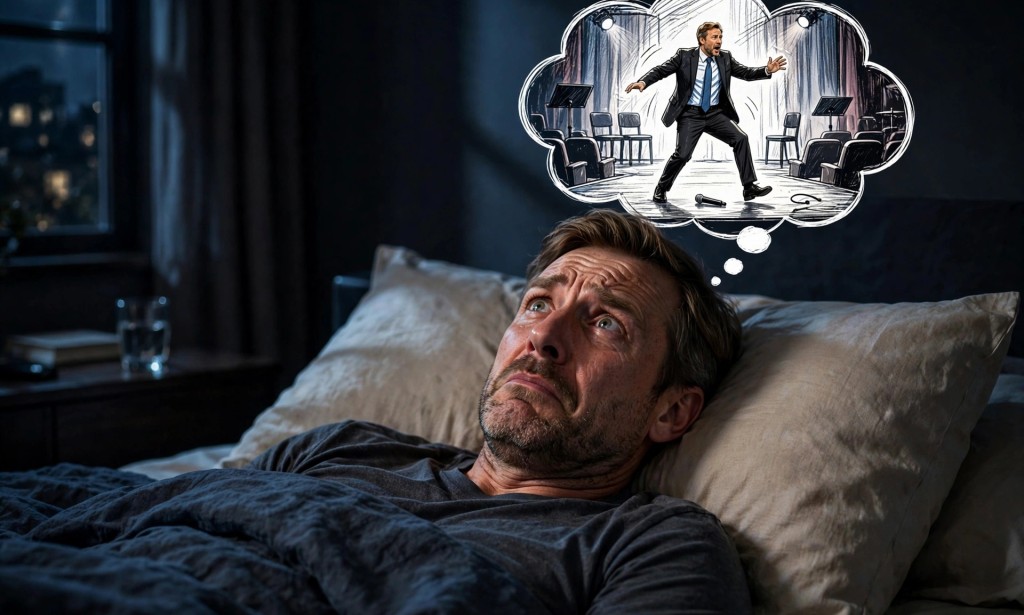
Why Your Brain Suddenly Remembers Embarrassing Moments When You're Trying to Sleep
Have you ever been lying comfortably in bed, almost ready to fall asleep, when your brain suddenly reminds you of something embarrassing you did years ago? Perhaps you said something awkward in front of your classmates, waved at someone who was not waving at you, or answered a question incorrectly in front of a crowd. Suddenly, you are wide awake, wondering why your mind chose that exact moment to bring back the memory.
If this sounds familiar, you are not alone. Many people experience embarrassing memories at bedtime. Although it can feel as if the brain is deliberately trying to disturb your peace, there are psychological reasons why these moments may become more noticeable when everything around you is quiet.
1. Your Brain Finally Has Time to Think
During the day, your attention is divided among school, work, conversations, social media and other responsibilities. Your brain constantly processes information, leaving less room to focus on memories that are not immediately important.
At night, however, the situation changes. You are no longer occupied by as many activities, and there are fewer distractions competing for your attention. As a result, thoughts and memories that you barely noticed during the day can suddenly become more prominent.
This does not mean your brain deliberately waits until bedtime to embarrass you. Rather, the quiet environment may make it easier for your attention to settle on memories that would otherwise remain in the background.
2. Your Brain Is Designed to Learn From Mistakes
Human memory helps us learn from past experiences. Remembering an uncomfortable social situation may help you recognise what you would prefer to do differently in the future.
For example, if you once made an awkward comment during a conversation, you might remember the incident because you care about how other people perceive you. Your brain may revisit the experience as you reflect on what happened.
The problem is that remembering a mistake does not always mean there is something useful left to learn from it. Sometimes, you can replay the same moment repeatedly without discovering anything new.
An incident that lasted only a few seconds can occupy your thoughts for several minutes, even when the people who witnessed it have probably forgotten about it.
3. Why Embarrassing Memories Feel So Powerful
Embarrassment is closely connected to our desire to belong, be respected and maintain good relationships with other people. This is one reason socially uncomfortable experiences can leave a lasting impression.
You might forget an ordinary conversation but remember the moment you mispronounced a word during a presentation. The second experience may feel more significant because it involved the possibility of being judged.
However, your memory is not a perfect recording of reality. Feelings experienced during an event can influence how you remember it later. When you recall an embarrassing experience, you may focus more on your own discomfort than on what other people actually noticed.
In other words, the memory can feel much more dramatic from your perspective than it appeared to everyone else.
4. Why Trying to Forget Can Make Things Worse
Have you ever told yourself, “I must stop thinking about this,” only for the memory to return a few seconds later?
Trying forcefully to suppress a thought can sometimes make you more aware of it. When you repeatedly check whether you have stopped thinking about something, you may keep bringing your attention back to the very thought you want to avoid.
A more helpful approach is to acknowledge the memory without turning it into a long argument with yourself. You can recognise that the moment was uncomfortable and remind yourself that it belongs to the past.
You do not have to prove that the memory is unimportant before allowing yourself to move on.
5. How to Stop Embarrassing Memories From Ruining Your Night
Although you may not be able to control every thought that enters your mind, you can change how you respond to it.
First, avoid judging your younger self too harshly. You were learning, growing and navigating situations with the knowledge you had at the time. Everyone makes mistakes, including people who appear confident.
Second, ask yourself whether the incident matters today. If the event happened years ago and has no meaningful effect on your present life, remind yourself that you do not need to solve it again tonight.
Third, gently redirect your attention. Try slow, comfortable breathing, listening to calming sounds or focusing on a peaceful mental image. The goal is not to force every thought away but to give your attention somewhere else to rest.
Finally, be patient with yourself. An uncomfortable memory returning does not mean you have failed to move on. Sometimes, thoughts appear automatically and disappear when you stop giving them so much attention.
If repetitive thoughts regularly prevent you from sleeping or cause significant distress, speaking with a qualified health professional may help.
Conclusion
Your brain may bring embarrassing memories to mind at bedtime because the quiet environment gives you more opportunity to reflect, while your emotions can make certain experiences feel especially memorable. These thoughts are a normal experience for many people, and they do not necessarily mean that something is wrong with you.
The next time an awkward memory suddenly appears just as you are falling asleep, remember this: you are experiencing a memory, not reliving the event. You have grown since that moment, and you are allowed to let it remain in the past.
Perhaps the funniest part is that while you are lying awake remembering something embarrassing you did five years ago, the other people involved may not remember it at all.


You must be logged in to post a comment.