

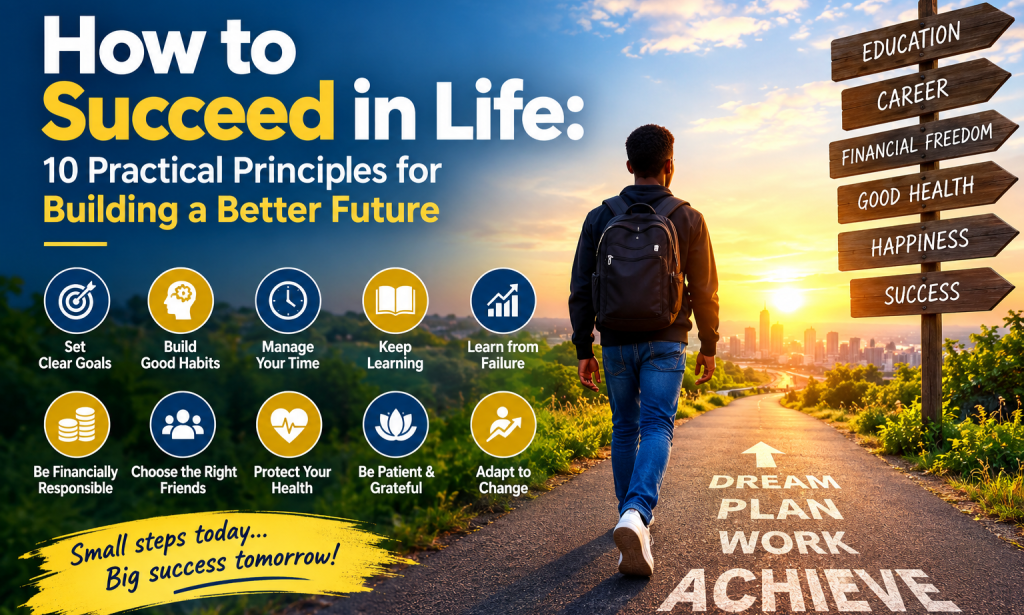
How to Succeed in Life: 10 Practical Principles for Building a Better Future
Introduction
Success in life means different things to different people. For some, it means achieving academic excellence, building a successful career, or starting a business. For others, it means having a peaceful family, good health, strong relationships, financial stability, and a meaningful life.
Although everyone has different goals, success rarely happens by accident. It often requires clear direction, consistent effort, patience, and a willingness to learn from mistakes. You do not need to have everything figured out before you begin. What matters is taking positive steps toward the future you want.
In this article, we will explore ten practical principles that can help you become more productive, overcome challenges, and build a successful and fulfilling life.
1. Define What Success Means to You
The first step toward success is knowing what you want to achieve. Without clear goals, it is easy to spend time and energy on activities that do not move you forward.
Take time to think about the areas of life that matter most to you. These may include education, career development, personal growth, family, health, spirituality, or financial responsibility.
Write down your goals and divide them into three categories:
- Short-term goals: Things you want to accomplish within days or months.
- Medium-term goals: Achievements that may take one to three years.
- Long-term goals: Bigger dreams that require years of preparation and effort.
For example, a student may set a short-term goal of improving examination results, a medium-term goal of entering university, and a long-term goal of becoming a qualified professional.
Clear goals provide direction and help you measure your progress.
2. Develop Positive Daily Habits
Your daily habits have a powerful influence on your future. Small actions repeated consistently can produce meaningful results over time.
Successful personal habits may include reading regularly, planning your day, exercising appropriately, managing your time, practising gratitude, and learning new skills.
You do not need to change everything at once. Begin with one or two habits that support your goals. For example, spending 30 minutes each day learning a useful skill can help you develop knowledge gradually.
Remember that motivation may come and go, but a realistic routine can help you continue making progress even when you do not feel motivated.
3. Make Education and Continuous Learning a Priority
Learning does not end when you leave school. The world continues to change, and people who remain willing to learn can discover new opportunities.
Education helps you understand the world, solve problems, communicate effectively, and make informed decisions. However, learning is not limited to formal education. You can also learn through books, practical experience, mentorship, online courses, and conversations with knowledgeable people.
Choose skills that are relevant to your interests and future plans. These might include communication, writing, technology, problem-solving, leadership, or business management.
Instead of being afraid of what you do not know, treat it as an opportunity to grow.
4. Learn to Manage Your Time
Time is a valuable resource because once a moment has passed, you cannot recover it. How you use your time can influence your progress toward your goals.
Begin each day by identifying your most important tasks. Complete urgent and meaningful activities before spending too much time on distractions.
A simple daily plan might include time for work or school, learning, family responsibilities, rest, and personal development.
Avoid comparing your schedule with someone else's. Different people have different responsibilities and circumstances. The goal is to use your available time wisely and consistently.
Good time management does not mean being busy every minute. Rest and recreation are also important parts of a balanced life.
5. Build Discipline and Consistency
Discipline means making choices that support your long-term goals, even when those choices are not always easy.
You may want to succeed academically, but achieving that goal requires studying regularly. You may want to become a skilled writer, but improvement requires writing, reading, and editing consistently.
Do not depend entirely on feelings or temporary excitement. Create a manageable plan and follow it as closely as possible.
When you miss a day or make a mistake, do not assume that you have failed completely. Review what happened, adjust your approach, and begin again.
Consistency is not about being perfect. It is about returning to your goals and continuing to work toward them.
6. Choose Your Friends and Environment Wisely
The people around you can influence your attitudes, decisions, habits, and ambitions.
Spend time with people who respect you, encourage responsible choices, and support your growth. Look for friendships built on honesty, kindness, trust, and mutual respect.
This does not mean avoiding everyone who has different opinions or facing difficulties. Healthy relationships allow people to disagree respectfully and learn from one another.
Be mindful of environments that constantly encourage harmful decisions or discourage you from pursuing reasonable goals.
Also, aim to become the kind of person who contributes positively to other people's lives. Encourage others, celebrate their achievements, and offer help when you can.
7. Learn from Failure and Mistakes
Failure can be disappointing, especially when you have worked hard for something. However, a setback does not have to determine your future.
Sometimes a failed attempt reveals that you need more preparation, a different strategy, additional knowledge, or better support.
When something goes wrong, ask yourself three questions:
1. What went wrong?
2. What can I learn from the experience?
3. What can I do differently next time?
For example, if you perform poorly in an examination, examine your preparation methods, identify difficult topics, and create a more effective study plan.
Be willing to take responsibility for your mistakes without treating them as proof that you cannot succeed.
Progress often comes from learning, adapting, and trying again with greater understanding.
8. Develop Financial Responsibility
Financial stability can contribute to a more secure and comfortable life. Although money is not the only measure of success, managing it responsibly is an important life skill.
Learn to distinguish between needs and wants. Whenever possible, create a budget, monitor your spending, and save a portion of any income you receive.
Be careful with offers that promise instant wealth, guaranteed profits, or unusually high returns with little effort. Research opportunities carefully and avoid risking money you cannot afford to lose.
You can also work toward financial independence by developing valuable skills, providing useful services, and exploring legitimate opportunities suited to your age and circumstances.
Financial progress may take time. Focus on making informed decisions rather than comparing your financial situation with that of others.
9. Protect Your Health and Personal Well-Being
Success is more meaningful when you can enjoy the results of your efforts. Your physical and emotional well-being deserve attention alongside your ambitions.
Aim for adequate sleep, balanced meals, regular physical activity suited to your abilities, and time to relax. Maintain healthy relationships and seek support when life becomes difficult.
Avoid sacrificing your health simply to appear productive. Constant exhaustion can make it harder to concentrate, make decisions, and maintain motivation.
It is also important to recognise that people face different challenges. Asking for help from trusted people or qualified professionals is a responsible step, not a sign of weakness.
A balanced life gives you a stronger foundation for pursuing your goals over the long term.
10. Be Patient, Grateful, and Willing to Adapt
Success rarely follows a perfectly straight path. You may encounter delays, unexpected responsibilities, changing opportunities, or goals that no longer suit you.
Patience helps you continue working when results take time. Gratitude reminds you to appreciate the progress and support you already have. Flexibility helps you change your approach when circumstances require it.
Do not measure your entire life against another person's achievements. People have different starting points, resources, responsibilities, and opportunities.
Instead, compare your current efforts with your previous efforts. Recognise what has improved and identify the next step you can take.
You can remain ambitious while appreciating the present. Both are possible.
Conclusion
Succeeding in life is not about becoming perfect, becoming richer than everyone else, or achieving every goal without difficulty. It is about building a life that reflects your values, using your abilities responsibly, learning from experience, and making meaningful progress.
Start by defining your goals, developing positive habits, managing your time, continuing to learn, and taking care of your well-being. Build healthy relationships, manage money wisely, and treat setbacks as opportunities to improve.
You do not have to accomplish everything in one day. Choose one useful action you can take today and build from there.
Your future is shaped by many decisions made over time. Start where you are, use what you have, keep learning, and continue moving forward.
Ultimately, a successful life is not only about what you achieve for yourself but also about the positive difference you make in the lives of others.


You must be logged in to post a comment.