

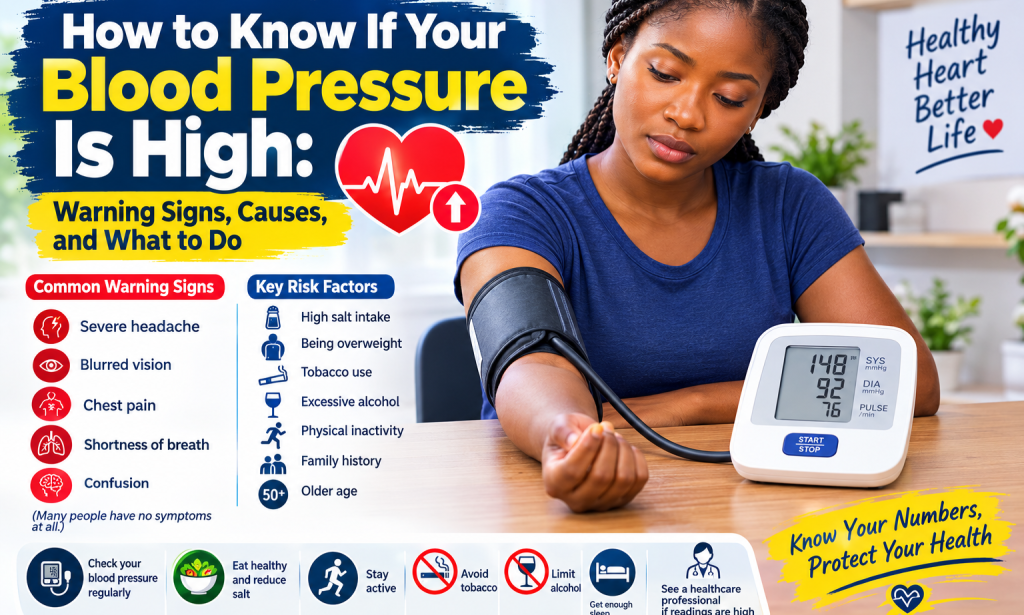
How to Know If Your Blood Pressure Is High: Warning Signs, Causes, and What to Do
Introduction
High blood pressure, also known as hypertension, is a common health condition that affects millions of people worldwide. It occurs when the force of blood pushing against the walls of the arteries remains consistently too high.
One of the most important things to understand about high blood pressure is that you may have it without experiencing any noticeable symptoms. A person can feel completely normal while their blood pressure is elevated. This is why checking your blood pressure regularly is an important part of looking after your health.
Understanding the warning signs, risk factors, and ways to measure blood pressure can help you recognise a possible problem and seek appropriate medical care.
1. What Is High Blood Pressure?
Blood pressure is measured using two numbers, such as 120/80 mmHg.
- Systolic pressure: The top number, which measures the pressure in your arteries when your heart beats.
- Diastolic pressure: The bottom number, which measures the pressure when your heart rests between beats.
For adults, a reading that repeatedly reaches 140/90 mmHg or higher is considered hypertension under World Health Organization guidelines. Some other medical guidelines classify blood pressure as high starting at lower levels.
A single high reading does not always mean that you have hypertension. Stress, recent physical activity, caffeine, and incorrect measurement techniques can temporarily affect the result. A healthcare professional can help interpret your readings.
2. Can You Recognise High Blood Pressure by Its Symptoms?
In most cases, high blood pressure does not cause obvious symptoms. You should not rely on how you feel to decide whether your blood pressure is normal.
When blood pressure becomes severely elevated, some people may experience symptoms such as:
- Severe headache
- Blurred vision or other changes in vision
- Chest pain
- Shortness of breath
- Confusion or other unusual neurological symptoms
These symptoms are not exclusive to high blood pressure, and their absence does not rule it out. If you experience chest pain, difficulty breathing, sudden weakness, confusion, or a sudden change in vision, seek emergency medical care.
3. The Most Reliable Way to Know Your Blood Pressure
The only reliable way to know your blood pressure is to measure it using a suitable blood pressure monitor or have it checked by a healthcare professional.
You can check it at a clinic, hospital, pharmacy that offers blood pressure checks, or at home using a validated automatic upper-arm monitor.
For a more accurate reading:
1. Avoid smoking, caffeine, and exercise for at least 30 minutes beforehand.
2. Empty your bladder if necessary.
3. Sit quietly for five minutes before taking the measurement.
4. Keep your back supported, feet flat on the floor, and legs uncrossed.
5. Place the cuff on your bare upper arm and support your arm at heart level.
6. Do not talk during the measurement.
7. Take two readings about one minute apart and record the results.
If your readings are repeatedly elevated, arrange a medical assessment. Do not diagnose yourself from one measurement alone.
4. What Causes High Blood Pressure?
High blood pressure often develops through a combination of factors. Common risk factors include:
- Eating too much salt
- Not getting enough physical activity
- Excessive alcohol consumption
- Tobacco use
- Being overweight
- Getting older
- Having a family history of hypertension
- Living with certain medical conditions, including kidney disease or diabetes
- Taking certain medicines that can raise blood pressure
Sometimes, high blood pressure develops without one clearly identifiable cause. It can also occur because of another medical condition.
Knowing your risk factors can help you make informed decisions about prevention and screening.
5. Why Is High Blood Pressure Dangerous?
When blood pressure remains high over time, it places extra strain on the heart and blood vessels. If left untreated, it can increase the risk of serious complications, including:
- Heart attack
- Stroke
- Heart failure
- Kidney damage
- Damage to blood vessels and other organs
These complications may develop over time without obvious early warning signs. Regular blood pressure checks can help identify hypertension before serious damage occurs.
6. What Should You Do If Your Blood Pressure Is High?
If you receive a high reading, remain seated and calm, then repeat the measurement after resting.
If your blood pressure remains elevated, contact a healthcare professional for advice and further assessment. Keep a record of your readings, including the dates and times.
If a reading is around 180 systolic and/or 120 diastolic mmHg or higher, wait at least one minute and measure again. If it remains that high, contact a healthcare professional immediately. If you also have chest pain, difficulty breathing, weakness, numbness, vision changes, or difficulty speaking, seek emergency medical care without delay.
Do not stop prescribed medication, take extra doses, or use someone else's medicine without medical guidance.
7. How Can You Help Prevent High Blood Pressure?
Healthy lifestyle choices can help lower the risk of developing high blood pressure and support treatment when hypertension is present.
Reduce salt intake: Limit excessive salt in meals and reduce frequent consumption of highly salted processed foods.
Eat balanced meals: Include vegetables, fruits, whole grains, beans, and other nutritious foods.
Stay physically active: Engage in regular physical activity appropriate for your age and health.
Avoid tobacco: Smoking damages blood vessels and increases cardiovascular risk.
Limit or avoid alcohol: Alcohol can raise blood pressure, particularly when consumed excessively.
Sleep well: Maintain a regular sleep routine and seek advice if you have persistent sleep problems.
Attend health checks: Regular screening is especially important if you have risk factors or a history of elevated readings.
If you already have hypertension, lifestyle changes are helpful, but you may also need prescribed medication. Follow your healthcare professional's treatment plan.
Conclusion
High blood pressure can be difficult to recognise because it often causes no symptoms. Feeling healthy does not necessarily mean your blood pressure is normal.
The best way to know is to measure it correctly and seek professional advice if readings are repeatedly high. Understanding your risk factors, maintaining healthy habits, and attending regular health checks can help protect your heart, brain, and kidneys.
Do not wait until you feel unwell before checking your blood pressure. Knowing your numbers is a simple but important step toward protecting your health.
Health notice: This article is for educational purposes only and is not a substitute for professional medical advice, diagnosis, or treatment.


You must be logged in to post a comment.