
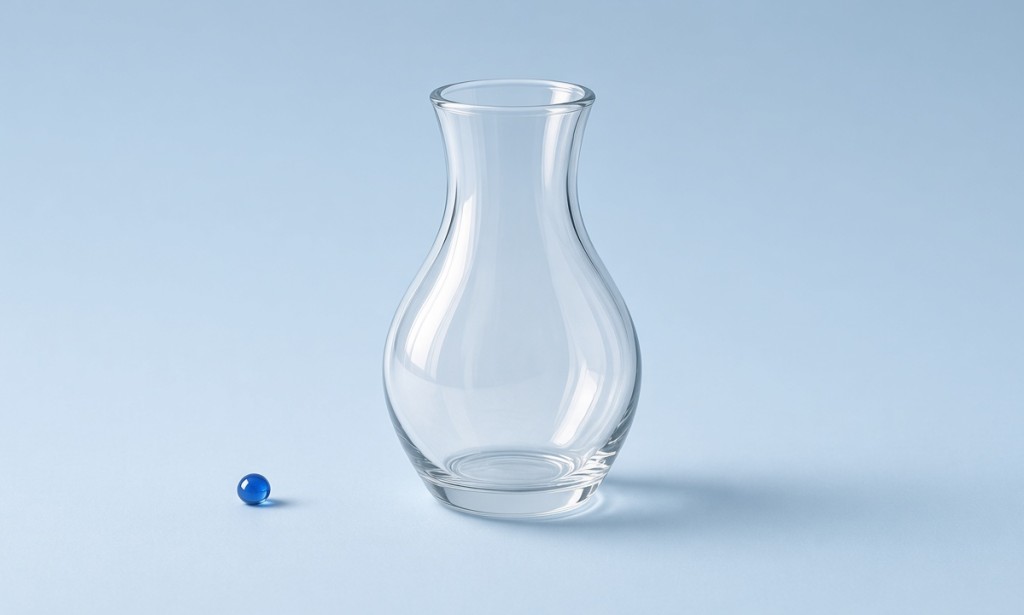
Changing a backdrop is straightforward until the subject is transparent. A clear vase does not have a single, solid colour that can be protected while everything around it changes. Part of the old background is visible through the glass, and the base meets the surface through reflections and shadow.
If the space around the vase turns blue but its centre remains grey, the object can look pasted into another scene. If the entire vase turns blue, it can look like coloured glass instead. The useful target is a new setting viewed through the same clear object.
I made the grey and blue versions here as a product-visual study, starting from an AI-created reference rather than a photograph of a real item for sale.
Start with a reference that makes the material readable
The original shows one empty vase on a warm grey surface. Its rim, narrow neck and heavy base are visible. A small blue bead sits to the left, providing an easy position reference. Soft light comes from the upper left, with the main grounding shadow extending right.
This simple arrangement makes the edit easier to assess. There are no flowers obscuring the glass, no waterline to reinterpret and no elaborate surroundings. The shape and material have to carry the picture.
Before changing the background, identify three areas: the empty space around the vase, the view through its body and the point where its base meets the table. All three should belong to the new scene, but they should not become a uniform patch of blue.
For a real catalogue task, begin with an authorised photograph of the actual product. This generated reference can demonstrate the editing decisions; it cannot establish the dimensions, finish or optical behaviour of merchandise.
Describe the new setting through the object
I used Image editing in Grok Image 2.0 with the grey reference uploaded, Standard quality and a 16:9 frame. The 1K request returned a 1280 × 720 JPEG. The form initially needed its missing resolution field corrected; that is separate from the wording of the image instruction.
The submitted prompt was:
Edit the uploaded studio image by changing only the warm grey seamless background and tabletop to a muted pale powder blue. Keep the same clear empty glass vase, its exact silhouette, neck, rim, base, position and size, and keep the small blue glass bead at the same position on the left. The new blue background should remain visible through the transparent glass, with coherent lighter and darker curved glass reflections rather than an opaque painted vase. Retain the upper-left soft studio lighting and a soft grounding shadow extending right. Keep a realistic material transition through the glass and at the base. No water, flowers, extra objects, writing or logos.
The important distinction is between the vase’s identity and the appearance of its surroundings through the material. The silhouette, rim, base, size and position should remain recognisable. The visible background colour inside the outline should change.
“Keep the vase unchanged” by itself would leave that distinction unclear. Here, the instruction names both the fixed shape and the expected relationship between clear glass and the new backdrop. The bead is also kept in place so the result can be checked without relying on a vague impression that the layout looks similar.
Read the result from the outside inward
The returned image places the vase against a pale blue surface and background. Blue is also visible through the body, while bright and dark curves continue to describe the glass. The vase does not read as an opaque blue container.
The rim, narrow neck and broad base remain recognisable, and the bead stays to the left. A soft shadow still grounds the vase toward the right. For choosing a visual direction, the blue version provides a useful alternative without requiring a different arrangement of props.
Start the comparison outside the vase, where the requested background change is easiest to judge. Then move through the centre of the body and down to the base. This avoids approving a nice-looking backdrop while overlooking an object that no longer looks transparent.
Pay attention to the transition at the base
The base is often where a background change becomes conspicuous. It contains several overlapping cues: a thicker-looking glass edge, reflections from the surface and a contact shadow.
Look for an abrupt colour boundary that does not follow the glass, a bright cutout halo or a shadow that appears detached from the object. Also check whether the surface texture continues plausibly around the base rather than stopping at a crude outline.
In this result, the blue setting extends behind and beneath the vase, with a darker base edge and a soft rightward shadow. Those cues keep it visually connected to the surface. They are more useful for this task than simply making the glass sharper.
Do not demand that every light and dark mark match the grey version. A changed setting can alter visible colour relationships. Instead, compare whether the overall material still reads as clear glass and whether important shape features remain consistent.
If a future candidate looks pasted in
If the centre stays grey, I would clarify that the new background must be visible through the transparent body. If the vase becomes opaque, I would remove any wording that could imply blue glass and restate that only the surroundings are blue.
A lost base shadow calls for attention to contact with the surface, not more global sharpening. A changed neck or rim is a different problem: return to the original reference and simplify the request before considering a further edit.
These are adjustments to consider if those failures appear. I did not run additional versions to prove that each wording change fixes them. The grey-to-blue edit shown here was one submitted reference edit.
Check the image at its actual use size
A convincing background change should make the product easier to present without quietly changing what is being presented. Before using the candidate, check:
- The backdrop has the intended colour outside and through the vase.
- The glass still appears transparent rather than painted.
- The rim, neck, body and base remain recognisable.
- The base meets the surface without a halo or detached shadow.
- The bead and other retained details stay where expected.
- Any real product claims are checked against the actual item, not inferred from the generated image.


You must be logged in to post a comment.