

The Bird That Never Lands — Creatures That Live Almost Entirely in the Sky
Introduction
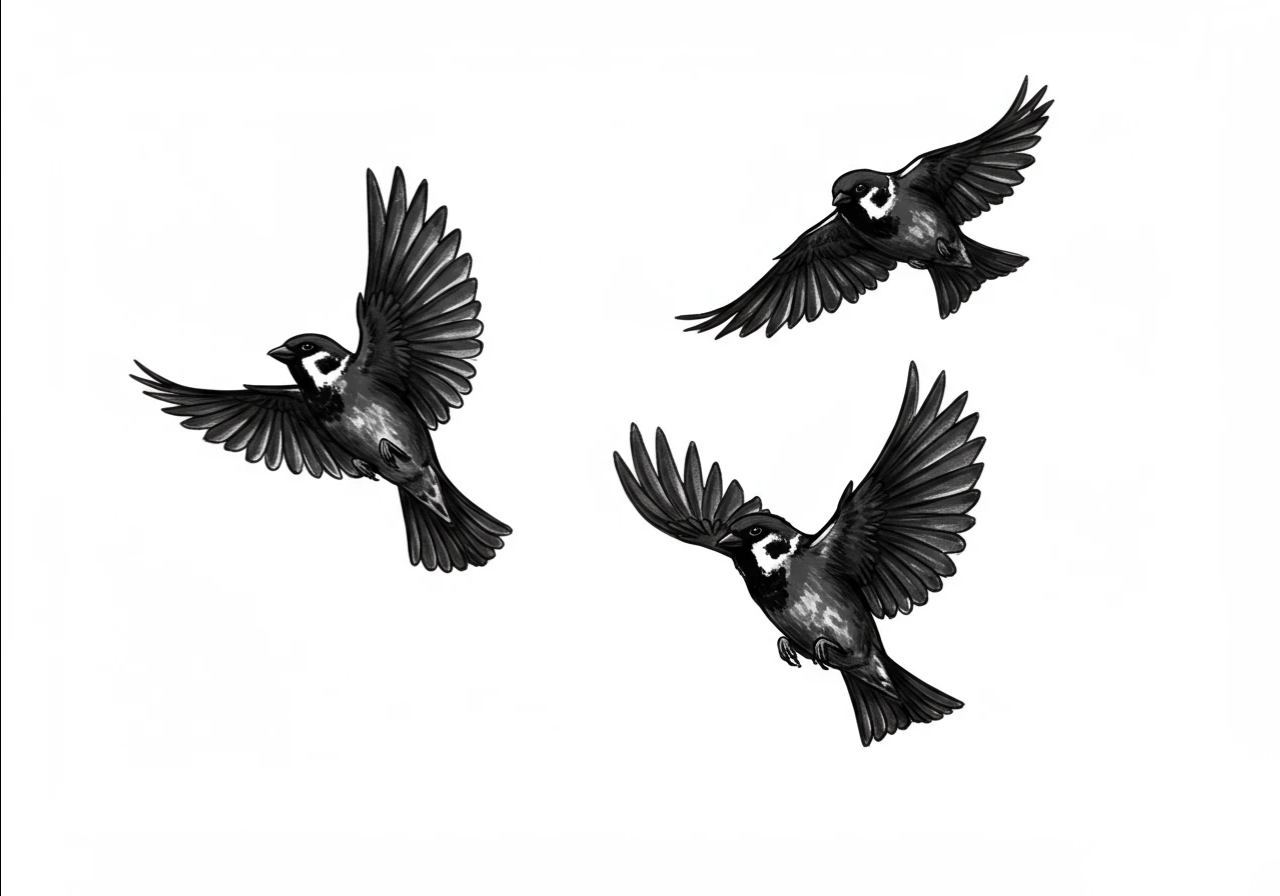
Imagine spending months in the air without touching the ground. No resting on trees. No landing on cliffs. No sleeping on branches. It sounds impossible, yet some birds and flying creatures live astonishing lives almost entirely above the Earth.
Among them is one extraordinary species often called “the bird that never lands” — a master of the skies that eats, sleeps, mates, and even drifts through storms while airborne.
These aerial specialists have evolved bodies built for endless flight. Their wings act like living gliders, their muscles work with incredible efficiency, and their lifestyles challenge everything humans think they know about life on Earth.
In this article, we explore the mysterious bird that seems to belong more to the sky than the land and discover other creatures that spend nearly their entire existence in flight.
The Bird That Never Lands — Meet the Common Swift
The title “bird that never lands” most often refers to the .
This small bird looks ordinary at first glance, but its life is extraordinary.
Research has shown that common swifts can remain airborne for months at a time, sometimes spending nearly their entire non-breeding season without landing.
Scientists tracking swifts discovered they could stay in the air continuously for around 10 months.
That means these birds may fly thousands of kilometers while barely touching land.
Why Swifts Almost Never Land
Swifts evolved for life in the sky.
Their bodies are designed differently from many birds:
Key adaptations include:
Long, crescent-shaped wings for efficient gliding
Lightweight bodies
Extremely powerful flight muscles
Tiny legs unsuitable for walking
Streamlined shape reducing air resistance
Ironically, swifts are actually poor walkers.
Their feet are adapted for clinging vertically to walls or cliffs rather than walking on flat surfaces.
Landing unnecessarily can even become risky because taking off again requires effort.
Sleeping in the Sky — How Swifts Rest Without Landing

One of the biggest mysteries surrounding swifts was simple:
How do they sleep?
Scientists believe swifts use short periods of sleep while gliding at high altitudes.
Some evidence suggests they may use unihemispheric sleep, where part of the brain rests while the other remains active.
This ability appears in several animals that cannot afford complete unconsciousness.
Night Flights at Extreme Heights
At dusk, swifts often climb thousands of feet into the air.
They drift in wide circles during darkness before descending again at dawn.
This aerial behavior may help them:
Avoid predators
Save energy
Rest during flight
Use stable atmospheric conditions
Their entire daily routine happens above the landscape.
Eating Without Landing — Life on Flying Insects
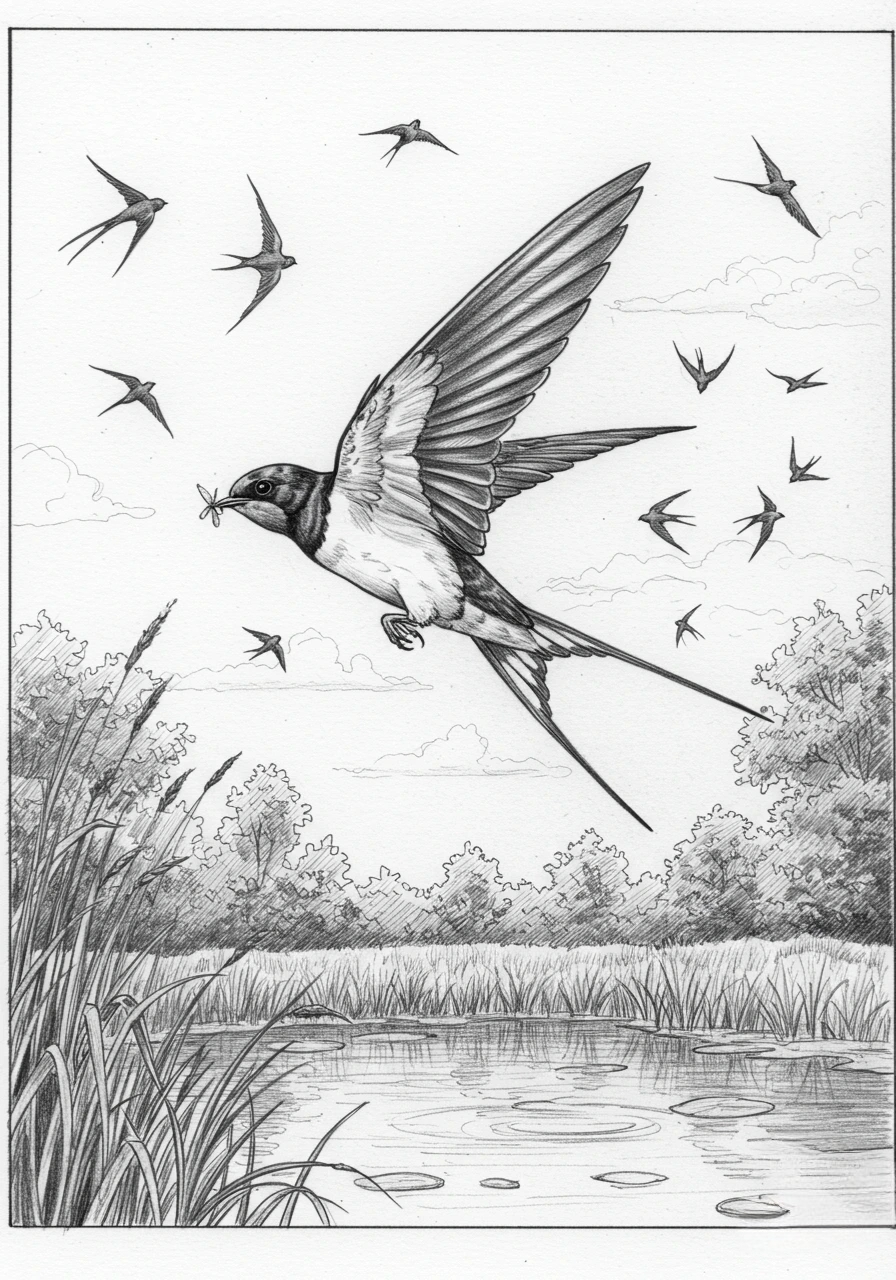
Swifts feed almost entirely while flying.
They capture insects directly from the air, creating what scientists call “aerial plankton.”
Their diet includes:
Flies
Mosquitoes
Tiny beetles
Aphids
Flying ants
Moths
The birds simply open their mouths while soaring through insect-rich air currents.
A single swift can eat thousands of insects daily.
Nature’s Flying Pest Control
Because they consume enormous numbers of insects, swifts provide ecological benefits.
Their feeding behavior helps regulate insect populations naturally.
This makes them important members of many ecosystems.
Migration Without Rest — Epic Journeys Across Continents
The common swift performs one of nature’s most impressive migrations.
Breeding populations across Europe travel toward Africa for winter.
Some journeys exceed thousands of kilometers.
Unlike many migrating birds that stop frequently, swifts continue living almost entirely airborne during travel.
Flying Through Weather Systems
Swifts can exploit wind patterns and thermal currents.
This helps them conserve energy during long journeys.
They often:
Glide on rising warm air
Use tailwinds
Shift altitude according to weather
Follow insect-rich atmospheric zones
Their migration is less like travel and more like living inside moving air.
Other Creatures That Spend Most of Their Lives in the Sky
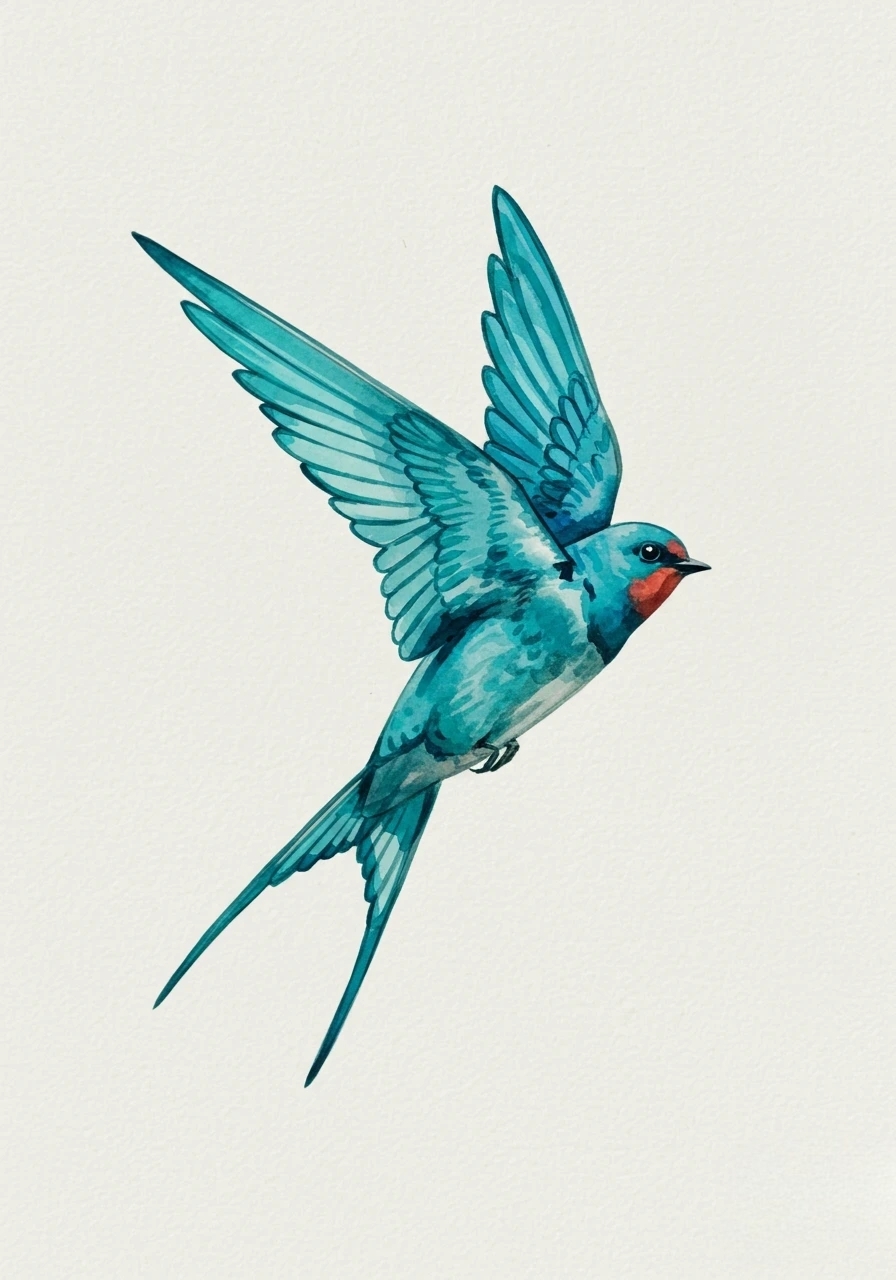
The common swift is not alone.
Several animals evolved lifestyles where the sky becomes home.
Alpine Swift — The Long-Distance Flyer
The is another aerial marvel.
Tracking studies suggest Alpine swifts may remain airborne for around 200 days continuously.
These birds migrate between Europe and Africa.
Features of Alpine Swifts
They possess:
Longer wings
Exceptional endurance
High-speed flight capability
Efficient gliding mechanics
Their flight lifestyle resembles that of common swifts but on a larger scale.
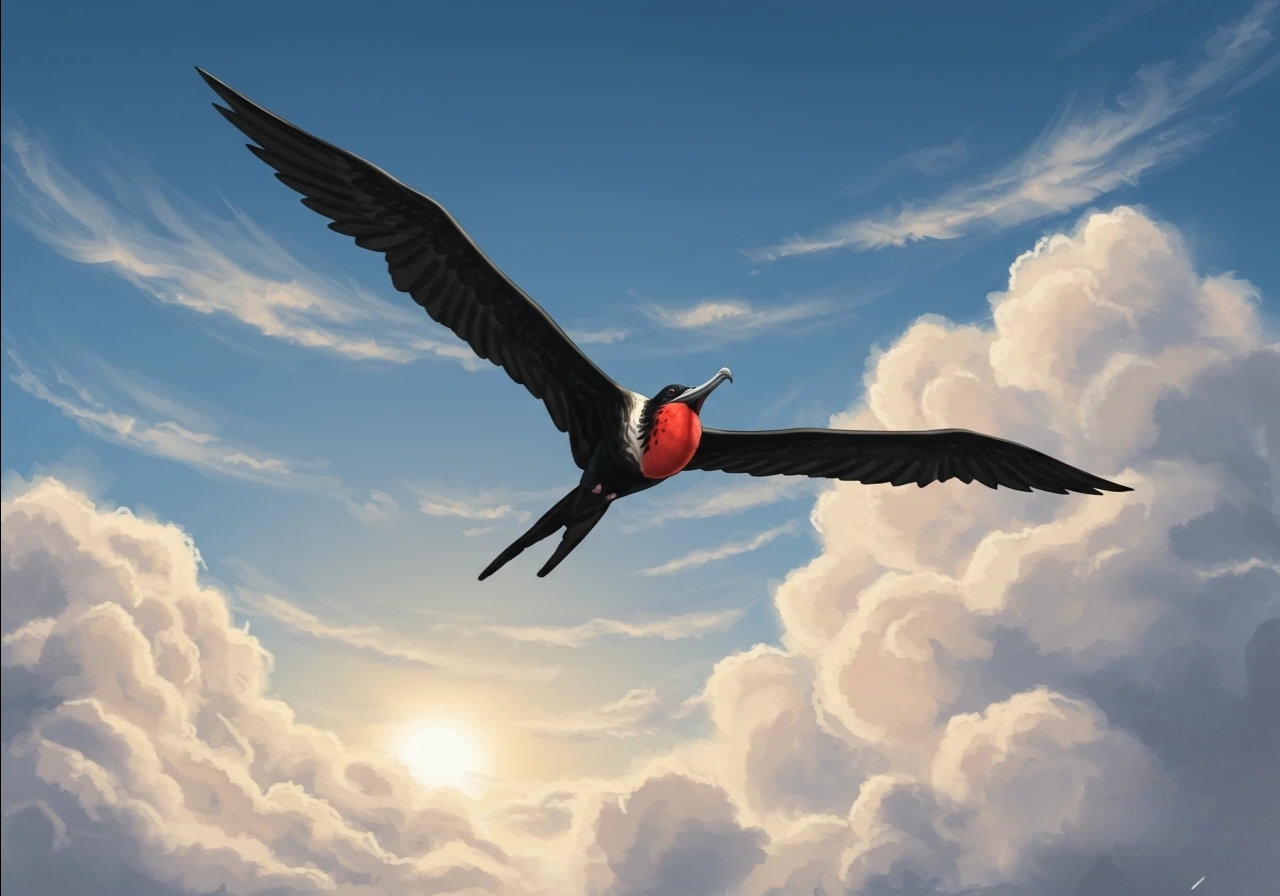
Frigatebirds — Masters of Endless Soaring
The spends astonishing amounts of time over oceans.
Researchers recorded some frigatebirds remaining airborne for weeks or even months.
Unlike swifts, these birds rely heavily on soaring.
Why Frigatebirds Avoid Landing
Their feathers are not fully waterproof.
Landing on water can be dangerous.
Instead they remain aloft over tropical seas searching for:
Fish
Squid
Marine prey
They exploit rising ocean air currents and can sleep during gliding flights.
Wandering Albatross — Giant of the Endless Ocean Sky
The has one of the largest wingspans among birds.
Some individuals exceed 3.5 meters (11 feet).
These birds cross entire oceans with minimal wing flapping.
Dynamic Soaring Technique
Albatrosses use a strategy called dynamic soaring.
This involves harvesting wind energy above waves.
Benefits include:
Reduced muscle effort
Massive travel distances
Energy conservation
Long-term flight endurance
An albatross may circle the Southern Ocean repeatedly.
Sooty Terns — Birds of Endless Flight
The also spends extraordinary time airborne.
Young sooty terns may remain at sea and in flight for years before breeding.
They hunt fish near ocean surfaces and rarely return to land.
Oceanic Lifestyle
Their lives involve:
Constant movement
Open ocean hunting
High-speed aerial feeding
Minimal land contact
For these birds, islands become temporary stops rather than homes.
Why Some Birds Evolved to Live in the Air
Living in the sky offers major advantages.
Escape From Predators
Ground predators create constant danger.
Staying airborne reduces risk from:
Mammals
Snakes
Ground hunters
Flight becomes protection.
Access to Food Everywhere
Airborne species can chase food wherever it appears.
Swifts follow insect swarms.
Ocean birds track fish populations.
Mobility equals survival.
Energy Efficiency
Surprisingly, gliding can save energy.
Certain birds use:
Wind currents
Thermals
Atmospheric layers
This reduces active flapping.
Nature turns the sky into a highway.
The Science Behind Endless Flight
Long-duration flight demands extraordinary biology.
Specialized Muscles
Birds adapted for endless flight possess:
Large chest muscles
Efficient oxygen use
High endurance metabolism
Their bodies function like natural endurance athletes.
Lightweight Skeletons
Bird bones are lightweight yet strong.
This reduces flight cost.
Key features include:
Hollow structures
Reinforced internal supports
Optimized balance
Every gram matters in the sky.
Wing Design Changes Everything
Wing shape determines flight style.
Examples:
Long narrow wings
Used by:
Albatrosses
Frigatebirds
Best for gliding.
Curved sickle-shaped wings
Used by:
Swifts
Best for maneuverability and speed.
The Hidden Dangers of Living in the Sky
A life in the air sounds magical, but it comes with risks.
Weather Extremes
Birds encounter:
Storms
Strong winds
Temperature shifts
Heavy rain
Survival requires constant adaptation.
Food Shortages
Flying insects change seasonally.
Ocean prey shifts locations.
Aerial species must continuously move.
Human Threats
Modern environments create new dangers.
These include:
Habitat destruction
Climate change
Light pollution
Insect decline
For swifts especially, declining insect populations may become a serious threat.
Myths About the “Bird That Never Lands”
Many people assume the phrase means a bird literally never touches land.
That is not completely true.
Swifts still land for:
Nesting
Raising chicks
Breeding
But outside these periods, they spend astonishing stretches continuously airborne.
The myth contains a real scientific foundation.
Few animals approach their aerial lifestyle.
Could Birds Stay Airborne Forever?
Probably not.
Even the greatest aerial species eventually return to land.
Breeding, nesting, and raising offspring require surfaces.
Yet swifts come remarkably close.
For much of the year, their world contains:
No trees.
No branches.
No ground.
Only sky.
Fascinating Facts About Birds That Live in the Sky
Common Swift Facts
Can remain airborne for months
Eats while flying
Drinks while flying
Sleeps during flight
Travels across continents
Frigatebird Facts
Can soar for weeks
Avoids water landings
Uses air currents efficiently
Sleeps while gliding
Albatross Facts
Giant wingspan
Ocean-crossing flights
Dynamic soaring specialist
Conclusion
The common swift may be the closest thing nature has created to a permanent creature of the sky.
It spends months in flight, hunts in the air, rests while gliding, and crosses continents without living the grounded life most animals know.
Yet it is not alone.
Frigatebirds drift above oceans, albatrosses ride endless winds, and terns disappear into open skies for years.
Together they reveal one astonishing truth:
Earth is not only a world of land and sea.
For some creatures, the sky itself is home.
Frequently Asked Questions (FAQs)
1. What bird is called “the bird that never lands”?
The common swift is commonly known by this nickname because it can stay airborne for months.
2. Do swifts really sleep while flying?
Scientists believe swifts rest during flight and may use partial-brain sleep mechanisms.
3. How long can a swift stay in the air?
Studies suggest common swifts may remain airborne for around ten months.
4. Which ocean bird spends the most time flying?
Frigatebirds and albatrosses are among the longest-flying ocean birds.
5. Can birds eat while flying?
Yes. Swifts catch insects directly from the air during flight.
6. Why do some birds avoid landing?
Reasons include feeding strategy, predator avoidance, and adaptations for efficient flight.


You must be logged in to post a comment.