
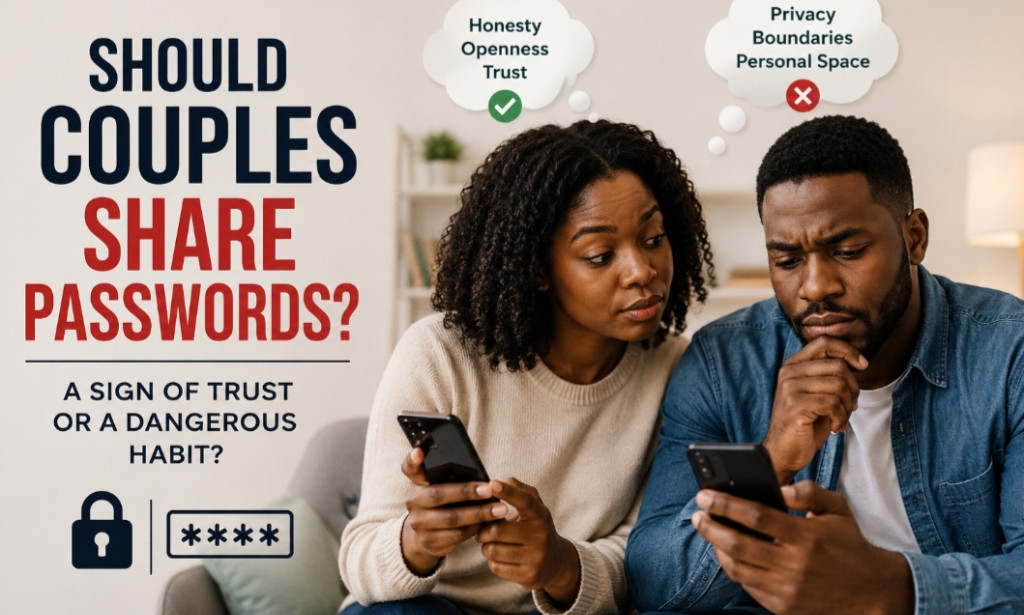
Should Couples Share Passwords? A Sign of Trust or a Dangerous Habit?
In today’s digital age, relationships no longer exist only in the physical world they also live online. From WhatsApp chats and Instagram DMs to bank apps and emails, much of our personal lives are stored behind passwords. This has created a new relationship question many couples now face: Should couples share passwords?
For some people, sharing passwords is a symbol of trust and openness. For others, it is an invasion of privacy and a sign of insecurity. So, which is right?
The Argument for Sharing Passwords
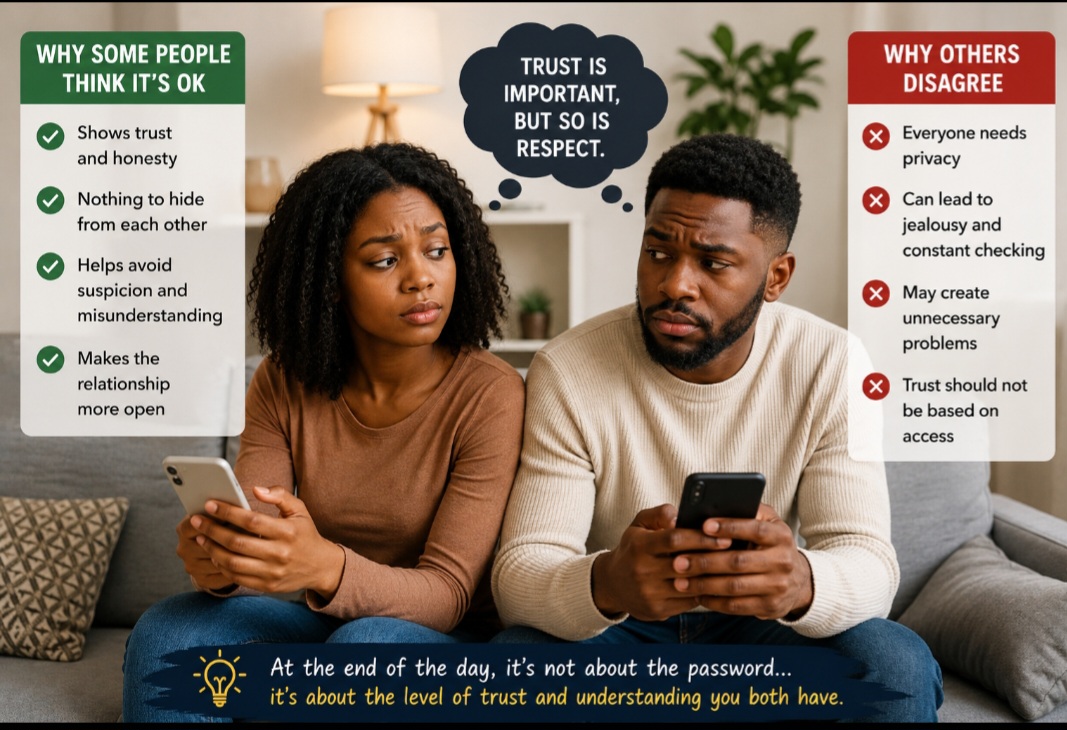
Many people believe that if you truly trust your partner, you should have nothing to hide. To them, sharing passwords is simply another way of showing transparency.
Some couples say it helps them:
● Feel more secure in the relationship
● Avoid suspicion and unnecessary arguments
● Build deeper trust over time
Their mindset is simple: “If we share our lives, why not our passwords too?”
In long-term relationships or marriages, some partners even share access for practical reasons like managing bills, emergencies, or helping each other with tasks online.
The Argument Against Sharing Passwords
On the other hand, many believe that privacy is not the same as secrecy.
Just because someone loves you does not mean they should surrender every private space they have. Everyone deserves personal boundaries even in committed relationships.
Problems can arise when:
○ One partner starts checking messages obsessively
○ Small misunderstandings create unnecessary fights
○ Password sharing becomes a form of control rather than trust
A healthy relationship should not require constant monitoring.
Is Refusing to Share a Password a Red Flag?
Not necessarily.
Some people immediately assume, “If you won’t share your password, you must be hiding something.” But that may not be true.
A person may simply value independence and personal space. Wanting privacy does not automatically mean disloyalty.
The bigger question might be: Why is the password being requested in the first place?
Is it based on trust or fear?
What Really Builds Trust?
Trust is not built through access to someone’s phone.
It is built through:
■ honesty,
■ consistent behavior,
■ good communication,
■ and emotional security.
A couple can know each other’s passwords and still have trust issues. Another couple may never share passwords and have a stronger bond.
Final Thoughts
So, should couples share passwords?
There may not be one universal answer. What works for one couple may damage another.
Perhaps the real issue is not whether passwords are shared but whether both partners feel respected, trusted, and secure.
What do you think?
Is sharing passwords a healthy sign of trust or an unhealthy habit in relationships?


You must be logged in to post a comment.