
How I Used a Zero-Based Budget to Take Control of My $2,000 Monthly Income
When I earned $2,000 per month, I was broke at the end of almost every month. I worked, received my income, paid bills, bought food, and handled other expenses. Yet, somehow, the money disappeared.
Then I learned about zero-based budgeting. It changed how I managed my money. Instead of spending first and wondering where my income went, I started giving every dollar a purpose before the month began.
It was not magic. It was a plan. With a budget, $2,000 started feeling like more money because I knew where it was going.
What Is Zero-Based Budgeting?
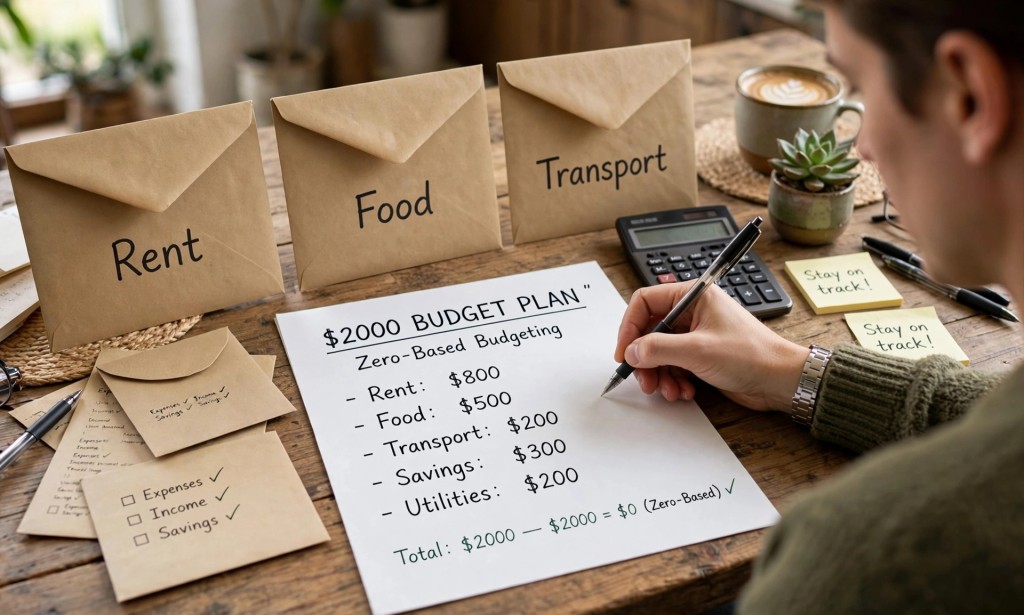
Zero-based budgeting is a budgeting method in which you assign every dollar of your expected income to a category before the month begins.
The goal is simple:
Total income − planned expenses, savings, debt payments, and other allocations = $0 unassigned.
This does not mean you must spend all your money. Savings, emergency funds, and extra debt payments are also assigned jobs in your budget. The goal is to account for every dollar rather than leave your money without a plan.
My Example of a $2,000 Monthly Budget
Here is an example of how I could divide a monthly income of $2,000 using the zero-based budgeting method.
| Category | Monthly Amount |
|---|---|
| Rent | $700 |
| Food | $300 |
| Transport | $150 |
| Bills (electricity, phone, internet) | $200 |
| Emergency fund | $200 |
| Debt payments | $150 |
| Personal spending and wants | $150 |
| Giving and charity | $100 |
| Car savings | $50 |
| Total allocated | $2,000 |
Every dollar has a purpose. My essential expenses are covered, I am putting money aside for emergencies, I am paying down debt, and I still have money for personal enjoyment.
Step 1: I Plan My Budget on the 25th of Every Month
I do not wait until my salary arrives before thinking about how to spend it. I use the 25th of each month to plan for the following month.
I start with my expected income and list my expenses, savings goals, debt payments, and other commitments. I use a simple sheet of paper and a pen.
If my planned allocations exceed my income, I review the budget and reduce flexible spending where possible. I do not pretend I can afford expenses that my income cannot cover.
Planning early helps me prepare for bills instead of being surprised by them.
Step 2: I Use Cash Envelopes for Three Categories
Food, transport, and personal spending are three categories where it can be easy to overspend. To manage them, I set aside a specific amount for each category.
For example, I can allocate:
- Food: $300 per month
- Transport: $150 per month
- Personal spending: $150 per month
I can keep these amounts in separate cash envelopes or use separate spending accounts. When the money in a category runs low, I pause and review my remaining needs before spending more.
This approach helps me become more aware of my spending. If I can reduce my food expenses from $450 to $300 without sacrificing necessary nutrition, I can redirect the extra $150 toward another financial goal.
Step 3: I Review My Budget Every Sunday
A budget is not something I create once and forget. Every Sunday night, I spend about 10 minutes checking what I have spent and comparing it with my plan.
If I spend $20 more than planned on food, I review my remaining budget. If it is practical, I may reduce discretionary spending by $20 to balance things out.
However, I do not cut essential expenses blindly. If the overspending comes from an unexpected bill or a necessary purchase, I adjust the budget realistically.
A budget is not a prison. It is a guide that helps me make better decisions with the money I have.
The Results: Giving My Money Direction
Before using a zero-based budget, I often reached the end of the month with little or no money left and plenty of stress. I did not have a clear plan for savings or debt repayment.
With a budget, I can deliberately set aside $200 for emergencies, allocate $150 toward debt, and put money toward longer-term goals while keeping a planned amount for personal enjoyment.
The difference is not that my income has magically increased. The difference is that I am making decisions before spending instead of trying to figure everything out afterward.
How You Can Try Zero-Based Budgeting This Month
- Write down your expected monthly income.
- List essential expenses such as housing, food, transport, and bills.
- Assign amounts to debt payments, savings, and personal spending.
- Make sure your entire income is accounted for.
- Track your spending throughout the month.
- Review your budget weekly and adjust when circumstances change.
You do not need an expensive budgeting application to get started. A notebook, a pen, and a few minutes of planning can be enough.
Final Thoughts
Managing a $2,000 monthly income is not just about how much you earn. It is also about how intentionally you use it. Zero-based budgeting gives every dollar a purpose and helps you balance today's needs with tomorrow's goals.
Try preparing your budget on the 25th of this month. Follow it, review it every Sunday, and make adjustments when necessary. After a month, look at what worked and what you need to improve.
Remember: A budget cannot make an insufficient income cover every need, but it can help you see where your money goes and make informed decisions about what to change.


You must be logged in to post a comment.