
7 Smart Money Habits That Can Help You Build a Better Financial Future in 2026
Have you ever wondered why some people seem to manage their money comfortably while others struggle, even when they earn an income?
It isn't always about how much money someone makes. Sometimes, the difference comes down to how they manage what they have.
Imagine receiving money at the beginning of the month, feeling financially comfortable for a few days, and then wondering where everything went. Perhaps unexpected expenses appeared, online purchases added up, or small daily payments became larger than expected.
Many people experience this situation. The good news is that developing better financial habits can help you understand your spending, prepare for unexpected expenses, and make more informed decisions about your future.
You don't have to be wealthy to start managing money wisely. You simply need a plan that works for your circumstances.
Whether you're a student, an employee, a freelancer, or someone hoping to start a business, these seven habits can help you build a stronger financial foundation.
1. Know Where Your Money Goes
One of the most important steps toward financial stability is understanding how you spend your money.
You might know how much you earn each month, but do you know exactly where it goes?
Small expenses can be surprisingly easy to overlook. Buying snacks, paying for subscriptions, ordering food, or making frequent online purchases may seem insignificant individually. However, several small expenses can add up over time.
For example, imagine spending ₦1,000 every day on something you haven't included in your budget. Over 30 days, that becomes ₦30,000.
That doesn't mean every small purchase is a mistake. The important thing is knowing whether your spending reflects your priorities.
How can you start?
- Write down your income.
- Record your expenses for a few weeks.
- Separate essential spending from optional purchases.
- Review your spending at the end of each week.
- Identify expenses you could reduce without affecting your essential needs.
You can use a notebook, a spreadsheet, or a budgeting application to track your money.
The goal isn't to feel guilty about spending. It's to understand your financial habits well enough to make better choices.
Remember: You can't manage your money effectively if you don't know where it's going.
2. Create a Budget That Fits Your Life
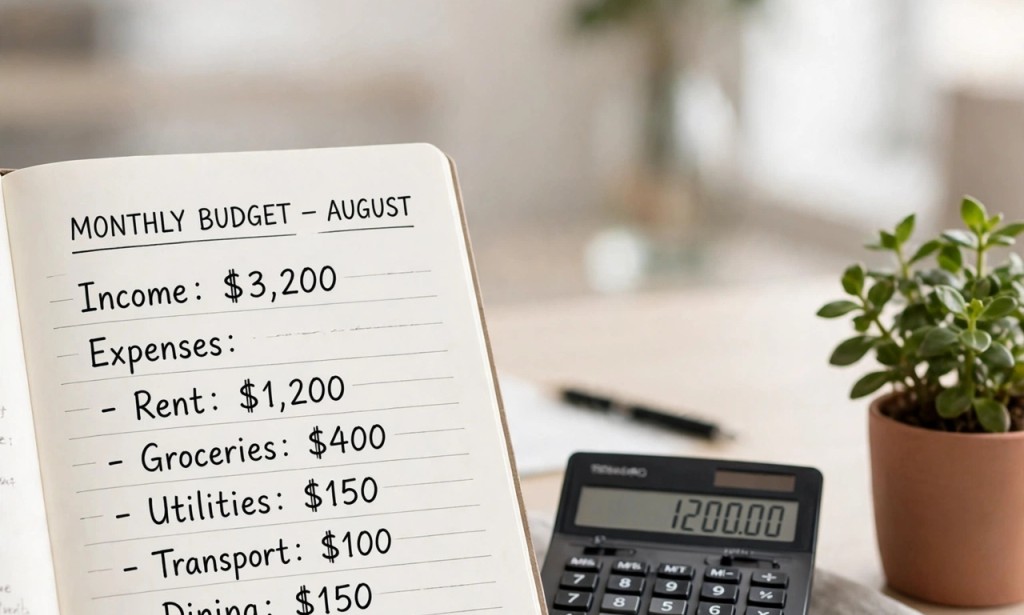
A budget is simply a plan for how you intend to use your money.
Despite what some people believe, budgeting isn't about refusing to enjoy life. It's about making sure your income can cover your priorities while helping you work toward your goals.
Without a budget, it's easy to spend money as soon as it arrives and postpone important expenses until later.
A simple budget can help you avoid this problem.
Here's an example.
Suppose someone receives ₦100,000 in a month.
They might plan their money around categories such as:
- Food and other essential needs.
- Transportation and communication.
- Savings for future expenses.
- Education or professional development.
- Personal spending.
The exact amounts will depend on their circumstances. Someone who supports a family will have different priorities from someone who lives with their parents.
You don't have to follow a budgeting formula that doesn't suit your situation.
Start by listing your actual expenses, identifying your most important needs, and deciding how much you can reasonably allocate to each category.
If your income changes from month to month, consider creating a flexible budget based on a conservative estimate rather than assuming you'll always earn the same amount.
The secret to successful budgeting isn't perfection. It's having a plan and adjusting it when circumstances change.
3. Build a Savings Habit, Even If You Start Small
Many people believe they need a large income before they can begin saving.
In reality, saving is a habit that can start with a small amount, provided essential expenses are covered.
The amount you can save will depend on your income, responsibilities, and cost of living. If money is already tight, covering basic needs comes first.
But when you have money available after essential expenses, setting aside a portion can help you prepare for future needs.
For example, saving ₦2,000 each week would amount to ₦104,000 over 52 weeks, before considering any interest or other returns.
That example isn't a promise that everyone can save this amount. It simply demonstrates how regular contributions can accumulate over time.
What should you save for?
You might create separate goals for:
- Unexpected expenses.
- School fees or educational materials.
- Replacing a phone or another essential device.
- Starting a small business.
- A future trip or personal project.
An emergency fund is particularly useful because unexpected expenses can arise without warning.
Keep money intended for emergencies somewhere reasonably accessible and secure. Understand any account fees, withdrawal restrictions, and applicable protections before choosing where to keep it.
Small, consistent steps can be more sustainable than setting an unrealistic savings target and abandoning it a few weeks later.
4. Learn to Distinguish Needs From Wants
One of the most useful financial skills is learning to distinguish between something you need and something you simply want.
Needs generally include essentials such as food, basic housing, necessary transportation, and important medical or educational expenses.
Wants are things that may improve your enjoyment or comfort but aren't essential to meeting immediate needs.
The distinction isn't always straightforward. For example, a phone might be essential for someone's work, education, or business, while a more expensive model may simply be an optional upgrade.
The aim isn't to stop buying things you enjoy. It's to make sure optional purchases don't prevent you from meeting important responsibilities.
Try the pause-before-purchasing method.
Before making a non-essential purchase, ask yourself:
- Do I genuinely need this right now?
- Have I included it in my budget?
- Could I find a suitable alternative at a lower cost?
- Would waiting a day or two help me make a clearer decision?
This approach can be particularly useful when shopping online, where attractive advertisements and limited-time offers may encourage quick decisions.
Be careful with messages claiming that you must pay immediately to avoid losing an unbelievable deal.
A legitimate opportunity should still make sense after you have checked its details.
Financial discipline doesn't mean never enjoying your money. It means making deliberate choices about how you use it.
5. Be Careful With Get-Rich-Quick Opportunities
The internet has created new ways to earn money, learn skills, and operate businesses.
People can offer freelance services, sell products, create digital content, teach online, and explore other legitimate opportunities.
However, the same environment also contains misleading offers and financial scams.
Some schemes promise unusually high returns, guaranteed profits, or large rewards for doing almost nothing.
Others pressure people to deposit money, recruit friends, or pay unexpected fees before they can withdraw supposed earnings.
These warning signs deserve serious attention.
How can you protect yourself?
Investigate the opportunity. Look for clear information about the business, its operators, how it earns revenue, and how payments work.
Be sceptical of guaranteed profits. Genuine business activities involve uncertainty, and investments can lose value.
Never rely solely on screenshots. Images of balances or successful withdrawals can be fabricated or taken out of context.
Protect your accounts. Never share passwords, private keys, or cryptocurrency recovery phrases with strangers.
Avoid risking essential money. Don't use money needed for food, education, transportation, or other important expenses to test an unverified opportunity.
Don't let urgency replace research. A message claiming that an offer expires in minutes is not proof that the offer is legitimate.
These precautions are particularly important when dealing with unfamiliar earning applications, cryptocurrency projects, and online investment platforms.
A useful rule is simple: if you cannot explain where the money comes from or verify the organisation's claims, pause before committing any money.
6. Invest in Skills That Can Increase Your Opportunities
One of the most valuable investments you can make is developing useful knowledge and skills.
Unlike a purchase that loses its usefulness over time, a skill can sometimes create opportunities for years.
Depending on your interests and circumstances, useful skills may include:
- Writing and editing.
- Graphic design.
- Video editing.
- Programming and web development.
- Digital marketing.
- Communication and customer service.
- Bookkeeping and basic financial management.
For example, someone who learns video editing might eventually offer editing services to content creators or small businesses.
Someone who develops writing skills might explore blogging, copywriting, technical writing, or other communication-related work.
However, learning a skill doesn't guarantee immediate income. Building a portfolio, finding clients, gaining experience, and understanding market demand often take time.
Fortunately, many introductory lessons are available through libraries, educational websites, and free online resources.
Before paying for an expensive course, investigate the provider, compare alternatives, and check whether the course teaches skills relevant to your goals.
Start with one practical goal.
Instead of trying to learn five different skills at once, choose one that interests you.
Study the basics, practise regularly, create a small project, and ask for constructive feedback.
Over time, you can use that experience to decide whether you want to develop the skill further.
Your earning potential can be influenced by many factors, but building useful skills can give you more options to explore.
7. Think Long-Term Instead of Chasing Quick Results
Financial progress rarely happens in exactly the way people imagine.
A business may take time to attract customers. A savings goal may require months of consistent contributions. A new skill may take considerable practice before it becomes useful professionally.
When people focus only on immediate results, they may become discouraged and abandon a sensible plan too early.
Thinking long-term encourages you to measure progress in a more realistic way.
For example, rather than expecting a new business to become profitable immediately, you could track customer interest, operating costs, product quality, and repeat purchases.
Rather than judging your financial habits after one difficult week, review your spending over several months and identify patterns.
If you are considering investments, learn about risk, fees, liquidity, diversification, and the possibility of losing money before committing funds.
Be especially careful with anyone promising guaranteed returns or claiming that a particular investment cannot lose value.
Set goals you can measure.
You might aim to:
- Track your expenses for one month.
- Save a realistic amount regularly.
- Complete a beginner course.
- Research a business idea before spending money.
- Review your progress at the end of each month.
These goals may appear modest, but they provide concrete steps you can take instead of relying on motivation alone.
The objective isn't to become financially successful overnight. It's to develop habits that help you make better decisions consistently.
Bonus: Three Money Mistakes Worth Avoiding
Before we finish, here are three common mistakes that can undermine otherwise sensible financial habits.
Mistake 1: Spending Based on Expected Income
Money you hope to receive isn't the same as money already available.
Freelance payments, business revenue, and online earnings may be delayed or uncertain.
Whenever possible, plan essential expenses around income you can reasonably rely on rather than spending money before it arrives.
Mistake 2: Ignoring Small Fees
Transaction charges, subscriptions, late-payment penalties, and other fees may appear minor individually.
However, recurring charges can become significant over time.
Review your statements regularly and make sure you understand the costs associated with the services you use.
Mistake 3: Comparing Your Finances With Other People's
Social media often shows expensive phones, holidays, cars, and business success stories without revealing the full financial picture behind them.
You usually cannot tell whether someone paid in cash, borrowed money, received a gift, or is presenting an incomplete version of their circumstances.
Instead of comparing yourself with strangers, measure progress against your own goals and responsibilities.
Your financial plan should reflect your real circumstances, not someone else's online appearance.
Conclusion: Better Financial Habits Start With Small Decisions
Building a stronger financial future doesn't always require a large income, a complicated investment strategy, or a successful business.
It begins with understanding your spending, creating a realistic budget, saving when you can, and making thoughtful decisions about your money.
It also means recognising financial risks, developing useful skills, and giving long-term plans enough time to develop.
There will be challenges. Unexpected expenses may arise, income may change, and some plans may not work as expected.
What matters is learning from those experiences and adjusting your approach when necessary.
You don't need to master every aspect of personal finance today.
Choose one habit from this article and begin practising it. Once it becomes manageable, consider adding another.
Over time, these small decisions can help you understand your finances better and prepare for future opportunities.
Because financial progress isn't only about how much money you earn—it's also about the decisions you make with the money you have.
💬 Let's Talk!
Which financial habit do you think is the most important: budgeting, saving, learning new skills, or avoiding financial scams? And why?
Share your thoughts in the comments. Your experience might help another reader make a smarter financial decision!


You must be logged in to post a comment.