

The “Potato” Psychology: Why Low-Maintenance Men Are Winning the Modern Burnout War
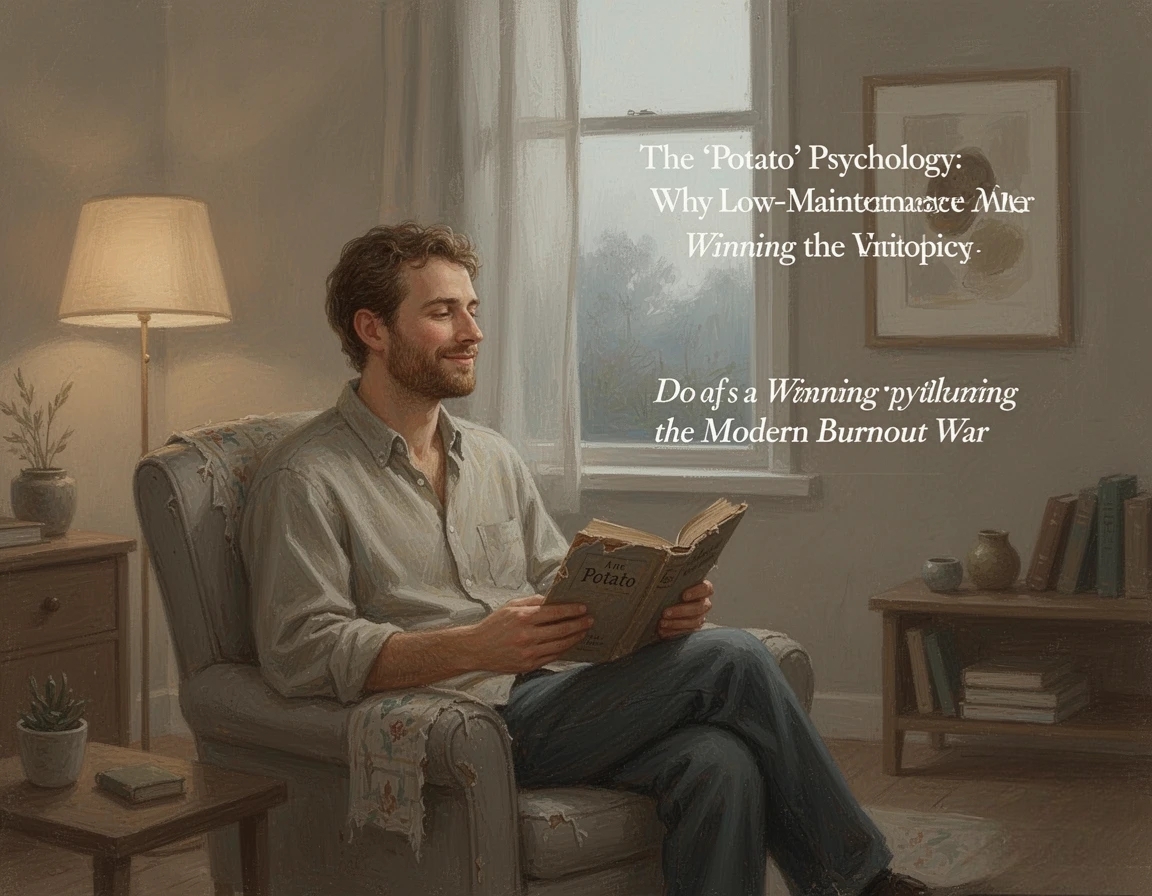
Introduction
In a world obsessed with optimization, hustle culture, self-branding, and endless productivity hacks, a surprising personality type is quietly gaining attention: the “Potato” man.
No, this is not an insult.
The internet’s version of the “Potato” personality describes men who live simply, avoid unnecessary drama, require little external validation, and often appear strangely content doing very ordinary things. They may enjoy staying home, wearing the same clothes for years, keeping small social circles, and finding happiness in routines that many people consider boring.
Yet during an age of emotional exhaustion, workplace burnout, social fatigue, and digital overload, these low-maintenance men seem to be coping better than expected.
Why?
Psychologists are increasingly studying how simplicity, reduced stimulation, lower social comparison, and emotional regulation affect mental resilience. The answer may explain why the “Potato” mindset is unexpectedly thriving in the modern burnout era.
What Is “Potato Psychology”?
“Potato Psychology” is not an official clinical term.
Instead, it is an internet label describing people—mostly men in this context—who possess extremely low-maintenance lifestyles and minimal emotional demands.
These individuals often display traits such as:
Comfort with solitude
Low need for social approval
Simple daily routines
Limited material ambitions
Reduced emotional drama
Preference for peace over excitement
Contentment with repetition
They are often described jokingly as men who can:
Sit quietly for hours
Wear identical outfits repeatedly
Eat the same meals regularly
Avoid social conflicts
Stay home happily
To outsiders, they may appear unambitious.
But psychologically, they may possess something modern society desperately lacks: recovery capacity.
The Burnout Age: Why Everyone Is Exhausted
Modern Life Is Designed for Overstimulation
Humans evolved in environments with limited information.
Modern life delivers:
Hundreds of notifications
Continuous news cycles
Social media comparison
Economic uncertainty
Career pressure
Constant self-improvement demands
The brain never fully rests.
Many people wake up already mentally exhausted.
This creates chronic stress conditions where attention becomes fragmented and emotional energy declines.
Burnout Is No Longer Just a Workplace Problem
Burnout used to describe work exhaustion.
Today it extends into:
Social Burnout
People become tired of:
Texting constantly
Maintaining online identities
Endless social obligations
Relationship management
Decision Burnout
Modern humans make thousands of micro-decisions daily:
What to wear
What to post
Which content to consume
Which goals to pursue
Mental energy gets depleted.
Emotional Burnout
People are expected to:
Be productive
Be emotionally available
Stay informed
Improve continuously
The pressure never stops.
Why Low-Maintenance Men Adapt Better

They Reduce Decision Fatigue
Many low-maintenance men unintentionally eliminate unnecessary choices.
Examples include:
Repeating meals
Simple wardrobes
Fixed schedules
Limited possessions
This resembles a concept called decision minimization.
The fewer trivial decisions you make, the more mental energy remains for important tasks.
Some highly successful individuals use similar systems deliberately.
The “Potato” personality simply arrives there naturally.
They Resist Social Comparison
Modern burnout is strongly linked to comparison culture.
Social media encourages people to compare:
Wealth
Fitness
Relationships
Careers
Lifestyles
Low-maintenance individuals often participate less.
Their thinking becomes:
“I have enough.”
This mindset acts like psychological armor.
Because if your happiness depends less on external ranking, stress decreases.
Simplicity Lowers Cognitive Load
Cognitive load means the total amount of mental effort your brain manages.
Complex lifestyles increase load.
Examples:
High-load living:
Multiple side hustles
Constant networking
Heavy social commitments
Endless goals
Low-load living:
Stable routines
Predictable schedules
Few obligations
The “Potato” man often lives closer to the second model.
Result?
More mental recovery.
The Hidden Strength of Emotional Stability
Boring Is Becoming Valuable
Modern culture celebrates excitement.
But excitement is expensive.
It requires:
Time
Money
Energy
Attention
Low-maintenance men often enjoy ordinary moments:
Tea alone
Gaming quietly
Walking
Watching old shows
Simple hobbies
Psychologically this creates emotional stability.
They need less stimulation to feel okay.
That is a major advantage.
They Often Have Lower Validation Needs
External validation addiction fuels anxiety.
Many people constantly seek:
Likes
Recognition
Attention
Approval
Low-maintenance personalities frequently operate differently.
Their reward system relies more on internal comfort.
Examples:
“I enjoyed today.”
“I rested.”
“I’m okay.”
This reduces emotional volatility.
The Science of Low-Stimulation Living
The Brain Was Not Built for Endless Input
Humans evolved under conditions of scarcity.
Now we face information overload.
Too much stimulation can lead to:
Attention fatigue
Anxiety
Sleep problems
Emotional exhaustion
Low-maintenance lifestyles accidentally mimic psychological recovery systems.
These include:
Reduced Inputs
Less noise means:
Better focus
Lower stress
Improved recovery
Repetition
Routines reduce uncertainty.
The brain likes predictability.
Quiet Time
Silence helps restore mental energy.
Many “Potato” personalities naturally create this environment.
Why Minimal Expectations Create More Happiness

Happiness Is Sometimes an Expectation Problem
High expectations increase disappointment risk.
Modern culture promotes:
Extraordinary success
Constant growth
Perfect lifestyles
Low-maintenance men often expect less.
This sounds negative—but psychologically it may be protective.
Simple expectation model:
Food + peace + stability = good day
Complex expectation model:
Career growth + social success + fitness goals + side income + perfect relationships = success
One is easier to sustain.
Satisfaction vs Excitement
Society chases excitement.
The “Potato” mindset prioritizes satisfaction.
Difference:
Excitement is temporary.
Satisfaction is sustainable.
Excitement demands novelty.
Satisfaction accepts repetition.
That distinction matters during burnout periods.
The Rise of Quiet Masculinity
Men Are Quietly Rejecting Hustle Culture
Many men are stepping away from:
Hyper-productivity
Status competition
Luxury signaling
Constant ambition
Instead they prioritize:
Peace
Stability
Time
Mental rest
This shift is sometimes criticized as laziness.
But it may actually be adaptive behavior.
Rest Is Becoming a Survival Skill
Previous generations often glorified exhaustion.
Modern research increasingly connects chronic stress with:
Reduced focus
Emotional fatigue
Sleep disruption
Health decline
Low-maintenance men often protect rest instinctively.
Examples:
Declining unnecessary plans
Limiting obligations
Keeping routines simple
This preserves energy reserves.
The “NPC” Insult and Why It Misses the Point
Internet culture sometimes mocks quiet men as:
NPCs
Boring
Unambitious
Passive
Yet psychological resilience does not always look impressive.
Often it looks ordinary.
People who survive stress well usually have:
Stable habits
Emotional control
Consistent routines
Lower chaos
These traits rarely appear glamorous.
But they work.
Are Low-Maintenance Men Actually Happier?
Not Always
Being low-maintenance does not automatically equal happiness.
There are risks.
Extreme simplicity may become:
Avoidance
Some people withdraw because of:
Fear
Anxiety
Depression
That differs from intentional peace.
Isolation
Too little social connection can hurt wellbeing.
Humans still need relationships.
Lack of Growth
Comfort zones may become restrictive.
Balance matters.
Healthy Simplicity vs Emotional Shutdown
Healthy “Potato” psychology:
Chooses peace
Enjoys simplicity
Maintains relationships
Protects energy
Unhealthy version:
Emotional numbness
Isolation
Withdrawal
Avoidance
The difference is intention.
Peace is healthy.
Disconnection is not.
The Digital World Rewards Attention — Potato Men Protect It
Attention Is the New Currency
Every app competes for human focus.
Platforms profit from:
Engagement
Notifications
Emotional reactions
Low-maintenance men often unintentionally resist this.
They may:
Ignore trends
Limit posting
Avoid online competition
This protects attention.
Attention protection increasingly predicts wellbeing.
The Power of Doing Less
Modern culture says:
Do more.
Optimize more.
Achieve more.
The “Potato” mindset asks:
“What if enough is enough?”
That question challenges modern burnout directly.
Doing less sometimes produces:
Better recovery
Lower anxiety
More clarity
Greater contentment
Why Women and Society Are Noticing This Shift
Emotional Availability Is Changing
Traditionally, status signaled value.
Now emotional stability matters more.
Traits increasingly appreciated include:
Calmness
Reliability
Low drama
Consistency
Low-maintenance personalities often possess these naturally.
Predictability Feels Safe
Burnout creates chaos.
People begin valuing stability.
Predictable individuals provide:
Emotional safety
Reduced conflict
Reliability
What once looked boring may now feel attractive.
The Minimalist Masculinity Trend
A new masculine archetype is emerging.
Not hyper-aggressive.
Not endlessly ambitious.
Instead:
Quiet
Stable
Self-contained
Energy-conscious
Its priorities:
Sleep
Mental peace
Simplicity
Personal freedom
This resembles minimalist living applied to identity.
Lessons Everyone Can Learn From “Potato” Psychology

You do not need to become a low-maintenance minimalist to benefit.
But some principles help.
Reduce Decision Load
Try:
Meal planning
Simpler wardrobes
Fixed routines
Less decision fatigue means more energy.
Lower Stimulation
Reduce:
Notifications
Doomscrolling
Constant inputs
Create mental quiet.
Redefine Success
Ask:
“What is enough for me?”
The answer may reduce stress immediately.
Practice Contentment
Small pleasures matter:
Tea
Reading
Walks
Rest
Silence
Happiness is often hidden in ordinary experiences.
Protect Energy Like Money
Time and energy are limited resources.
Spend them intentionally.
Avoid:
Unnecessary drama
Excess obligations
Constant comparison
The Future Belongs to Sustainable People

For decades society admired people who could push endlessly.
Now many are exhausted.
The next advantage may belong to those who recover well.
People who know how to:
Rest
Simplify
Disconnect
Stabilize
The low-maintenance man once looked unremarkable.
Today he may represent adaptation.
Conclusion
“The Potato Psychology” phenomenon is not really about laziness.
It is about sustainability.
In a culture addicted to speed, stimulation, and constant achievement, low-maintenance men often protect something increasingly rare: mental energy.
Their quiet routines, simple pleasures, and reduced demands may appear boring from the outside.
But psychologically, they often create conditions that resist burnout.
The modern world rewards attention extraction.
The “Potato” mindset protects attention.
And in the burnout era, that may be one of the strongest survival strategies of all.
FAQs
1. What is Potato Psychology?
“Potato Psychology” is an informal internet term describing low-maintenance people who prefer simple routines, low stimulation, and peaceful lifestyles.
2. Are low-maintenance men happier?
Not always, but reduced stress, fewer comparisons, and stable routines may improve wellbeing.
3. Does simplicity reduce burnout?
Research suggests simpler routines and reduced cognitive load can help preserve mental energy and reduce stress.
4. Is being low-maintenance the same as being lazy?
No. Low-maintenance behavior can reflect energy management and emotional stability rather than lack of ambition.
5. Why are simple lifestyles becoming popular?
Burnout, overstimulation, and digital fatigue are causing more people to value peace, rest, and sustainability.
6. Can anyone adopt Potato Psychology habits?
Yes. Reducing stimulation, simplifying routines, and protecting attention can benefit many people.


You must be logged in to post a comment.