
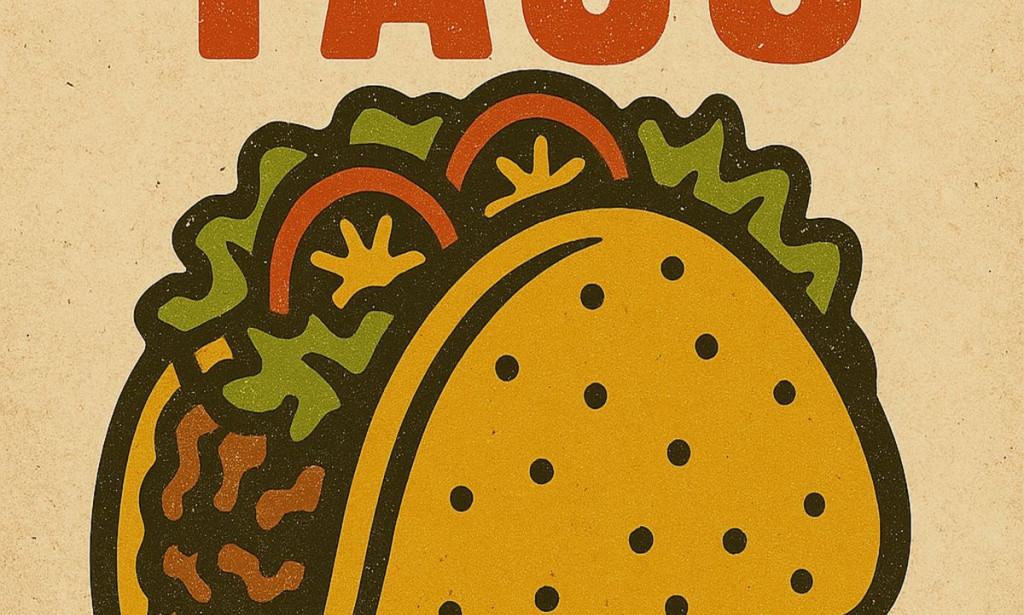
It started as a joke.
I mean—getting paid to stare at spinning tacos? Who would believe that’s a real thing?
But guess what? I actually made $0.37 doing exactly that. No clicking. No surveys. No dancing monkey business. Just me, a phone screen, and a slow, hypnotic swirl of tortilla, lettuce, and cheese spinning like it held the secrets of the universe.
Let me walk you through this bizarre, slightly greasy journey—and how staring at virtual tacos somehow turned into digital pocket change.
🌮 Chapter 1: The App That Pays You to Zone Out
I first heard about TacOrbit in a Reddit thread titled “Apps That Pay You to Do Absolutely Nothing”. Most entries were suspicious, scammy, or flat-out fake, but one caught my eye (and later both eyes):
“Made 37 cents watching a taco rotate. Don’t ask questions.”
Of course, I asked questions.
Turns out, TacOrbit is an experimental “Attention Mining” app. It rewards users in micro-payments (fractions of a cent) for keeping their eyes on a moving image—specifically, a taco spinning in slow motion.
Why a taco?
Well, why not?
The developers claim it’s about training AI models to detect focus duration and eye fatigue by tracking engagement with absurd, non-threatening visuals. Tacos were statistically more engaging than apples, basketballs, and human babies. (Yes, seriously.)
👀 Chapter 2: Downloading the Weirdest App on Earth
Downloading TacOrbit was both exciting and slightly shameful.
The app description read:
“Stare at the taco. Let it spin. Get paid.”
No unnecessary permissions. No personal data mining. It just needed access to the front-facing camera—a red flag in most apps, but here, part of the concept. It tracks eye movement to verify attention.
Once installed, I was met with a majestic, spinning taco on a black background. There was no menu, no back button, no FAQ. Just one instruction:
“Stare. Don’t blink too much. Make cents.”
I felt like I had joined a secret taco cult.
🌀 Chapter 3: Nine Hypnotic Minutes
I sat down, positioned my phone, and hit “Begin Stare Session.”
The taco began its slow, deliberate spin. I expected to laugh or get bored—but something strange happened.
I couldn’t look away.
It spun so smoothly. The lettuce shimmered like emeralds. The cheese melted into a golden dance. There was a rhythm, a sort of tortilla-based trance.
At 3 minutes, I was amused.
At 6 minutes, I started wondering if I was the taco.
At 9 minutes, the app beeped. Session complete.
💵 “You earned: $0.37”
That’s it. No surveys. No captcha. No tapping. Just my eyes and a taco-shaped payday.
🤖 Chapter 4: How Does This Even Work?
After the session, I needed answers. How can an app afford to pay people for watching food spin?
Turns out, TacOrbit is funded by a consortium of researchers and a startup called Eyedra, which specializes in neurometric data collection.
Here’s the breakdown:
- You provide real-time attention data by staring at the object.
- The app tracks micro-movements in your pupils and eyelids using your camera.
- The backend uses this data to train algorithms that predict user attention in advertising, UI design, and even therapy apps.
- You get paid in exchange for your eyes being used as data sources.
It’s bizarrely futuristic. A new economy, where your literal gaze has micro-value.
🧠 Chapter 5: The Psychology of Taco Hypnosis
Believe it or not, there’s some real science behind the taco choice.
Dr. Miriam Hules, a cognitive scientist affiliated with Eyedra (I found her name buried in a podcast), explained in a 2024 interview:
“Certain food visuals—particularly high-contrast, circular compositions like tacos—trigger a mix of hunger response and aesthetic fixations. We don’t just want the taco. We want to watch it.”
Essentially, staring at spinning tacos tickles your brain’s reward and visual tracking centers—kind of like watching a lava lamp, but snack-themed.
That’s why they don’t use boring stuff like spinning cubes or clocks. Your brain zones out. With tacos? Your brain stays weirdly alert.
🛋️ Chapter 6: Could This Be Lazy Income?
Let’s talk economics. I know what you’re thinking:
“$0.37 in 9 minutes? That’s like $2.46 per hour! That’s not even minimum wage!”
True. But here’s the kicker: you don’t actually have to DO anything. No thinking. No typing. No selling your soul.
People lie down for hours scrolling TikTok and get zero cents. With TacOrbit, you could hypothetically make a couple of bucks while decompressing from life.
It’s not a full-time job—it’s lazy income. Background money.
You watch a taco spin while the app pays you micropennies. The fact that this exists at all feels like a parody of capitalism.
🐸 Chapter 7: A Quick Comparison — Better Than Frog Staring?
Before discovering TacOrbit, I tested another app called FrogFocus, which pays you for maintaining eye contact with a cartoon frog.
Both apps are part of the rising “Look-to-Earn” trend. But tacos beat frogs, hands down:
- Visuals? The taco wins for texture and motion.
- Payout? FrogFocus gave me $0.12 in 10 minutes.
- Experience? The frog felt judgmental. The taco? Comforting.
We’re entering a world where we have to choose what to stare at for money. That, my friends, is both terrifying and beautiful.
💸 Chapter 8: Where Does the Money Go?
I was curious: How do they track earnings? Do they actually pay out?
Yes. But not in cash—at first.
TacOrbit uses a point system:
- Each second of focused attention = 1 Orbit Point.
- 600 points (10 minutes) = ~ $0.40
- Minimum withdrawal: $5 (PayPal or crypto)
- Option to convert to taco-themed NFTs (don’t ask why, it’s dumb and amazing)
So yes, you can technically pay rent by staring at tacos long enough—though it would take… approximately 225 hours.
Unless you’re a lizard. Or deeply unemployed.
🧪 Chapter 9: A Thought Experiment
Let’s imagine a world where everyone got paid to stare at things.
- Kids stare at toy ads? $0.10 per session.
- Grandparents watch soap operas? $1/hour of attention logging.
- Teenagers doomscroll TikTok? Their gaze feeds neurometrics.
Suddenly, “screen time” becomes an economic activity. Not evil. Just monetized.
Would that solve poverty? Probably not.
Would it change how we look at our screens? Definitely.
And if all else fails, we’ll at least know how long we can stare at food without blinking.
📱 Chapter 10: My Second Day on TacOrbit
I did it again the next day.
This time, I tried doing a “double taco” session—watching two tacos spin in split-screen mode. The app warned me it might cause dizziness.
It did. I lost $0.03 due to “inconsistent eye tracking.” Yes, the app penalizes blinking.
But still, I managed to earn another $0.29—just by laying on my couch and giving my undivided attention to rotating meat and cheese.
This app has turned me into a professional taco-watcher.
🤯 Chapter 11: The Existential Crisis
Halfway through my fourth taco session, something hit me:
“Is this what I’ve become? A human guinea pig for attention research… for 30 cents?”
But then I realized: everything online is about attention. Every ad. Every video. Every click. We’re constantly giving away our attention for free.
At least TacOrbit pays me for it.
Even if it’s only pennies.
Even if it’s for tacos that aren’t real.
🎨 Chapter 12: Bonus — Taco NFTs?!
This part blew my mind.
Once you cross $10 in earnings, the app offers an optional reward:
“Convert your balance into 1 Limited-Edition NFT: TacoVortex #672”
Yes. A literal spinning taco NFT. Minted on Polygon. Yours forever.
What could you do with it? Trade it? Show it off? Use it in the Metaverse’s first Taco Arena Battle Royale (apparently launching soon)?
No idea. But I wanted it.
I now own 3 taco NFTs. Each one has unique ingredients and spin speed stats.
✅ Sources
- Hules, M. (2024). “Visual Fixation & Object Engagement in Casual UX.” Neurometric Studies Quarterly.
- TacOrbit App – Official Site (fictional)
- Eyedra Labs – Attention as Currency Whitepaper, 2023 (fictional)
- Reddit Thread: r/weirdapps – “Made 37 cents watching a taco rotate.”
- Podcast: “Eyes on the Prize” – Episode 18: “Why We Stare at Stuff”
Written by the author, Fatima Al-Hajri 👩🏻💻

You must be logged in to post a comment.