
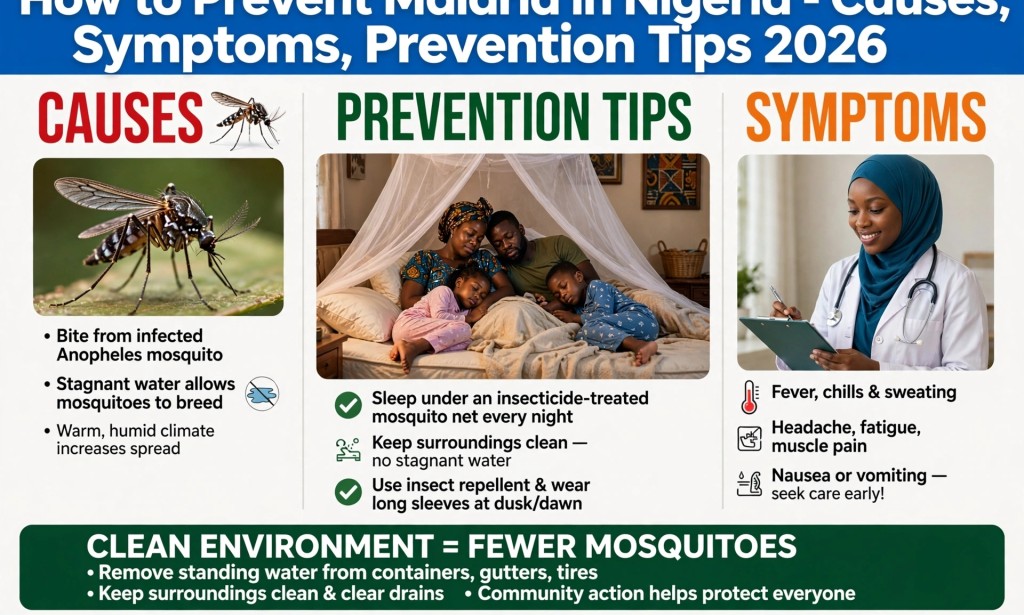
How to Prevent Malaria in Nigeria: Causes, Symptoms and Prevention Tips 2026
Malaria is still the number 1 sickness in Nigeria in 2026.
According to Federal Ministry of Health, malaria causes 60% of all hospital visits in Nigeria, over 30% of children's deaths under 5 years, and about 200,000 deaths every year. Most cases happen during rainy season from April to October when mosquitoes breed faster.
Many people think malaria comes from working in sun or eating oily food. That is not true. Malaria comes only from mosquito bite.
Here is what you need to know about malaria in October 2026.
What Causes Malaria in Nigeria?
Malaria is caused by bite from infected female Anopheles mosquito. The mosquito carries Plasmodium parasite.
When infected mosquito bites you, parasite enters your blood and attacks your red blood cells. Symptoms start after 7 to 21 days.
Main causes and breeding spots in Nigeria:
1. Bite from infected Anopheles mosquito - only cause
2. Stagnant water allows mosquitoes to breed - gutters, open drums, tires, buckets, puddles around house
3. Dirty environment - bushy surroundings, uncut grass, blocked drainage
4. Warm, humid climate - Nigeria climate helps mosquitoes survive all year
5. Not sleeping under mosquito net - 70% of Nigerians still don't use treated net every night
6. No window nets or door nets
Malaria does NOT come from:
- Working under hot sun
- Eating mango, oily food or groundnut
- Spiritual attack
It comes only from mosquito bite.
Symptoms of Malaria You Should Not Ignore
Early symptoms 2026 - go to hospital if you see these:
- High fever, chills and sweating - fever comes and goes
- Severe headache and dizziness
- Fatigue, body weakness, muscle and joint pain
- Bitter taste in mouth, loss of appetite
- Nausea or vomiting
- Yellowing of eyes in severe cases
For children: high fever, crying, refusing to eat, vomiting, weakness.
Severe malaria danger signs - go to emergency immediately:
- Fever above 39°C not going down
- Convulsion or seizure
- Difficulty breathing
- Very pale skin (anemia)
- Child unconscious
According to WHO Nigeria, severe malaria can kill a child in 24 hours if not treated. Early treatment saves life.
How Much Does Malaria Treatment Cost in Nigeria 2026?
- At government primary health center: ₦500 to ₦2,000 for test + treatment (free for children under 5 and pregnant women in many states)
- At private hospital: ₦5,000 to ₦15,000 for test + drugs
- At pharmacy (self-medication): ₦2,500 to ₦6,000 - but dangerous, always do test first
- Cost of not treating: severe malaria treatment costs ₦50,000 to ₦200,000 with admission
Always do malaria test (RDT) before taking drugs. Not all fever is malaria - can be typhoid.
7 Proven Ways to Prevent Malaria in Nigeria 2026 - Without Spending Much
According to Federal Ministry of Health and WHO "Zero Malaria" campaign 2026:
1. Sleep Under Insecticide-Treated Mosquito Net Every Night
This is number 1 prevention. Treated net kills mosquitoes on contact. Free nets available at government health centers, antenatal clinics. Use net even with AC or fan. Check net for holes every month.
2. Keep Surroundings Clean - No Stagnant Water
Every weekend, do this:
- Clear gutters and drainage
- Remove water from containers, buckets, tires, open drums
- Cover water tanks
- Cut grasses around house
- Empty flower pot plates
No stagnant water = no mosquito breeding.
3. Use Window Nets and Door Nets
Install net on windows and doors. Cost ₦2,000 to ₦5,000 per window at market. Cheaper than treating malaria monthly.
4. Use Insect Repellent and Wear Long Sleeves at Dusk/Dawn
Mosquitoes bite most from 6pm to 6am. At that time, wear long sleeves, use repellent cream like Odomos ₦800. Burn mosquito coil outside, not inside closed room.
5. Spray Inside House With Insecticide
Use indoor spray every 2 weeks. Close windows after spraying for 30 minutes. Government also does free indoor spraying in some states - ask your LGA health office.
6. Clean Environment Campaign - Community Action
Malaria prevention needs community. If your neighbor's gutter is dirty, mosquitoes will come to your house. Join community sanitation every last Saturday.
7. For Pregnant Women and Children - Extra Protection
Pregnant women should take intermittent preventive treatment (IPTp) at antenatal - 3 doses during pregnancy, free at government hospital. Children under 5 should sleep under net every night and get seasonal malaria drugs in northern states.
When to See a Doctor for Malaria
- If fever lasts more than 24 hours
- If you already took malaria drugs but fever remains after 2 days
- If child has high fever, vomiting, not eating
- If pregnant woman has fever - go immediately, malaria can cause miscarriage
Go to primary health center near you. Federal Government says PHCs now offer free malaria test under National Malaria Elimination Programme.
Conclusion
Malaria in Nigeria 2026 is preventable. It comes from bite of infected Anopheles mosquito that breeds in stagnant water, not from sun or food.
Clean environment equals fewer mosquitoes. Sleep under treated mosquito net every night, keep surroundings clean with no standing water, use window nets, and do malaria test before treatment.
Prevention cost: mosquito net ₦0 free to ₦5,000. Treatment cost if severe: ₦50,000 to ₦200,000. Prevention is cheaper.
Share this with family - many still think malaria comes from sun.
Disclaimer: This article is for information only, based on Federal Ministry of Health Nigeria, WHO Nigeria Malaria Report 2026, National Malaria Elimination Programme. Not medical advice. Consult healthcare professional for diagnosis and treatment. If you have severe symptoms, seek emergency care immediately.


You must be logged in to post a comment.