

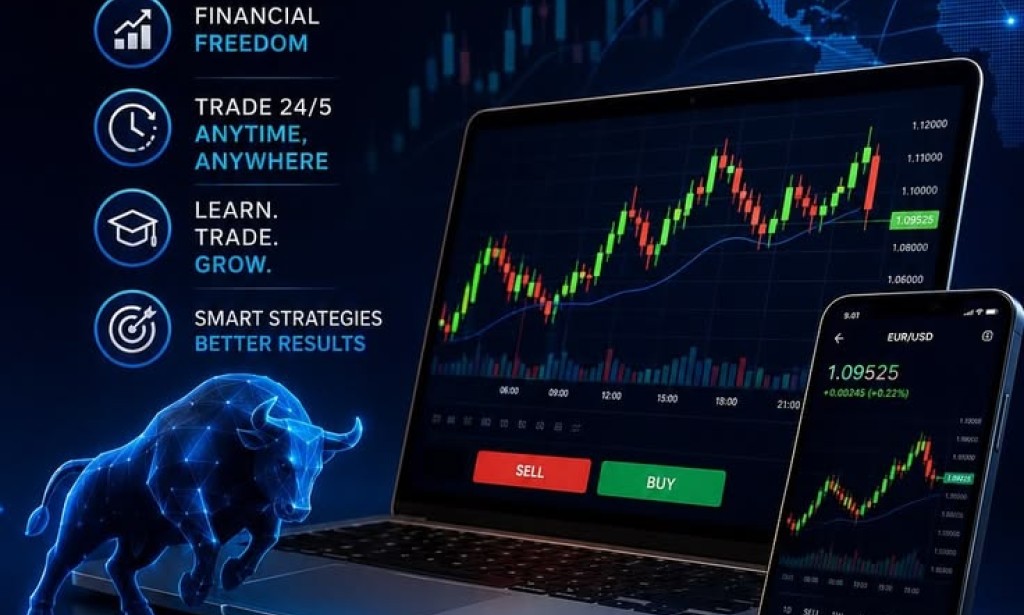
1. Understand the Business Before Investing
Nobody establishes a business without first understanding what the business involves. The same principle applies to Forex trading.
Before investing your money, you must understand:
-
What Forex trading means.
-
How currency pairs work.
-
How to read price charts.
-
How to identify market trends.
-
How to use technical indicators.
-
How to manage trading risks.
-
How economic news affects currency prices.
You should invest time in learning before investing your money.
2. Start with a Business Plan
Every serious business needs a plan. Forex trading should not be an exception.
Your trading plan should explain:
-
The amount of capital you intend to invest.
-
The currency pairs you intend to trade.
-
The trading strategy you will use.
-
Your entry and exit conditions.
-
Your stop-loss and take-profit levels.
-
The maximum amount you are willing to risk.
-
Your daily and weekly trading limits.
A trading plan helps you avoid making decisions based on excitement, fear or greed.
3. Protect Your Trading Capital
In business, capital is an important asset. Without capital, it becomes difficult to continue operating.
The same applies to Forex trading. Your first responsibility should be protecting your capital rather than chasing profits.
Never risk money meant for feeding, rent, school fees, medical expenses, or other essential needs.
A sensible approach for a beginner is to risk only a small percentage of trading capital on each trade, such as 1% or less.
For example, if your trading capital is $100, risking 1% means that your planned loss on a trade should not exceed $1.
Remember that protecting your capital allows you to continue learning and trading.
4. Treat Profits as Business Returns
A business owner does not expect to make huge profits every day. Some days bring profits, while other days bring losses.
Forex trading works in the same way.
There will be winning trades and losing trades. What matters is whether your trading strategy produces positive results over a sufficiently large number of trades after costs.
Do not measure your success by one profitable trade. Measure it by your consistency, discipline, and long-term performance.
5. Avoid Emotional Trading
Emotions are among the greatest enemies of a Forex trader.
Fear may prevent you from taking a valid trading opportunity, while greed may make you hold a profitable position for too long.
Revenge trading can also make you increase your trading volume after a loss in an attempt to recover your money immediately.
A professional trader follows a trading plan instead of allowing emotions to control decisions.
Learn to accept losses. A controlled loss is part of doing business.
6. Use Demo Accounts Before Real Money
Before opening a live trading account, practice with a demo account.
A demo account allows you to learn how the market works without risking real money.
Use this opportunity to:
-
Practice identifying entry points.
-
Understand stop-loss and take-profit orders.
-
Test your trading strategy.
-
Learn how to manage trading positions.
-
Develop patience and discipline.
Move to a live account only when you have demonstrated consistent discipline and understand the risks involved.
7. Keep Proper Business Records
Every business needs proper records to measure performance.
As a Forex trader, maintain a trading journal showing:
-
Date and time of each trade.
-
Currency pair traded.
-
Entry and exit prices.
-
Reason for entering the trade.
-
Stop-loss and take-profit levels.
-
Profit or loss recorded.
-
Lessons learned.
These records will help you identify your mistakes, improve your strategy, and understand your trading performance.
8. Understand That Forex Trading Involves Risk
Forex trading is not a guaranteed source of income.
The market can move against your position, and leverage can increase both profits and losses. You may lose some or all of your trading capital.
Avoid borrowing money to trade, paying people who promise guaranteed profits or joining schemes that promise fixed daily returns.
Successful trading requires patience, continuous learning and responsible risk management.
Conclusion
Forex trading should be approached as a business that requires knowledge, preparation, discipline, and accountability.
Do not enter the market simply because someone has shown you screenshots of profits or promised you financial freedom.
Learn the business, develop a strategy, protect your capital, maintain proper records, and evaluate your performance.
Remember:
Do not trade Forex because you urgently need money. Learn to trade because you understand the business.
The objective should not be to make money in one day but to develop the knowledge and discipline required to make informed trading decisions over time.











































You must be logged in to post a comment.