

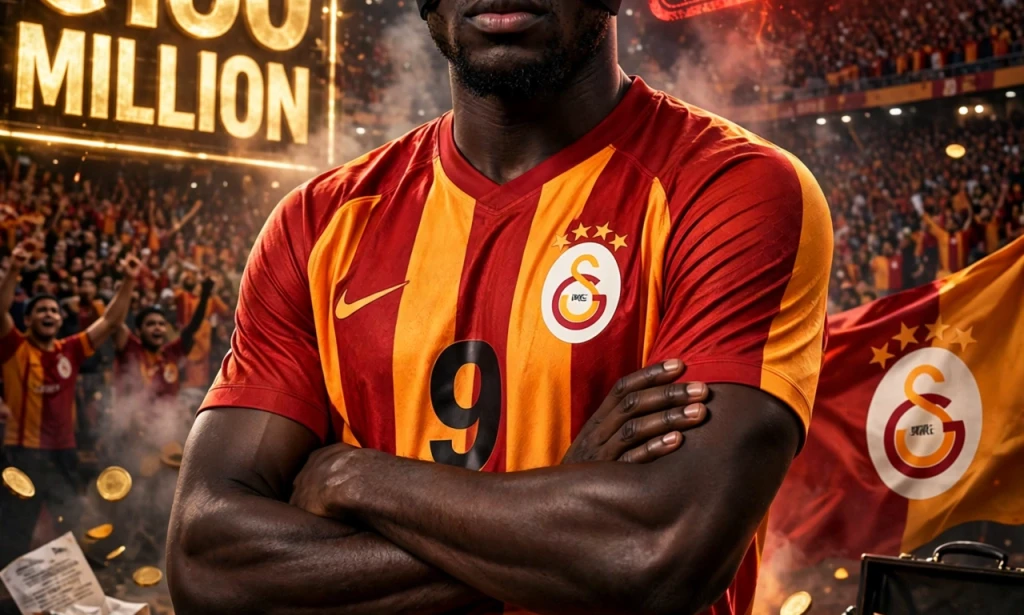
In modern football, €150 million is life-changing money for any club. It can buy a new stadium stand, pay debts, and sign five new players.
Yet, Galatasaray reportedly said no to it.
The player in question was Victor Osimhen, the Nigerian striker they signed from Napoli for €75 million, the most expensive transfer in Turkish football history. When a huge offer of around €130 million, later rising to €150 million, arrived from Saudi Arabia, many expected Galatasaray to accept instantly and double their money.
They did not. Here is why that decision makes perfect business sense.
THE PURCHASE THAT CHANGED EVERYTHING
Galatasaray did not just buy a striker. They bought a brand.
When Osimhen arrived, ticket sales exploded. Jersey sales with his name and number 9 became the highest in the club's history. Social media followers grew by millions. Sponsors who had ignored Turkish football suddenly wanted to be associated with Galatasaray.
That is not a normal signing. That is a business acquisition.
If Galatasaray had sold him after one season, they would have made a €75 million profit on paper. But they would have lost the engine that was driving all their other income.
A PLAYER IS MORE THAN A TRANSFER FEE
Many fans only look at the transfer fee. Clubs look at the total value.
Osimhen gives Galatasaray:
1. Goals That Mean Money
Every goal in the Turkish Super Lig keeps them at the top. Every goal in the UEFA Champions League means millions in prize money, TV rights, and bonuses. A top striker guarantees Champions League qualification, which alone is worth over €30 million per season.
2. Commercial Revenue
Osimhen's face sells shirts, boosts sponsorship deals, and fills the 52,000-capacity Rams Park every week. A full stadium means more ticket money, more food and merchandise sales, and a better atmosphere that attracts even more sponsors.
3. Global Attention
Before Osimhen, how many people in Nigeria, Africa, and Asia watched Galatasaray every week? Today, millions do. That global attention is exactly what sponsors pay for.
Selling him for €150 million would have been a one-time payment. Keeping him is a continuous income stream.
WHY €150 MILLION WAS NOT ENOUGH
To replace Osimhen, Galatasaray would need to spend at least €60 million to €80 million on another world-class striker. There is no guarantee that new striker would score the same goals, sell the same shirts, or bring the same excitement.
They would also lose their competitive advantage over rivals like Fenerbahce and Besiktas. In Turkey, winning the league means Champions League money. Losing Osimhen could mean losing the league, and losing that money too.
In business terms, Galatasaray did a simple calculation: The cost of losing Osimhen is higher than the profit from selling him.
THE LESSON FOR FOOTBALL AND BUSINESS
Galatasaray's decision teaches a powerful business lesson: Not every asset should be sold, even at a huge profit.
Some assets are the reason other assets make money. Osimhen is that kind of asset for Galatasaray. He is not just an employee. He is the product, the marketing, and the revenue driver all in one.
Smart businesses know the difference between a quick profit and long-term value. Galatasaray chose long-term value.
CONCLUSION
Was rejecting €150 million a risk? Yes.
If Osimhen gets injured or his form drops, his value could fall. But for now, Galatasaray are betting that keeping a superstar is worth more than selling one.
And in the business of football, that bet is looking very smart.


You must be logged in to post a comment.