

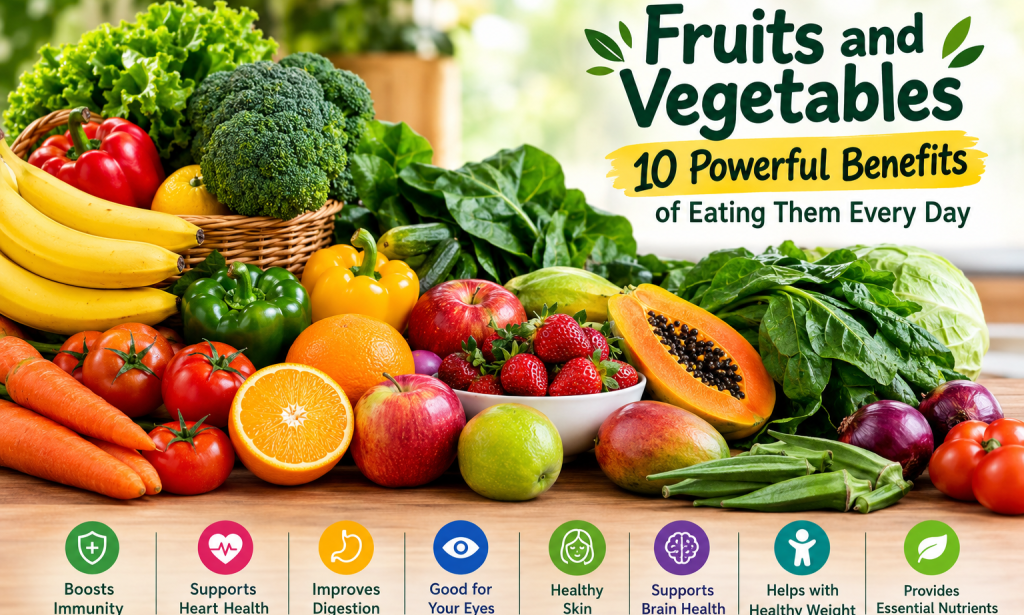
Fruits and Vegetables: 10 Powerful Benefits of Eating Them Every Day
Introduction
Good health begins with the everyday choices we make, especially the foods we eat. Among the most valuable foods for maintaining a healthy lifestyle are fruits and vegetables. From sweet oranges and juicy watermelons to green spinach and crunchy carrots, these natural foods supply nutrients that help the body function properly.
Unfortunately, many people do not eat enough fruits and vegetables because of busy schedules, food preferences, or limited awareness of their benefits. Including a variety of these foods in daily meals is a simple step towards improving nutrition and supporting long-term health.
In this article, we will explore ten benefits of eating fruits and vegetables regularly and practical ways to make them part of your everyday diet.
1. They Provide Essential Vitamins and Minerals
Fruits and vegetables contain many vitamins and minerals that the body needs. Oranges, guavas, and mangoes provide vitamin C, while carrots and sweet potatoes contain beta-carotene, which the body can convert into vitamin A.
Leafy vegetables such as spinach also supply nutrients, including folate and vitamin K. Eating different types helps you obtain a wider range of essential nutrients.
2. They Support a Healthy Immune System
The immune system protects the body against infections and other harmful organisms. Nutrients such as vitamins A and C, along with minerals like zinc, play important roles in normal immune function.
Fruits such as oranges, pawpaw, and guava, combined with vegetables such as broccoli and spinach, can contribute to a balanced diet that supports the body's natural defences.
However, no single fruit or vegetable can prevent every illness. Good nutrition works alongside adequate sleep, hygiene, physical activity, and appropriate medical care.
3. They Improve Digestion
Many fruits and vegetables contain dietary fibre, which supports healthy digestion and helps prevent constipation.
Apples, pears, beans, carrots, and leafy vegetables can contribute fibre to your diet. Fibre also supports beneficial bacteria in the digestive system.
To increase your fibre intake comfortably, add these foods gradually and drink enough water throughout the day.
4. They Support Heart Health
A diet rich in fruits and vegetables can contribute to better cardiovascular health. Many contain potassium, fibre, and plant compounds that support healthy blood pressure and other aspects of heart health.
Bananas, oranges, tomatoes, and leafy vegetables are examples of foods that can form part of a heart-friendly eating pattern.
The benefits are greatest when these foods are included in an overall balanced diet that also limits excessive salt and highly processed foods.
5. They Help Maintain Healthy Skin
Healthy skin depends on several factors, including nutrition, hydration, sleep, and protection from excessive sunlight.
Vitamin C supports collagen formation, which helps maintain the structure of the skin. Fruits such as guava, oranges, and pawpaw can provide vitamin C, while colourful vegetables supply other useful nutrients.
Eating a variety of fruits and vegetables can support skin health, although food alone cannot treat every skin problem.
6. They Support Healthy Eyes
Some vegetables and fruits contain nutrients that help maintain normal vision.
Carrots, pumpkin, and sweet potatoes provide beta-carotene, which the body converts into vitamin A. Leafy green vegetables also contain compounds such as lutein and zeaxanthin, which are associated with eye health.
Eating a variety of these foods helps provide nutrients needed for normal eye function.
7. They Contribute to Healthy Weight Management
Fruits and vegetables can be useful components of balanced meals because many are rich in water and fibre.
Whole fruits and vegetables can help meals feel satisfying while providing important nutrients. For example, adding vegetables to rice or beans, or choosing a piece of fruit as a snack, can improve the nutritional quality of your meals.
Healthy weight management should focus on adequate nourishment, balanced eating, and enjoyable physical activity rather than skipping meals or following extreme diets.
8. They Provide Antioxidants
Many fruits and vegetables contain antioxidants and other plant compounds that help protect cells from damage caused by unstable molecules known as free radicals.
Examples include vitamin C in citrus fruits, beta-carotene in orange-coloured vegetables, and various plant compounds in berries, tomatoes, and leafy greens.
Different foods contain different compounds, so eating a variety of colours is a practical way to benefit from a broader range of nutrients.
9. They Support Healthy Ageing
A balanced diet containing plenty of fruits and vegetables can contribute to long-term health. Their vitamins, minerals, fibre, and plant compounds support normal body functions and may help lower the risk of certain chronic diseases when consumed as part of a healthy overall eating pattern.
Building these habits early can make healthy eating easier to maintain throughout life.
10. They Encourage Better Eating Habits
Making fruits and vegetables a regular part of meals can help establish healthier eating routines.
For example, adding tomatoes, onions, and leafy vegetables to soups, serving vegetables with rice, or eating seasonal fruits between meals can improve dietary variety.
These habits do not require expensive ingredients. Locally available foods such as oranges, bananas, pawpaw, ugu, okra, carrots, and garden eggs can all contribute to a nutritious diet.
Practical Ways to Eat More Fruits and Vegetables
Here are seven simple suggestions:
1. Eat seasonal produce: Choose fruits and vegetables that are readily available and affordable.
2. Add vegetables to familiar meals: Include them in soups, stews, beans, rice, and other dishes.
3. Choose whole fruits: Eat whole fruit more often than drinking fruit juice because whole fruit generally provides more fibre.
4. Vary your colours: Combine green, red, yellow, and orange produce throughout the week.
5. Wash produce properly: Rinse fruits and vegetables thoroughly under clean running water before eating or preparing them.
6. Store them safely: Keep cut produce refrigerated where possible and avoid eating food that has spoiled.
7. Make gradual changes: Add one extra fruit or vegetable to your usual meals and build from there.
Conclusion
Fruits and vegetables are valuable components of a balanced diet. They supply essential nutrients, support digestion, contribute to heart and eye health, and help establish positive eating habits.
The good news is that healthy eating does not have to be complicated. By choosing a variety of affordable, locally available produce and including it regularly in your meals, you can take practical steps towards better nutrition.
Start with small changes, explore different fruits and vegetables, and make balanced eating a consistent part of your lifestyle. Your everyday food choices can make a meaningful contribution to your overall well-being.
Disclaimer: This article provides general educational information and is not a substitute for individual medical advice.


You must be logged in to post a comment.