

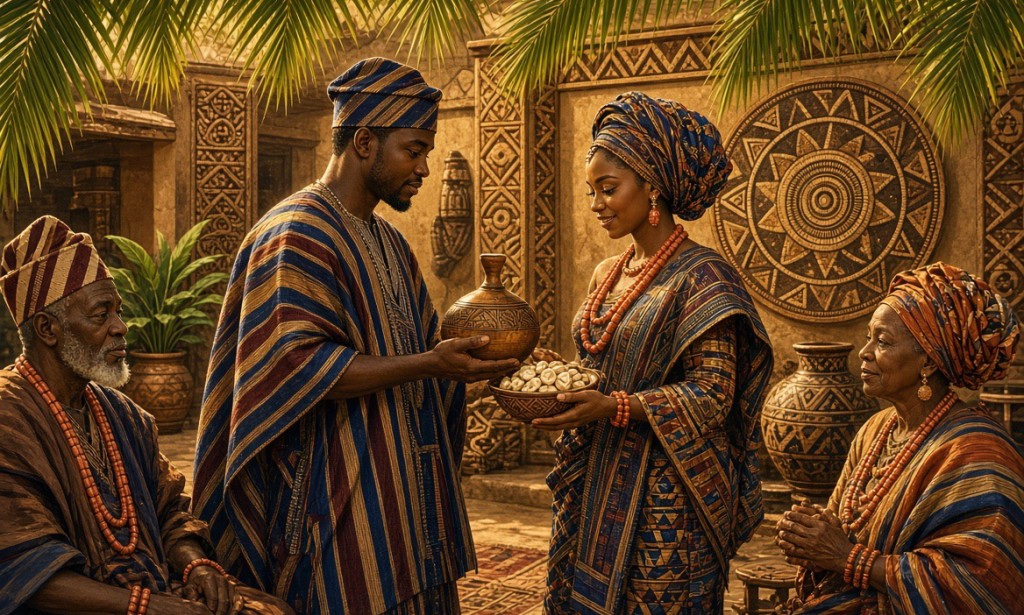
Ethics of Marriages in Yoruba Culture
Marriage in Yoruba culture is far more than a private contract between two individuals. It is a sacred, communal institution that binds families, lineages, and communities. Rooted in the southwestern region of Nigeria and parts of neighboring countries, Yoruba marital ethics emphasize character, mutual responsibility, respect for elders, lineage continuity, and social harmony. These values continue to shape both traditional practices and modern adaptations, even as Christianity, Islam, and Western influences have introduced new layers.
Philosophical Foundations: Character and Community
At the heart of Yoruba ethics is the concept of Ìwà (character) and the ideal of the Ọmọlúàbí a person of good character who embodies honesty, respect, patience, and responsibility. A successful marriage reflects not only on the couple but on the moral standing and reputation of both families. Families therefore invest heavily in assessing the background, conduct, and lineage of a prospective spouse.
Marriage is understood as the union of two extended families rather than an isolated romantic partnership. The saying that one marries not just a person but an entire household captures this reality. The bride becomes integrated into her husband’s family, and both sides assume ongoing obligations of support, protection, and accountability. Children are central to the purpose of marriage, ensuring the continuity of the lineage and the remembrance of ancestors.
Pre-Marital Ethics and the Role of Investigation
Traditional courtship was deliberate and collective. Families, often with the help of an Alárìnà (go-between or matchmaker), conducted thorough inquiries into the character, health, reputation, and social standing of both parties—though historically the scrutiny fell more heavily on the bride and her family. Issues such as hereditary illness, chronic conflict, debt, or moral failings could halt the process. Spiritual compatibility was also considered through consultation with elders or diviners.
Consent mattered, though the weight of family authority was strong. Elders sought the cooperation of the young people, recognizing that forced unions undermined long-term stability. Personal feelings were acknowledged, but they operated within a framework of collective wisdom and protection of family honor.
Symbolic Gifts, Bridewealth, and the Ethics of Commitment
The formal stages introduction (Ìtọrọ), engagement, and the wedding proper (Ìgbéyàwó) are rich with ethical symbolism. Gifts such as kola nuts (hospitality and longevity), bitter kola (endurance), honey and sugar (sweetness), yams (fertility and sustenance), and alligator pepper (fruitfulness) express hopes and moral expectations for the union.
Owó orí (bride price or bridewealth) is frequently misunderstood. In Yoruba thought it is not a commercial transaction that “buys” a wife. It is a symbolic recognition of the value of the woman, an acknowledgment of the care her family invested in raising her, and a formal transfer of certain rights and responsibilities to the husband’s lineage. In many contemporary settings the amount is modest or nominal, and some families return part or all of it as a gesture of goodwill and partnership. The return of bridewealth has historically also marked the dissolution of a marriage, underscoring its role as a bond rather than a sale.
Roles, Responsibilities, and Gender Dynamics
Ethical expectations within marriage are reciprocal but differentiated. The husband is expected to provide, protect, and treat his wife with dignity. The wife is expected to manage the household, support her husband, and raise children of good character. Both are bound by fidelity and the duty to maintain family harmony.
In traditional polygynous households historically common among men of means the senior wife often held authority in organizing domestic life, while the husband was expected to treat co-wives with fairness in material provision and attention. Polygyny was never mandatory; most men practiced monogamy because of economic constraints. Modern Yoruba society shows a clear shift toward monogamy under the influence of Christianity and changing social norms, though customary law still permits polygyny.
Critics rightly note historical gender imbalances: greater scrutiny of women’s virginity and fertility, limited formal voice in some decisions, and expectations that a woman’s primary identity became tied to her husband’s household. At the same time, Yoruba ethics also provided women with protections—appeal to the husband’s family against ill-treatment, the right to return to her natal home in serious conflict, and recognition of her economic contributions. Contemporary practice increasingly emphasizes partnership, mutual respect, and individual agency alongside enduring family involvement.
Divorce, Conflict, and Reconciliation
Divorce was traditionally rare and discouraged. Families preferred mediation and reconciliation. When separation occurred, the return of bridewealth formalized the end of the union. A woman remained connected in important ways to her husband’s lineage, especially if children were involved. The ethical ideal was endurance, patience, and the prioritization of children and family stability over individual dissatisfaction. Modern legal frameworks and religious teachings have expanded options for dissolution while many families still urge counseling and communal intervention first.
Contemporary Adaptations and Enduring Values
Today’s Yoruba marriages often blend traditional rites with Christian or Islamic ceremonies and civil registration. Personal choice and romantic love receive greater emphasis, yet family introduction and traditional engagement remain nearly universal. The ethical core character assessment, respect for elders, symbolic affirmation of commitment, and the understanding that marriage creates wider social obligations persists.
Challenges include commercialization of wedding lists, tension between individual autonomy and family expectations, and debates over gender equity. Many Yoruba people and scholars argue that recovering the deeper ethical substance honesty of character, mutual responsibility, and communal accountability offers resources for stronger marriages in a rapidly changing world.
In Yoruba culture, marriage is ultimately an ethical project: the cultivation of Ìwà, the joining of lineages, the raising of the next generation, and the maintenance of social harmony. Its enduring strength lies in the recognition that private unions carry public consequences and that lasting happiness is inseparable from character, responsibility, and the wider web of family and community.


You must be logged in to post a comment.