
Earth’s Evil Twin — The Planet Where One Day Lasts Longer Than a Year
Introduction
Imagine standing on a planet where the Sun rises only twice every Earth year. A world so hostile that it crushes spacecraft, melts metals, and traps heat beneath clouds thick enough to hide its surface forever. This planet is often called “Earth’s Evil Twin” because it is almost the same size as Earth—yet it evolved into one of the deadliest places in the Solar System.
That planet is .
Venus is one of the brightest objects in the night sky and appears beautiful from afar. But beneath its glowing clouds lies an environment that resembles a planetary nightmare. Temperatures exceed those of Mercury, acid clouds fill the atmosphere, and its rotation behaves in a bizarre way that creates one of astronomy’s strangest facts:
One day on Venus lasts longer than one Venusian year.
This shocking reality has fascinated scientists for decades. How can a planet take longer to rotate once than to orbit the Sun? And what transformed Earth’s “twin” into such an inferno?
This article explores the mysteries behind Earth’s evil twin and reveals why Venus may hold the key to understanding Earth’s future.
Why Venus Is Called “Earth’s Evil Twin”
Venus earned the nickname Earth’s Evil Twin because the two planets appear surprisingly similar at first glance.
Earth and Venus Share Remarkable Similarities
Venus and Earth have:
Nearly identical sizes
Similar mass and density
Rocky surfaces
Comparable gravity
Similar formation ages
Key comparisons:
FeatureEarthVenusDiameter12,742 km12,104 kmGravity9.8 m/s²8.87 m/s²TypeRocky planetRocky planetAtmosphereNitrogen/OxygenCarbon dioxide
Billions of years ago, Venus may even have possessed oceans.
Scientists suspect early Venus could once have been far more Earth-like before extreme climate changes transformed it into a furnace.
Similar Outside, Opposite Inside
Despite their similarities, Venus evolved very differently.
Earth supports life.
Venus became a planet where:
Surface temperatures reach about 465°C (869°F)
Atmospheric pressure equals crushing depths underwater
Sulfuric acid clouds dominate the sky
Water almost completely vanished
This contrast makes Venus one of astronomy’s biggest mysteries.
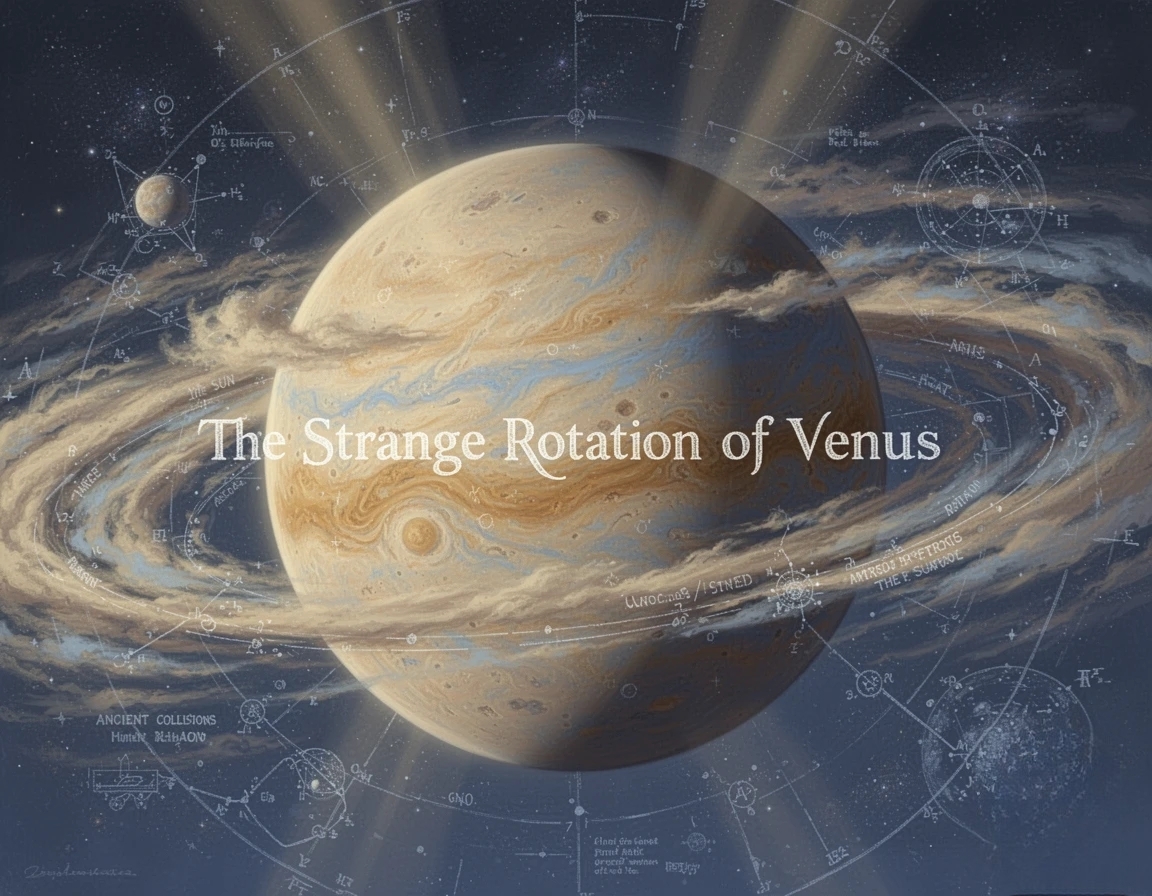
The Strange Rotation of Venus
The most shocking feature of Venus is its unusual movement.
Most planets spin relatively quickly.
Earth rotates once every 24 hours.
Jupiter rotates in under 10 hours.
Venus is incredibly slow.
One Venus Day Equals About 243 Earth Days
Venus needs approximately 243 Earth days to complete one rotation.
Its year—the time needed to orbit the Sun—is only 225 Earth days.
That means:
A Venus day is longer than a Venus year.
Think about that for a moment.
If you lived on Venus:
Your birthday would arrive before the Sun completed a full day-night cycle.
This makes Venus unique among the planets.
Venus Rotates Backward
Venus does something even stranger.
It spins in the opposite direction.
Astronomers call this retrograde rotation.
On Venus:
The Sun rises in the west
The Sun sets in the east
Only Venus and Uranus rotate unusually compared with most planets.
Scientists still debate why.
Possible explanations include:
Massive Ancient Collision
One theory suggests a giant impact flipped Venus early in Solar System history.
A collision involving a planet-sized object might have altered its rotation dramatically.
Atmospheric Effects
Another idea proposes that Venus’s extremely dense atmosphere gradually slowed and reversed the planet’s spin.
Its thick atmospheric layers contain enormous energy.
Over millions of years, these forces may have changed rotation patterns.
Why Venus Is Hotter Than Mercury
This is one of the most surprising facts in astronomy.
Mercury is closer to the Sun.
Yet Venus is hotter.
Why?
The answer lies in its atmosphere.
The Runaway Greenhouse Effect
Venus possesses a massive atmosphere composed mostly of carbon dioxide.
Approximate composition:
96% carbon dioxide
Nitrogen and trace gases
Sulfur compounds
Carbon dioxide traps heat.
On Earth, greenhouse gases help maintain temperatures.
On Venus, the process became uncontrollable.
Scientists call this a runaway greenhouse effect.
Heat entered the atmosphere but could not escape.
The planet kept warming.
Eventually:
Oceans evaporated
Water vapor increased heating
Temperatures soared
Surface water disappeared
Today Venus is hot enough to melt lead.
Surface temperature remains around 465°C nearly everywhere.
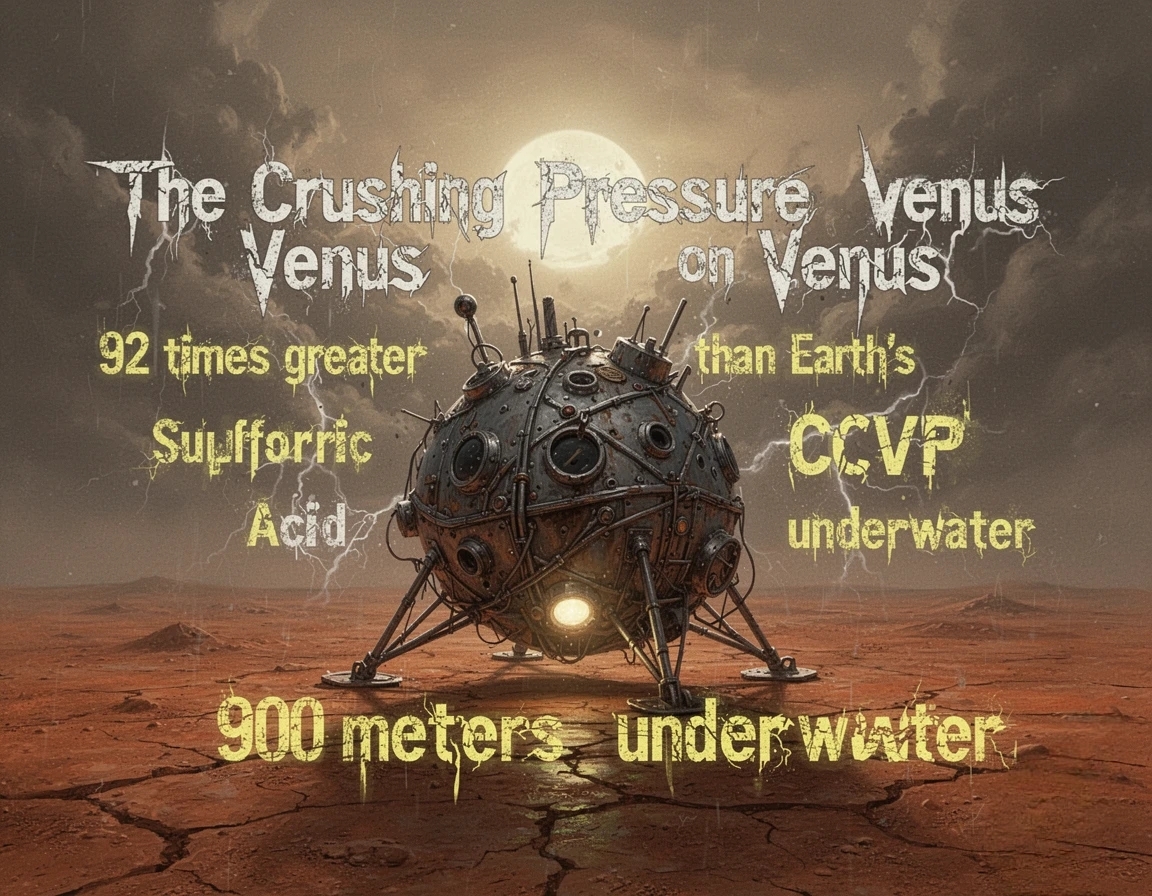
The Crushing Pressure on Venus
Heat is only part of Venus’s terror.
Pressure is another.
Standing on Venus would expose you to atmospheric pressure about:
92 times greater than Earth’s.
That equals conditions roughly 900 meters underwater on Earth.
A human would not survive.
Many spacecraft also struggle.
Several probes sent to Venus survived only minutes before failing.
Soviet Missions That Reached Venus
The achieved some of the most successful Venus landings.
The Venera missions reached the surface despite extreme conditions.
Achievements included:
Surface images
Temperature measurements
Atmospheric data
Some probes lasted less than an hour.
Even heavily reinforced technology struggled.
The Thick Clouds Hiding Venus
From Earth, Venus looks bright and beautiful.
But nobody can see its surface directly with ordinary visible light.
The reason:
Massive cloud layers.
Venus Is Covered by Sulfuric Acid Clouds
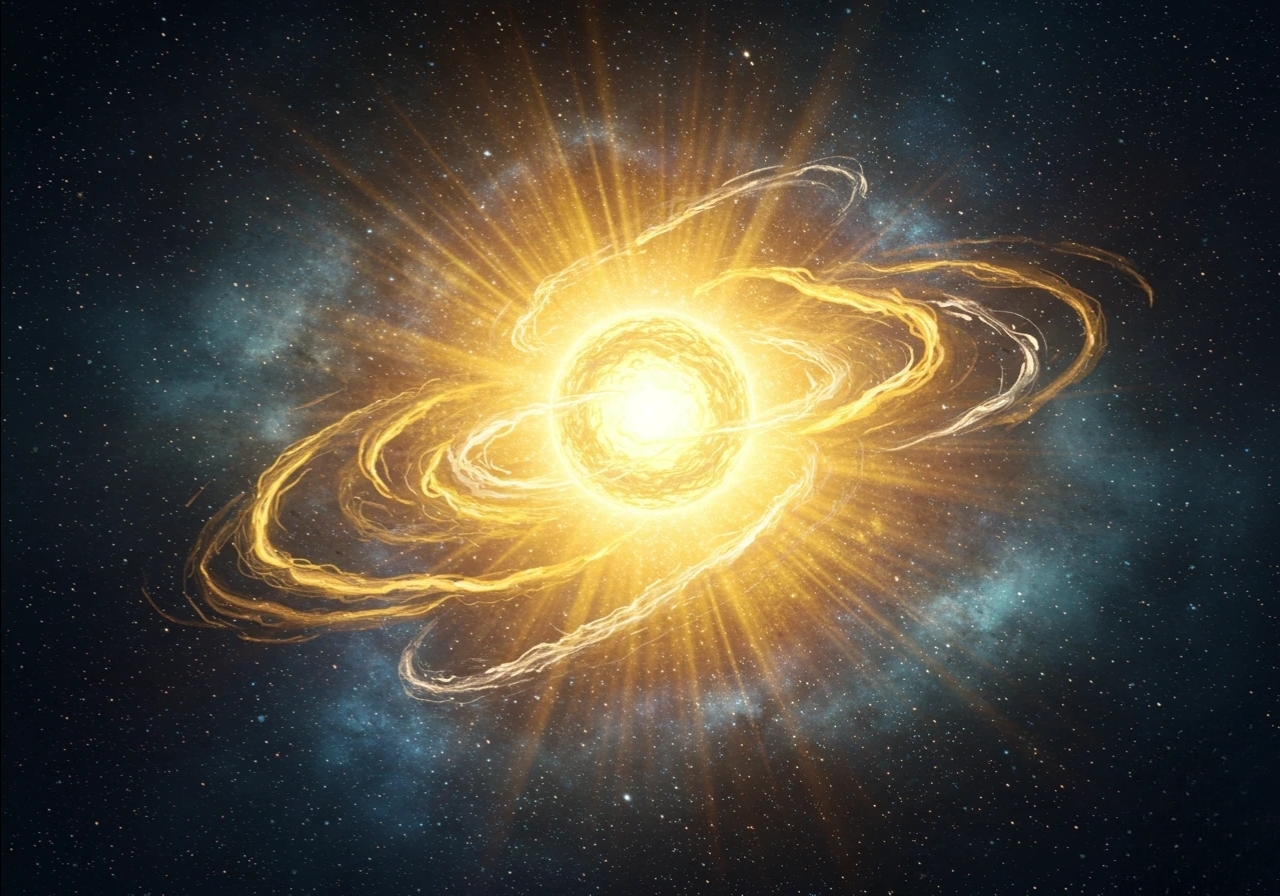
The clouds contain droplets of sulfuric acid.
These layers reflect sunlight efficiently.
That reflection makes Venus the brightest planet visible from Earth.
Cloud effects include:
Blocking surface visibility
Trapping heat
Creating extreme weather systems
Winds high above Venus can exceed hundreds of kilometers per hour.
Ironically, while the atmosphere races rapidly, the planet itself rotates very slowly.
Could Venus Once Have Had Oceans?
Scientists increasingly suspect Venus was not always hellish.
Ancient Venus might have looked very different.
Some climate models suggest:
Liquid oceans existed
Temperatures were moderate
Conditions may have lasted billions of years
If true, Venus experienced one of the greatest planetary transformations ever known.
What Destroyed Venus?
The leading explanation again involves climate runaway effects.
Possible sequence:
Stage 1: Solar Heating Increased
The Sun gradually became brighter.
Venus received more energy.
Stage 2: Oceans Began Evaporating
Water vapor entered the atmosphere.
Water vapor itself is a greenhouse gas.
Heating accelerated.
Stage 3: Atmospheric Collapse
More heat caused more evaporation.
More evaporation caused more heating.
A feedback loop formed.
Eventually oceans vanished.
The planet transformed permanently.
Could Earth Become Like Venus?
This question worries many scientists.
Earth is not becoming Venus anytime soon.
The planets differ significantly.
However, Venus provides a warning about climate systems.
Venus as a Climate Laboratory
Venus demonstrates how greenhouse effects can reshape worlds.
Lessons scientists study include:
Atmospheric evolution
Climate tipping points
Planetary habitability
Long-term environmental changes
Earth has stabilizing systems:
Oceans
Plate tectonics
Carbon cycles
These help regulate climate.
Still, Venus remains a reminder of planetary vulnerability.
Why Space Agencies Are Returning to Venus
For decades Mars dominated exploration discussions.
Now Venus is returning to the spotlight.
Scientists want answers.
Modern Venus Missions
Several missions aim to investigate Venus again.
DAVINCI Mission
Goals include:
Atmospheric measurements
Chemical analysis
Searching ancient water evidence
VERITAS Mission
Objectives:
Surface mapping
Geological studies
Tectonic investigations
EnVision Mission
Focus areas:
Interior structure
Surface evolution
Atmospheric interactions
Scientists hope these missions reveal:
Whether oceans existed
Why Venus changed
How Earth-like planets evolve
Could Humans Ever Visit Venus?
Walking on Venus is nearly impossible with current technology.
Surface conditions destroy equipment quickly.
Yet scientists imagine alternative possibilities.
Floating Cities Above Venus?
About 50 km above the surface:
Conditions become less extreme.
Temperatures and pressures approach Earth-like levels.
Some researchers have proposed:
Floating habitats
Airship colonies
Atmospheric research stations
These ideas remain theoretical.
But Venus’s upper atmosphere may someday become more accessible than its surface.
Strange Facts About Earth’s Evil Twin
Venus contains many astonishing features.
Mind-Blowing Venus Facts
One day lasts longer than one year
It spins backward
It is hotter than Mercury
Surface pressure equals deep ocean conditions
It may once have had oceans
Thick clouds hide the surface
Lightning may occur in the atmosphere
Volcanoes might still be active
It shines brighter than any planet in Earth’s sky
Venus and the Search for Alien Worlds
Venus influences more than Solar System studies.
It affects exoplanet research too.
Astronomers discover Earth-sized planets regularly.
Size alone is not enough.
A world can resemble Earth physically yet behave completely differently.
Venus teaches scientists:
Appearance does not equal habitability.
Future exoplanet studies now ask:
Does the planet have oceans?
What atmosphere exists?
Is greenhouse warming extreme?
Could climate collapse occur?
Venus became a cautionary model.
The Psychological Mystery of Venus
Humans often imagine neighboring planets as destinations.
Mars inspires dreams.
Venus inspires fear.
Its beauty hides danger.
This contrast explains why “Earth’s Evil Twin” remains such a powerful nickname.
From space it glows softly.
Below the clouds lies planetary chaos.
Few places in the Solar System feel more alien.
Conclusion: Earth’s Twin That Became a Warning
Venus began with many of Earth’s advantages:
Similar size
Similar composition
Similar origins
Yet it followed another path.
Today it is:
Hotter than Mercury
Covered by acid clouds
Crushed by immense pressure
Rotating so slowly that one day lasts longer than its year
Venus proves that planets can change dramatically.
It reminds us that worlds are fragile and evolution is unpredictable.
Earth’s evil twin may not host life, but it still tells one of the greatest stories in planetary science:
How two nearly identical worlds became complete opposites.
Frequently Asked Questions (FAQs)
Why is Venus called Earth’s Evil Twin?
Venus resembles Earth in size, mass, and composition but evolved into an extremely hostile world with intense heat and pressure.
How long is one day on Venus?
One Venus rotation lasts about 243 Earth days.
How long is a Venus year?
Venus completes an orbit around the Sun in approximately 225 Earth days.
Why is Venus hotter than Mercury?
Venus has a dense carbon dioxide atmosphere that traps heat through a runaway greenhouse effect.
Could Venus have supported oceans?
Some studies suggest ancient Venus may have had liquid water before climate changes transformed the planet.
Can humans live on Venus?
The surface is too hostile, but scientists have proposed future floating habitats in the upper atmosphere.


You must be logged in to post a comment.