
Crazy Rock Game Review — Scam or Legit?
1. Introduction
A few days ago, I saw ads all over social media promising “play a fun game, get paid fast” — and one of them was Crazy Rock. The promotional posts claimed you could earn real money, withdraw to PayPal or other accounts, and even get bonuses just for signing up. As someone who’s tested many “play-to-earn” apps, I got curious: Is Crazy Rock one of those legit gems, or is it just another pyramid-style trap?
In this review, I walked through everything: the gameplay, how rewards supposedly work, what users are saying, what red flags show, and ultimately whether it’s worth your time (or money). Let’s dive in.
2. What Crazy Rock Is All About
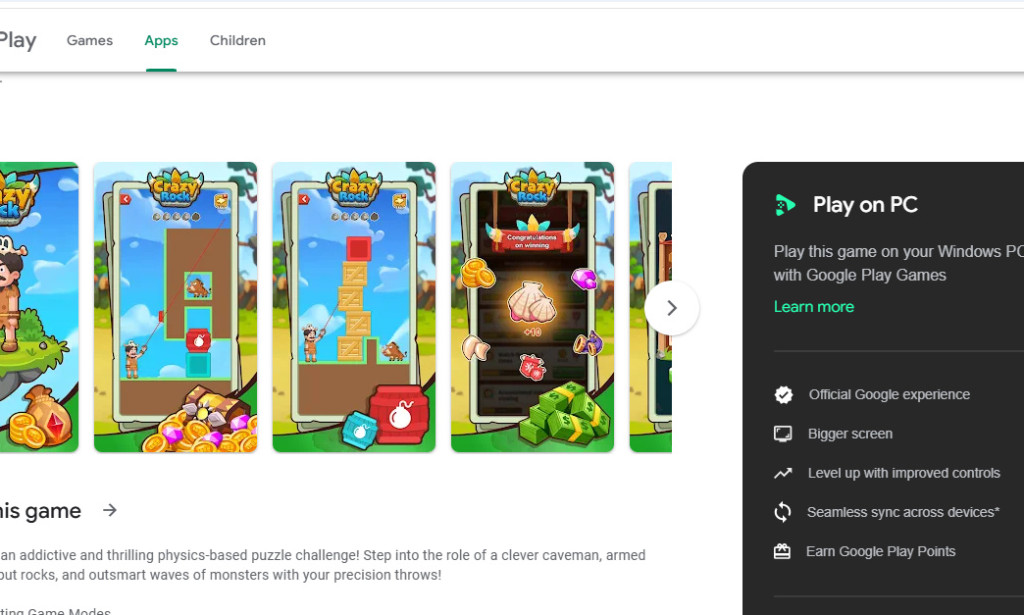
Crazy Rock is a mobile puzzle / physics-based game developed by DotVerse. On the Google Play Store, it’s described as an app where you “throw rocks, beat monsters, and earn real rewards.” (Google Play)
The gameplay itself is typical of slingshot / trajectory mechanics: you aim rocks, bounce off obstacles, trigger chain reactions, hit hidden enemies, etc. There are different modes (Direct Strike, Arc Throw, Rescue Mission) and unlockable skins or weapons (vampire stones, boomerangs, thunder hammers). (Google Play)
The app also includes daily missions, lucky draws, “altar blessings,” and a notion of in-game coins or “cash” that you accumulate as you play. (Google Play)
In short: Crazy Rock sells itself as a hybrid—fun as a game, but also as a side-hustle app if you can really cash out.
3. How It Works (Earnings, Rewards, Mechanics)
Here’s a breakdown of how Crazy Rock is supposed to “pay” users, and how many of those promises break down.
Gameplay & Rewards
-
As you complete levels, you collect “coins” and sometimes “cash icons.”
-
You also get bonus tasks: daily missions, watching video ads, lucky draws, etc. (Lodpost)
-
The more you play (and the more ads you watch), the more your in-game balance increases.
-
A significant part of the “earning” comes from watching ads. The developers rely on that ad revenue to claim they can share with players.
Withdrawal & Cash Out
-
The app claims that when your balance reaches a certain “minimum withdrawal limit,” you can cash out to PayPal (or similar). (Lodpost)
-
However, many users report that once you approach the threshold, you run into delays, “waiting in queue,” “under review,” or new requirements. (Google Play)
-
Some reviews mention being told “you are the 941st in line” or having to wait because of large volume. (AppBrain)
-
Others say that advertisement requirements spike as you near withdrawal, forcing you to watch excessive ads or meet new tasks. (Lodpost)
So while the app’s front-end operation (levels, ad watching, rewards) works, the back-end withdrawal is where many users hit walls.
4. CEO / Developer Info
This is a big weak point for Crazy Rock.
-
The developer is listed as DotVerse. (Google Play)
-
Contact: crazyrockcs@outlook.com is listed as support. (Google Play)
-
No clear website, no home address, no public CEO or team details are given beyond a generic “DotVerse” name. (Lodpost)
-
This lack of transparency is common in apps that don’t intend to be long-term or want to disguise accountability.
Because we don’t know who is behind it (or whether they’re even real or traceable), it’s harder to trust their payout commitment.
5. Source of Income — How Could They Pay (or Not)
A legitimate “play-to-earn” app must have a sustainable income model. Let’s see what we find.
Likely income sources:
-
Ads: The app heavily relies on ads (rewarded video ads, interstitials). The more ad views, the more revenue for the developer.
-
In-app purchases (skins, boosters, faster upgrades) may exist, although they aren’t the main advertised feature.
-
Referrals: Encouraging users to bring in new users to inflate the user base and viewership.
Why the model is shaky:
-
Ad revenue per user is usually very low. To pay many users “real money,” you’d need massive ad traffic or large advertisers. Many similar apps inflate user balances knowing that only a tiny fraction ever reach withdrawal.
-
If the developer doesn’t generate more revenue than they promise to pay, they will default or delay.
-
Some schemes use fake balances to keep users engaged, but never intend to fully pay out everyone.
Given that many users report being unable to actually withdraw, it suggests the economics don’t hold up for the developer (or they’re running the app as a short-term bait-and-switch).
6. Referral Program Details
Crazy Rock appears to push heavy referral incentives (common in this category of apps). Some known referral mechanics:
-
You get bonus rewards when someone you invite passes certain levels (5, 10, 15) in the game. (Lodpost)
-
They advertise “share and earn” rewards in app descriptions. (Google Play)
-
But many users report that invited users don’t actually see real cash rewards — either the bonus stays in non-withdrawable “coins” or is very small. (Lodpost)
- This new app Crazy Rock makes money super fast. Enter the invitation id 56432339 to get ₦1500. https://dh8jung6gx1y7.cloudfront.net/cr/index_19.html?s=NTc2NTQzMjc&id=56432339
Referrals are often one of the main strategies that sustain these apps (they bring in new users to watch more ads), but they typically don’t produce substantial cash for most users.
7. Withdrawal System & Payment Methods
This is the crucial test. Here’s what seems to happen in practice:
Advertised withdrawal process:
-
Reach a specified minimum balance.
-
Request withdrawal to PayPal (or another supported payment method).
-
Wait for “processing time” (some say 1 minute up to 3 business days). (Lodpost)
-
Sometimes there’s a “queue” or “waiting list” if many users are withdrawing. (Lodpost)
-
Coin withdrawal may be limited to once per day. (Lodpost)
Reported user experiences & complaints:
-
Many users state they never received their withdrawals despite meeting all requirements. (Lodpost)
-
Some say they were told to wait, or that they were placed in a long queue. (Google Play)
-
Others claim as soon as they approach payout, the app raises new conditions or denies the request. (Lodpost)
-
One review on Play Store says: “When you reach the withdrawable amount, it says you’re the 941st in line — total trash game.” (AppBrain)
-
Some reviewers say “customer service not responsive” when they try to withdraw. (AppBrain)
All of these are red flags. An app that truly pays would have smoother, verifiable payout records and responsive support.
8. Red Flags (Scam Indicators)
Here are the warning signs that suggest Crazy Rock is more likely a scam or borderline scheme:
| Red Flag | Explanation |
|---|---|
| Lack of transparency | No clear CEO or company background |
| Unrealistic promises | Claims of fast, easy money from gameplay |
| High withdrawal hurdles | Delays, queues, “under review,” new tasks |
| Referral dependence | Heavy reward for inviting users, which often drives pyramid dynamics |
| User complaints | Numerous negative reviews about failed withdrawals |
| Ad-heavy model | They push ads aggressively to monetize rather than rewarding users fairly |
| Fake reviews or over-glowing ratings | Many 5-star reviews are generic or overly positive with little substance (AppBrain) |
When many of these appear together in a “play-to-earn” app, it’s a strong signal that the payout side is unreliable or deceptive.
9. What Real Users Are Saying
It’s always good to see what people really experience. Here are some user voices and feedback:
-
On Google Play, some users admitted: “tried the withdrawal … have to wait on queue” (Google Play)
-
Another review: “Unlike similar apps I tried, many ads … when you’re close to payout, runarounds begin.” (Lodpost)
-
From Reddit (r/beermoneyph): one user shared they got some “coins” but not significant amounts; it comes with caveats. (Reddit)
-
On AppBrain, reviewers wrote: “If you know you're not good at referring people, don’t download this app – it’s a scam like all the others.” (AppBrain)
-
Also: “Customer service not responsive at all when I try to withdraw” (AppBrain)
These voices tend to agree: the game is fun, the ad/reward system works up to a point, but when it comes to actual payments, many users are left disappointed.
10. Alternatives You Can Trust (e.g. LodPost)
Because apps like Crazy Rock are so risky, here are safer alternatives you could use instead:
-
LodPost: A content platform where users write articles and get paid per valid view.
-
No upfront investment required.
-
Minimum withdrawal: $10 (via PayPal, crypto, or bank transfer).
-
Transparent payment proofs.
-
Using something like LodPost shifts the focus from games + ads to real work + content, which tends to be more sustainable.
Other legitimate alternatives include:
-
Freelancing platforms like Upwork, Fiverr
-
Micro-task apps with proven track records
-
Survey or rewards apps with good reputations
-
Affiliate marketing, blogging, or content creation with real monetization paths
11. Final Verdict — Is Crazy Rock Real or a Scam?
After reviewing all the evidence, here’s where I land:
-
The game itself is real: The levels, mechanics, ad system, rewards display work (you can see your in-game balance rising).
-
The payout promise is highly dubious: Many users report failed or delayed withdrawals.
-
The economics are unsustainable for a broad user base paying many people.
-
Lack of transparency + aggressive referral push + user complaints strongly point toward a “get people in and monetize their ad views” model rather than a genuine reward system.
So, my verdict: **Crazy Rock is not a reliable app to depend on for income. It functions more as a “bait to watch ads + referrals” scheme. If you enjoy it as a casual game, that’s fine — but don’t expect significant cash rewards or guaranteed payouts.
If your goal is making steady money online, use platforms that have verifiable payment history and transparent terms (like LodPost).


You must be logged in to post a comment.