
an aeroplane pilot let his son drive his aeroplane
-----
He put his 15-year-old son in the captain's seat, saying, "Come on, Dad will teach you how to fly a plane." 75 lives were thus entrusted to a child. The plane began to tilt to the right, 45 degrees, 90 degrees, then stalled, plummeted, and crashed into a mountain. The black box recorded his last words: "Get out! Get out, Elda!"
In the early morning of March 23, 1994, Aeroflot Flight 593 took off from Moscow, bound for Hong Kong. On board were 63 passengers and 12 crew members, a total of 75 people. They came from Russia, China, Hong Kong, Taiwan, the United States, the United Kingdom, Germany, Israel, India, Malaysia, and other countries and regions. The youngest passenger was a 5-year-old Russian girl traveling to Hong Kong with her parents. The oldest was a 68-year-old Israeli businessman who frequently traveled between Moscow and Hong Kong for business. This was a state-of-the-art Airbus A310 at the time, less than three years old, equipped with a sophisticated autopilot system. The crew was Aeroflot's elite select group—they were among the first Russian pilots authorized to fly this Western-style aircraft, each with over 900 flight hours.
Captain Danilov, on cockpit duty until late at night, followed procedure to rest in the cabin, handing the aircraft over to First Officer Kudlinsky and Second Officer Piskaryev. The aircraft was level with the autopilot operating stably at an altitude of 33,000 feet. Everything was normal.
However, Kudlinsky had brought his two children on board—his 15-year-old son, Elda, and his 12-year-old daughter, Yana. This was an annual discounted ticket, a benefit Aeroflot provides to the crew's families. It was their first time traveling abroad, and he let them into the cockpit. He first had his daughter sit in the captain's seat, turning the heading selector to slightly tilt the aircraft to the left, creating the illusion that she was flying.
After his daughter disembarked, his son took his place. Kudlinsky instructed Elda to place her hands on the control stick, telling her to move it gently. Elda tried it and found the stick too stiff and difficult to move, so he pushed it forcefully to the left. He held this position for about 30 seconds. Those 30 seconds changed everything.
Investigators later reconstructed the event using a simulator and discovered a design flaw in the Airbus A310's autopilot: if someone applied force to the stick for more than 30 seconds, the autopilot would disengage from the ailerons, switching to manual control. Moreover, this disengagement was done without any audible warning; only a small, inconspicuous light on the instrument panel illuminated. Neither Kudlinsky nor Piskarev noticed that light.
After Elda released the stick, the aircraft did not return to level flight. The rest of the autopilot remained active, attempting to maintain altitude and heading, but the ailerons were now manually controlled. The aircraft began to bank to the right, the angle increasing—30 degrees, 45 degrees, 60 degrees, 90 degrees.
The black box recordings reconstructed that moment.
"Huh, why is it turning?" Elda said. "Is it turning by itself?" Kudrinsky said. "Yes... it's turning." A few seconds later, the flight path indicator showed the plane was about to turn 180 degrees. "We're in a holding pattern," Piskarev said. No one realized what was happening. They spent nine seconds studying the screen; by then, the plane had tilted more than 45 degrees, exceeding its design limits, and began to plummet rapidly. The immense G-force pressed everyone back into their seats.
Kudrinsky yelled, "Hold on! Hold the stick!" Piskarev yelled, "The other way! Left! Left!" Elda yelled, "I'm turning left!" Piskarev yelled, "Right!" The situation was completely out of control.
The plane continued to fall, warning lights blaring. Kudrinsky told his son to get out of his seat: "Elda, get out... do you see the danger?" He tried to return to the captain's seat, but the G-force was too strong; he couldn't move. Piskarev pulled desperately on the control stick, finally managing to lift the plane from its descent. But he pulled too hard, causing the nose to spike upwards, the plane stalled again, and spiraled downwards.
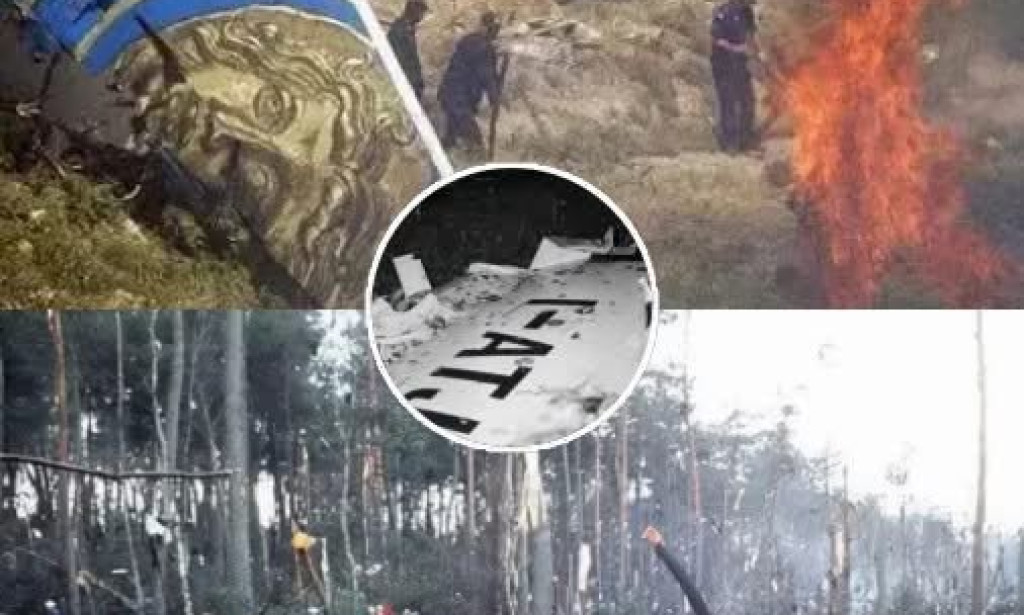
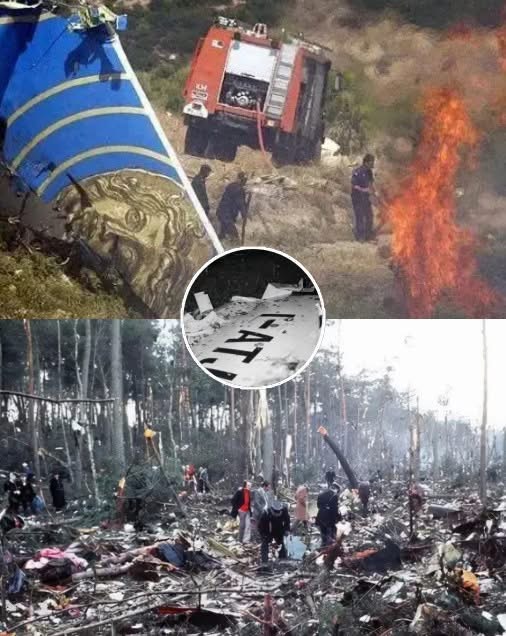
Kudlinsky finally pushed his son aside and returned to the captain's seat. He and Piskarev worked together to level the plane in the seconds before impact. But it was too late. The plane had dropped below the mountains and couldn't pull back up. At 00:49, Flight 593 crashed into the Kuznetsk Mountains in Siberia at a vertical speed of 14,000 feet per minute.
All 75 people on board perished. There were no distress signals. The last sound recorded by the black box was the impact.
The search and rescue team found the black box the next day and also discovered the bodies of two children in the cockpit wreckage. News reached Moscow, and the victims' families gathered at the airport, waiting for the plane that would never land. Captain Danilov's daughter was not on board that day. She later told reporters that her father was joking with her before he left, saying, "I'll bring you chocolates from Hong Kong when I get back." What she received was her father's body. There was also a five-year-old girl on that plane; her parents perished, leaving her an orphan.
When Kudlinsky put his 15-year-old son in the captain's seat, he probably didn't expect anything bad to happen. He just wanted to make his child happy. He thought autopilot would protect everything. He forgot—and wasn't told—that the plane's design had flaws. He may not have known the mistake he made. But 75 lives were lost, and no one can give them back. Captain Danilov never had a chance to return to the cockpit. He died in the passenger cabin, just steps from the cockpit. He probably didn't know what had happened until the very end.
Elda didn't know either. He just listened to his father, put his hand on the control stick, and pushed hard. He was probably still thinking: Why is the plane spinning? When that little light came on, no one saw it. When those 30 seconds ended, it was too late. Seventy-five lives lost in a 33,000-foot plunge, in just two minutes and six seconds. It wasn't a plane crash; it was negligence. Kudlinsky's daughter, Yana, was in the cockpit. She watched her brother take the captain's seat, watched the plane begin to tilt, watched her father panic. She survived—because she was in the back, she was thrown from the wreckage upon impact, and when found, she was severely injured but still breathing. She was the last person to leave the plane. She was also the only one who knew the whole truth. She never flew again. She said she was afraid. She said she wasn't afraid of the plane crashing, but afraid of remembering that night. She heard her father shout, "Get out!" and she got out. Her brother didn't. Her father didn't either.
You must be logged in to post a comment.