

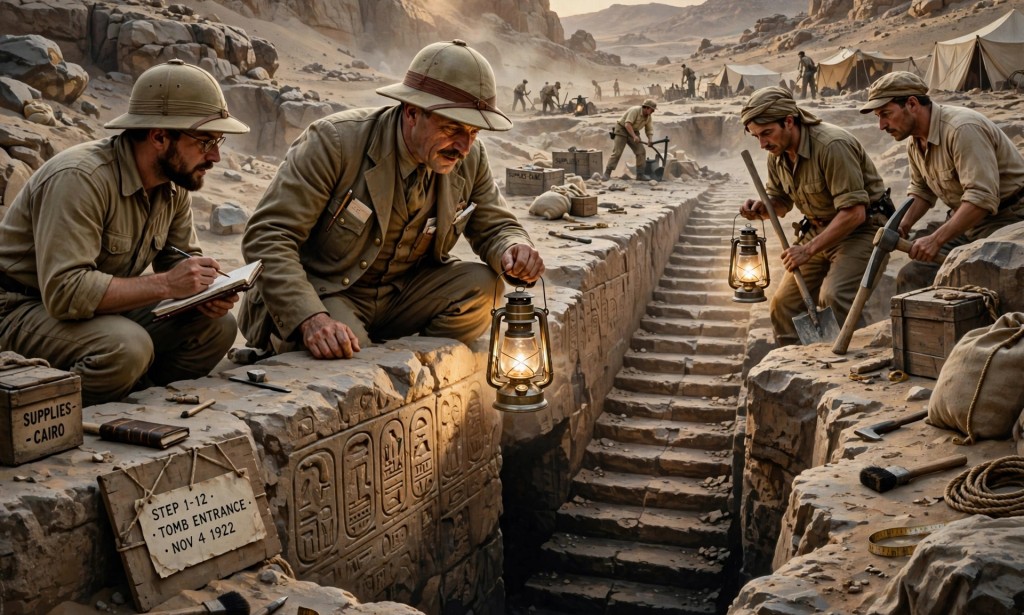
On November 4, 1922, British archaeologist Howard Carter made one of the most important discoveries in the history of archaeology.
After years of searching in Egypt's Valley of the Kings, Carter was close to giving up. Funded by Lord Carnarvon, his team had spent five seasons looking for a lost tomb. Then, on that morning, a young water boy stumbled on a stone step hidden beneath the sand.
Carter's workers quickly cleared the area and uncovered a full staircase of 16 steps leading down to a sealed doorway. The door was stamped with ancient royal seals, including the name of Tutankhamun.
It was the entrance to the tomb of the young pharaoh who ruled Egypt more than 3,000 years ago, around 1323 B.C. For over 3,000 years, it had remained untouched.
When Carter finally entered weeks later, he found a treasure beyond imagination. The tomb contained over 5,000 priceless objects — golden chariots, jeweled statues, furniture, weapons, clothing, and the iconic golden death mask that covered the pharaoh's mummy.
Unlike all other royal tombs in the valley, which had been looted by thieves, Tutankhamun's tomb was almost perfectly intact.
The discovery revolutionized Egyptology. It gave scientists and historians an unprecedented, untouched look into the burial customs, religion, and daily life of ancient Egyptian royalty.
The find made King Tut world-famous overnight and sparked a worldwide fascination with ancient Egypt that still continues today.


You must be logged in to post a comment.