
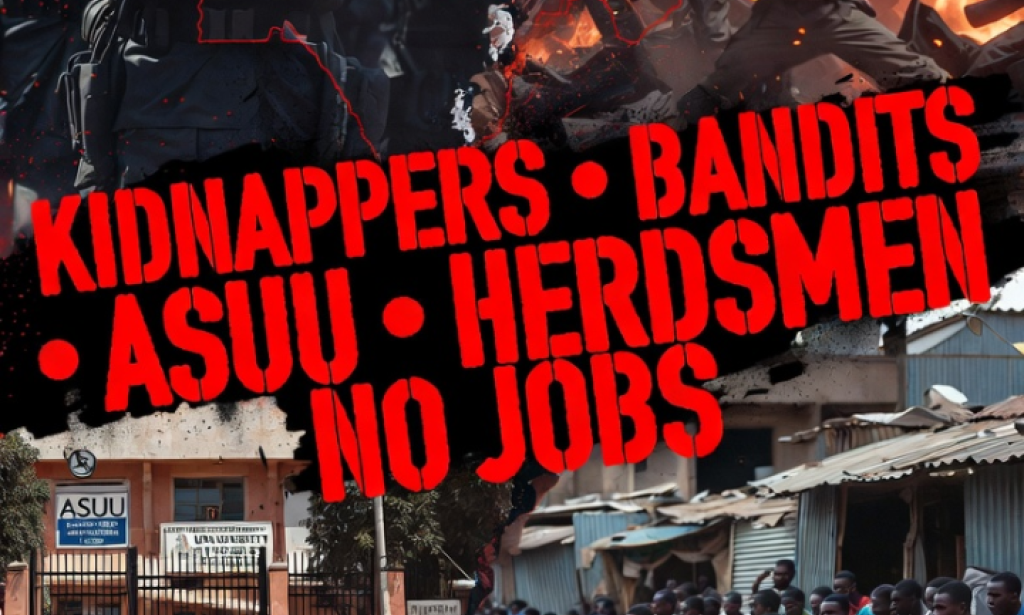
HOW UNPLEASANT NIGERIA IS !
Life in Nigeria is an exhausting script of endless struggles. You go to the farm — herdsmen attack, destroy crops, kidnap or kill innocent farmers in the Middle Belt and North, turning food production into a deadly gamble. You travel by road — kidnappers lie in wait on major highways, turning routine journeys into terrifying ransom ordeals that traumatize families and drain savings. You sleep at night — bandits raid villages with impunity, looting, raping, and murdering while security forces seem helpless. You go to school — ASUU strikes stretch four-year courses into six or seven frustrating years due to poor funding and broken agreements. You graduate from school — no job awaits. Millions of graduates face crushing unemployment, forcing them into desperate hustling or risky migration.From farms to classrooms, insecurity, failed governance, and economic hardship make everyday life deeply unpleasant. Resilience keeps Nigerians going, but the constant threats and broken systems paint a picture of a nation where basic aspirations come with heavy costs.
1: You Go to Farm – Herdsmen In the fertile fields of Nigeria’s Middle Belt and North, the dream of agricultural self-sufficiency collides violently with reality. For many rural families, “going to the farm” once symbolized honest labor, seasonal harvests, and food security. Today, it often means confronting well-armed herdsmen whose cattle graze freely while farmers face existential threats.The clashes between herders and farmers have escalated over the past decade due to desertification, population pressure, and competition for dwindling resources. What began as occasional disputes over land has morphed into organized violence. Farmers preparing for planting seasons now risk kidnapping, murder, or the destruction of their crops. Entire communities have been displaced, turning breadbaskets into ghost towns.The economic toll is staggering. Nigeria, blessed with vast arable land, still imports massive quantities of food while its farmers live in fear. Government responses—ranging from peace committees to controversial grazing bills—have yielded mixed results. Meanwhile, rural youth watch their inheritance bleed away and migrate to cities, further weakening the agricultural sector.Yet the resilience of Nigerian farmers remains remarkable. Many now farm in groups, adopt early-warning systems, or invest in solar-powered fencing. International organizations have stepped in with conflict-resolution programs, but lasting peace requires addressing root causes: climate change, weak law enforcement, and ethnic tensions.The meme’s blunt punchline captures a painful truth—everyday survival activities have become high-stakes gambles. Until security and justice improve, “going to farm” will continue carrying the heavy footnote of “Herdsmen.
2: You Travel by Road – Kidnappers! Nigeria’s roads tell stories of ambition and terror. A journey that should take hours can stretch into days of anxiety. Bandits and kidnappers have turned major highways—especially in the North-West and South-East—into corridors of fear. Travelers set out with prayers, cash, and sometimes trackers hidden in their vehicles.Kidnapping for ransom has become a lucrative industry. From schoolchildren to weary commuters, no one is entirely safe. Families sell land, borrow money, or crowd-fund to secure releases. The psychological scars linger long after physical freedom.Poor infrastructure, porous borders, and underfunded security agencies create perfect conditions for criminal entrepreneurship. While some states have deployed military operations and technology like drones, the problem persists because of corruption, poverty, and a broken justice system where arrested suspects often walk free.Travelers now prefer night buses in convoys, GPS monitoring, or expensive air travel. Yet for the average citizen, road travel remains unavoidable for business, family visits, or farming. The constant threat adds invisible costs to every transaction in the economy.The meme distills this national anxiety into four words. Until comprehensive security sector reform and socio-economic development reduce desperation, Nigerian roads will remain a dangerous lottery.
3: You Sleep at Night – Bandits at Nightfall, once a time of rest and family bonding, now brings dread in many Nigerian communities. Bandits—armed groups operating with military precision—raid villages under the cover of darkness. They loot, rape, kidnap, and kill with shocking impunity.In states like Zamfara, Kaduna, and parts of Benue, entire villages have been sacked. Survivors recount how bandits arrive on motorcycles, wielding sophisticated weapons sometimes superior to those of local police. The cycle of attack, retaliation, and reprisals deepens communal mistrust.The roots are complex: illegal mining, political patronage, poverty, and the proliferation of small arms. Some bandits started as cattle rustlers or vigilantes before evolving into full-fledged criminal syndicates controlling territories.Communities have responded with vigilante groups, but this often leads to more violence and human rights abuses. Government military operations occasionally clear areas only for bandits to regroup elsewhere.The psychological impact is profound. Children grow up associating night with trauma. Mental health resources are scarce. The meme’s dark humor reflects a grim reality: basic human needs like sleep have become privileges in parts of the country.Sustainable solutions require intelligence-led policing, community engagement, economic alternatives for at-risk youth, and stronger border control.
4: You Go to School – ASUU For generations of Nigerian students, university education promised social mobility. Instead, it frequently delivers prolonged strikes by the Academic Staff Union of Universities (ASUU). What should be four years often stretches into six or seven.ASUU strikes highlight chronic underfunding of public universities, poor infrastructure, brain drain, and disputes over salaries and allowances. While lecturers fight for better conditions, students lose time, motivation, and opportunities. Many graduate half-baked or pivot to vocational skills out of frustration.Successive governments sign agreements only to renege later, repeating the cycle. Private universities flourish for those who can afford them, widening inequality. The public system—once the pride of the nation—now produces graduates competing in a harsh job market with outdated skills.The meme captures the collective student groan. Yet education remains vital. Innovative solutions like technology-enhanced learning, industry partnerships, and diversified funding models could break the impasse. Until then, “You go to school – ASUU” remains a rite of passage marked by uncertainty.
5: You Graduate from School – No Job 100 percent Graduation day should be triumphant. In Nigeria, it often marks the beginning of a frustrating job hunt. Youth unemployment hovers at alarming rates, with millions of graduates entering a market that cannot absorb them.Skills mismatch, economic slowdown, corruption in recruitment, and preference for connections over competence compound the problem. Many resort to “hustling”—driving rideshares, freelancing online, or starting micro-businesses with limited capital.The psychological toll manifests in anxiety, depression, and migration dreams. The “Japa” syndrome reflects not just ambition but desperation. Those who stay navigate a gig economy where survival often trumps fulfillment.Policy recommendations include massive investment in technical education, entrepreneurship support, industrialization, and youth-focused economic reforms. Until Nigeria creates enough productive jobs, the transition from classroom to unemployment line will remain painfully etc.

You must be logged in to post a comment.