
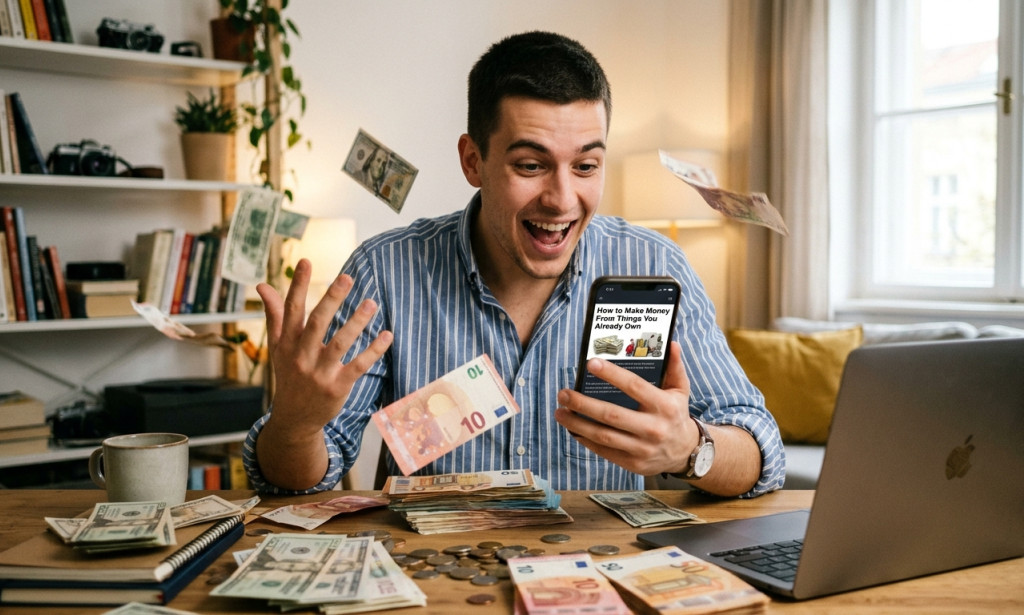
What if making extra money didn't require buying anything, starting a business, or learning a new skill?
You may already have a simple source of extra cash sitting inside your home.
Unused clothes, old electronics, books, furniture, gaming accessories, bags, collectibles, and other unwanted items can often be sold to people who need or want them. Instead of letting these things take up space, you can turn unused possessions into money.
I decided to look around my own home and test a simple idea: making money from things I already own.
The process taught me that you don't necessarily need a traditional side hustle to make extra money. Sometimes, the easiest place to start is with things you already have.
How to Make Money From Things You Already Own
The basic idea is simple:
Find something you no longer use → check its resale value → list it for sale → sell it for cash.
The challenge is knowing which items are worth selling and how to sell them efficiently.
Not everything in your home has enough value to justify the time required to photograph it, write a listing, answer questions, package it, and arrange a sale.
That's why I found it useful to focus on items that are still useful, easy to describe, and likely to have demand.
Best Things to Sell From Your Home
Different types of household items can have very different resale values. Here are some of the categories worth checking first.
1. Clothes You No Longer Wear
Clothing was one of the easiest categories to identify.
Most people have clothes sitting in their closets that they haven't worn in months or even years. If an item is clean, in good condition, and still fashionable or useful, it may be worth listing.
Brand names, sizes, measurements, condition, and clear photographs can all make a difference.
When selling used clothes, don't simply say:
"Good condition."
Give buyers useful information. Mention the size, material when relevant, how often the item was used, and any noticeable flaws.
The biggest lesson was simple:
Don't photograph an item like you're trying to get rid of it. Photograph it like you're trying to sell it.
Take photos in good lighting and show the front, back, label, size, and any imperfections.
2. Old Electronics
Electronics can be some of the best things to sell for extra money.
Look around for old phones, tablets, headphones, keyboards, gaming accessories, smartwatches, cameras, speakers, and other devices you no longer use.
Before listing an electronic item, check:
- Exact model
- Storage capacity
- Overall condition
- Battery condition when relevant
- Included accessories
- Chargers and cables
- Scratches or damage
- Whether the device works properly
If you're selling an old phone or computer, remember to remove your personal accounts and information before handing it over.
Honesty is also important. Clearly mentioning scratches, defects, missing chargers, or battery problems can prevent disagreements with buyers.
3. Books and University Materials
Books are another category people often overlook.
Textbooks, exam-preparation books, language-learning materials, university books, and specialist publications may still be valuable to someone who doesn't want to pay full retail price.
However, selling inexpensive books individually may not always be worth the effort.
Instead, consider creating a book bundle.
For example, several books from the same subject could be advertised together as a study bundle. Bundling low-value items can make the transaction more worthwhile for both you and the buyer.
4. Furniture and Home Items
Don't forget about things outside your bedroom or closet.
Small furniture, decorations, kitchen equipment, storage items, lamps, mirrors, and other household products may have resale value.
Furniture has one major advantage: local buyers may prefer purchasing used items nearby rather than paying expensive shipping costs.
However, there is also a downside.
Large items can require more time, transportation, and coordination. Your selling price isn't the only thing that matters.
Consider:
Selling price − fees − transportation costs − other expenses = actual money you keep.
Sometimes an item that sells for a reasonable amount isn't worth the effort if moving it takes several hours.
5. Gaming Items and Accessories
Old gaming equipment can also be worth checking.
Unused controllers, games, gaming headsets, keyboards, mice, consoles, cases, and other accessories may still have a market.
Older doesn't always mean worthless. Some products can even become more desirable because they are no longer widely available.
Before listing gaming items, check the exact model and condition and compare your item with similar listings.
6. Bags, Accessories, and Collectibles
Some items are easy to overlook because they aren't used every day.
These can include:
- Bags
- Watches
- Accessories
- Collectibles
- Hobby equipment
- Sports equipment
- Old gaming items
- Unopened products
- Decorative items
- Certain stationery
- Spare household accessories
The important question isn't:
"Would I personally pay much for this?"
Instead, ask:
"Is someone else actively looking for this?"
That shift in thinking can make decluttering much more interesting.
How to Decide What Is Worth Selling
Not everything you own should become a listing.
Before spending time preparing an item for sale, ask yourself a few questions:
Is it still useful?
If the item is outdated, broken, or difficult to use, demand may be low.
Does it have resale value?
Search for similar used items and compare their prices.
Is there demand?
A product can be valuable but difficult to sell if very few people want it.
Is it easy to sell?
Small, lightweight products are usually easier to photograph, package, and deliver than large furniture.
Is the money worth your time?
Selling a low-value item can sometimes require nearly as much effort as selling an expensive one.
This is why I would prioritize items with reasonable resale value or combine several inexpensive items into a bundle.
How to Price Used Items
One of the biggest mistakes when selling unwanted items is choosing a price based only on what you originally paid.
The original purchase price doesn't necessarily determine the current resale value.
Instead, research similar items.
Look for products with the same or a very similar:
- Brand
- Model
- Age
- Condition
- Size
- Features
- Included accessories
Don't automatically copy the highest listing price you find. An item being listed for a certain amount doesn't mean someone is actually willing to pay that amount.
A realistic price can help your item sell faster while still giving you a reasonable return.
If buyers commonly negotiate on the platform you're using, you may also want to leave some room for negotiation.
How to Take Better Photos for Your Listings
Photos can have a major effect on whether someone stops to look at your listing.
You don't need professional photography equipment.
A phone and good lighting are usually enough.
Try to:
- Clean the item before photographing it.
- Use natural or bright lighting.
- Keep the background simple.
- Take several angles.
- Show important labels and model numbers.
- Photograph scratches and defects.
- Avoid blurry pictures.
- Don't hide damage.
Good photographs reduce uncertainty and can make buyers more comfortable contacting you.
Remember:
You're not just showing the item. You're showing the buyer what they are actually getting.
How to Write a Good Listing
A useful listing should answer the questions a buyer is likely to ask before they contact you.
Include:
What it is:
Give the exact product name or model when possible.
Condition:
Explain whether it is new, lightly used, used, or has noticeable wear.
Important details:
Include size, measurements, storage capacity, compatibility, or other relevant information.
What's included:
Mention chargers, boxes, accessories, manuals, or missing parts.
Problems:
Be honest about defects.
Price:
Give a clear asking price.
The goal isn't to make the item sound perfect.
The goal is to make the buyer feel that they know exactly what they're considering.
Where to Sell Unwanted Items
There isn't one perfect place to sell everything.
The best option depends on the item, your location, and whether you want to sell online or locally.
For smaller products, online secondhand marketplaces can help you reach more potential buyers.
For furniture and bulky household items, local marketplaces may be more convenient because buyers can arrange pickup.
You can also consider specialized marketplaces for categories such as fashion, electronics, books, collectibles, or gaming.
The important thing is to choose a platform where people are already searching for the type of item you're selling.
How to Sell Things Online
Selling items online can give you access to a larger audience, but it can also require more work.
You'll usually need to:
- Photograph the item.
- Research its value.
- Create a listing.
- Answer buyer questions.
- Negotiate when necessary.
- Package the item if shipping is required.
- Arrange payment and delivery.
For inexpensive items, shipping and platform fees can reduce your actual profit.
That's another reason bundling inexpensive products can make sense.
How to Sell Things Locally
Local selling can be particularly useful for furniture, appliances, large household items, and other products that are expensive or inconvenient to ship.
The process can be simpler because the buyer may collect the item directly.
However, think about safety when meeting strangers.
Whenever possible, use sensible precautions such as meeting in a public location when appropriate, avoiding unnecessary sharing of personal information, and confirming payment before handing over valuable items.
Be especially careful with unusual payment requests, suspicious messages, or buyers who pressure you to move the transaction outside the normal platform process.
Things That May Not Be Worth Selling
One of the biggest lessons from selling unwanted items is that not everything is worth listing.
An item may technically have some value but still not be worth your time.
For example, a very cheap item may require:
- Taking photos
- Writing a description
- Answering messages
- Negotiating
- Packaging
- Traveling
- Arranging pickup
If all of that takes an hour to make a few dollars, you may be better off bundling the item, donating it, or giving it away.
The goal isn't to sell everything.
The goal is to get the most useful return from the things you no longer need.
Common Mistakes When Selling Used Items
If you're trying to make extra money selling things you already own, avoid these common mistakes.
Pricing based on emotion
You may have paid a lot for something, but buyers care about its current value.
Hiding defects
Trying to hide damage can create disputes and unhappy buyers.
Using poor photos
Dark, blurry, or incomplete photos can make good products look undesirable.
Writing vague descriptions
"Used but good" doesn't tell the buyer enough.
Accepting the first offer immediately
Compare similar listings before deciding whether an offer is reasonable.
Spending too much time on low-value items
Your time has value too.
Forgetting about fees and transportation
Your final profit is what you actually keep, not simply the advertised selling price.
How Much Extra Money Can You Make?
There is no guaranteed amount.
It depends on what you own, the condition of your items, demand in your market, and how effectively you price and present them.
Someone with several valuable electronics may be able to make significantly more than someone selling a few inexpensive clothes.
The important point is that you're starting with something you already own.
You're not purchasing inventory, renting a store, developing a product, or paying for a course.
You're converting unused possessions into cash.
Even if each individual sale is relatively small, several sales can add up.
Declutter Your Home and Make Extra Money
Selling unwanted items has another benefit besides the money.
It can help you declutter your home.
Instead of keeping something simply because you bought it in the past, you can ask whether you're actually using it.
If the answer is no, you have several options:
Sell it.
Bundle it.
Donate it.
Give it away.
Recycle it responsibly.
Selling is simply one way to turn unused possessions into something more useful.
The Real Advantage: You're Not Starting From Zero
The biggest takeaway from this experiment is that making money from things you already own is different from starting a traditional side hustle.
You aren't buying inventory.
You aren't paying for a course.
You aren't creating a product from scratch.
You're simply converting unused possessions into money.
That doesn't mean every item will sell quickly, and it certainly isn't guaranteed income. But if you're looking for a simple way to make extra money online or locally, selling unwanted items can be one of the lowest-cost places to start.
Before searching for a complicated side hustle, look around your home.
Check your closet.
Open those old drawers.
Look at the electronics you haven't touched in years.
Check the books, games, accessories, and household items you no longer use.
You might already be sitting on things someone else is willing to pay for.
Sources
- FTC — Selling Stuff Online: How to Avoid a Scam: Supports the article's safety advice, including warnings about fake payments, fake checks, overpayment scams, and verification-code scams.
- eBay — Pricing Your Items: Supports the advice to research similar products and check completed/sold listings when determining a price.
- eBay — Create Great Listings: Supports recommendations about effective titles, detailed descriptions, item condition, photos, and competitive pricing.
- eBay — Picture Policy: Supports the importance of accurate, high-quality photos and showing the item's actual condition.
- eBay — Selling Practices Policy: Supports the recommendation to accurately describe an item's condition and disclose defects or flaws.

You must be logged in to post a comment.