
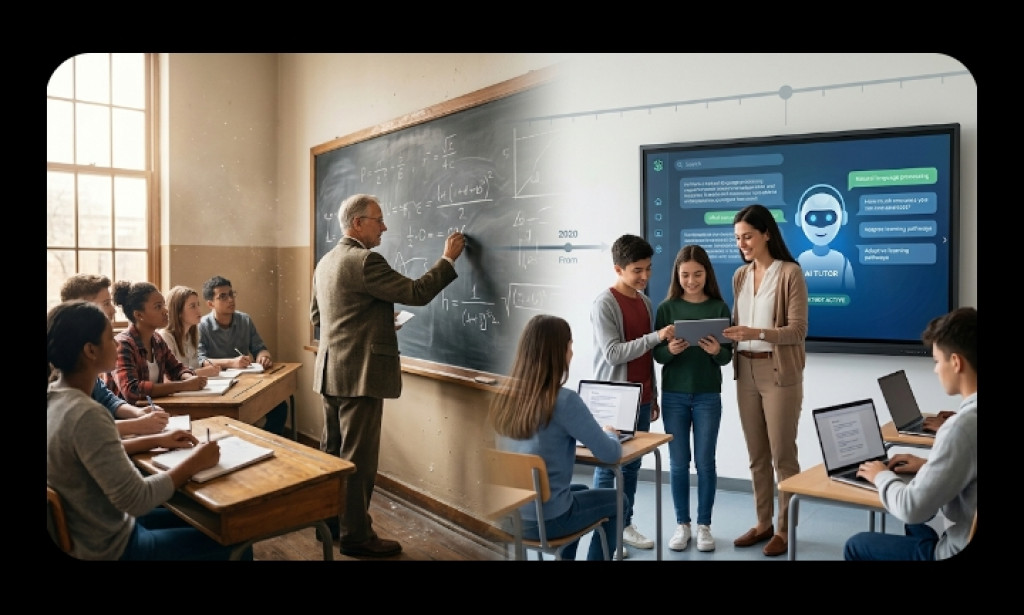
Education hasn’t always looked the way it does today. Not long ago, classrooms were filled with chalk dust, handwritten notes, and a single teaching style meant to fit everyone. Now, things are changing—and quite fast. Schools are becoming more dynamic, more connected, and more responsive, largely thanks to the growing role of Artificial Intelligence (AI). From smart tutoring systems to simple chatbots that answer questions instantly, AI is gradually reshaping both learning and teaching.
One of the biggest shifts is how learning is becoming more personal. In a typical classroom, a teacher has to manage many students at once, each with different strengths and challenges. That’s not easy. AI helps bridge that gap by adjusting lessons to match each student’s pace. Some learners move ahead quickly, while others take a bit more time—and both are supported in ways that feel natural. It creates a learning environment where fewer students feel left behind.
You’ll also notice that learning is no longer limited to school hours. AI-powered chatbots are always available, ready to explain a concept or answer a question at any time. Whether it’s late at night or early in the morning, students can get help when they actually need it. That kind of flexibility makes learning feel less rigid and more in tune with real life.
For teachers, AI isn’t a replacement—it’s more like a helping hand. Routine tasks such as grading or tracking student progress can be handled more efficiently, freeing up time for what really matters: teaching, guiding, and connecting with students. It allows teachers to focus more on people, not just paperwork.
Another important change is access. With digital platforms and AI tools, students in remote or underserved areas can now reach learning materials that were once out of reach. Language is becoming less of a barrier too, thanks to real-time translation and voice tools. Step by step, these changes are making education more inclusive.
At the same time, learning itself is becoming more engaging. Instead of just reading from a textbook, students can explore ideas through simulations, virtual labs, and interactive activities. Subjects that once felt difficult or abstract—like science or math—can now be experienced in a more visual and hands-on way.
Of course, it’s not all smooth sailing. Not every student has access to devices or reliable internet, which can deepen existing gaps. There are also valid concerns about privacy and the risk of depending too much on technology. These are real issues, and they need thoughtful solutions.
Still, the shift from chalkboards to chatbots is more than just a change in tools—it’s a change in how we think about education. Learning is becoming more flexible, more personal, and more connected to the world students are growing up in. As AI continues to evolve, the real challenge will be keeping that human element alive, because at its core, education is still about people helping people grow.


You must be logged in to post a comment.