

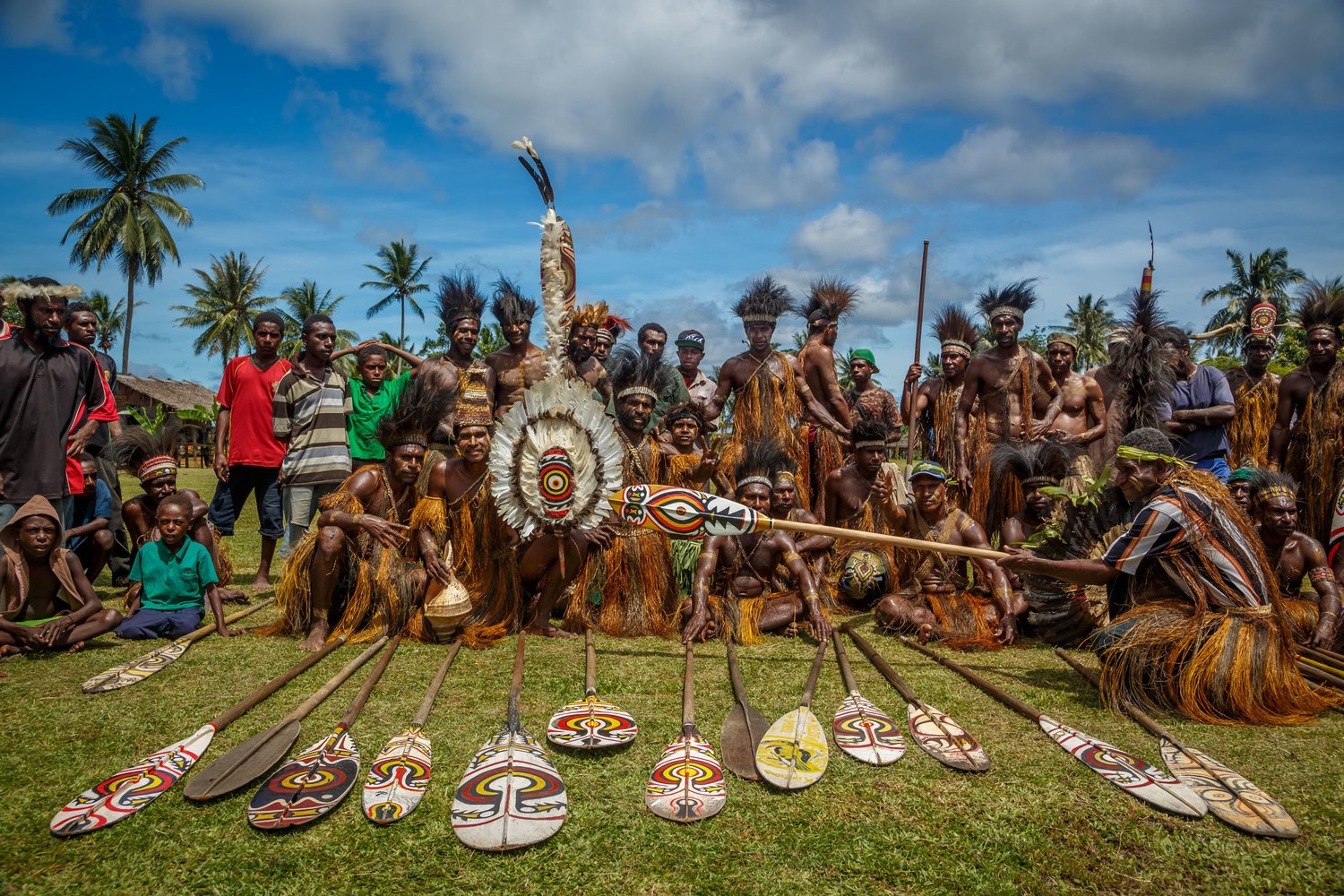
Papua New Guinea (PNG) is one of the most culturally diverse countries in the world. Located in the southwestern Pacific, it is home to hundreds of distinct ethnic groups, languages, customs, and traditional practices. The country's rugged mountains, tropical forests, islands, and isolated communities have helped many unique cultures develop and survive over generations. Although modern life is changing communities, traditional culture remains an important part of Papua New Guinean identity.
Languages and Cultural Diversity
One of the most remarkable features of Papua New Guinea is its enormous linguistic diversity. More than 800 languages are spoken across the country, making PNG one of the most linguistically diverse places on Earth. Different communities often have their own languages, customs, ceremonies, and ways of life.
English, Tok Pisin, and Hiri Motu are widely used as official or common languages, helping people from different cultural and linguistic backgrounds communicate. However, local languages remain extremely important because they carry traditional knowledge, stories, histories, and cultural values from one generation to another.
Traditional Communities and Social Life
Traditionally, many Papua New Guinean communities have been organized around extended families, clans, and villages. Relationships between relatives and clan members are often central to social life. People may work together to build houses, grow food, care for children, and organize ceremonies.
In many communities, respect for elders is highly valued. Older people can play important roles as leaders, advisers, storytellers, and keepers of traditional knowledge. Community cooperation and sharing are also important values, particularly in rural areas.
Traditional Dress and Body Decoration
Traditional clothing and body decoration vary greatly between regions and cultural groups. During ceremonies and festivals, people may wear elaborate costumes made from natural materials such as feathers, shells, leaves, fibres, and woven materials. Some traditional decorations are used to represent a person's community, status, ancestry, or participation in a particular ceremony.
Body painting and other forms of decoration are also significant in some cultural traditions. Bright colours, feathers, shells, and distinctive headdresses can transform ordinary gatherings into impressive cultural celebrations.
Sing-Sing Festivals
One of the best-known expressions of Papua New Guinea's cultural diversity is the sing-sing. A sing-sing is a gathering where people from different communities perform traditional songs, dances, music, and ceremonial displays.
The Goroka Show and Mount Hagen Cultural Show are among the country's best-known cultural events. Participants may wear elaborate traditional costumes and perform dances representing their communities. These festivals provide opportunities for cultural groups to celebrate their heritage and introduce their traditions to visitors.
Music, Dance, and Storytelling
Music and dance are deeply connected to traditional life in Papua New Guinea. Drums, bamboo instruments, flutes, singing, and other forms of music can accompany ceremonies and celebrations. Traditional dances may tell stories, commemorate important events, welcome visitors, or express relationships with ancestors and the natural world.
Storytelling is another important cultural tradition. Elders have historically passed knowledge to younger generations through stories, myths, legends, songs, and oral histories. These traditions can teach children about their community's origins, values, environment, and responsibilities.
Traditional Food and Agriculture
Food is closely connected with both everyday life and cultural traditions. In many rural communities, people grow crops such as sweet potatoes, taro, cassava, bananas, and sago. Fishing and hunting also provide food in many regions.
The preparation and sharing of food can have an important social meaning. Large communal meals may be part of celebrations, ceremonies, and gatherings, bringing families and communities together.
The Importance of the Land
Land has a profound cultural and spiritual significance for many Papua New Guinean communities. Traditional connections to particular areas may be associated with ancestors, family histories, sacred places, and responsibilities to future generations.
The natural environment also provides food, materials for houses and traditional clothing, medicines, and resources for daily life. As a result, caring for the land and maintaining relationships with the environment are important aspects of many traditional ways of life.
Customs and Ceremonies
Papua New Guinea has many different ceremonies marking important stages of life and community events. These may include ceremonies associated with birth, marriage, initiation, death, harvests, or the welcoming of visitors.
Practices differ considerably between cultural groups, so there is no single tradition that represents all Papua New Guineans. This diversity is one of the country's greatest cultural strengths.
Culture in Modern Papua New Guinea
Papua New Guinea is changing rapidly as education, technology, cities, Christianity, transportation, and modern economic activities influence everyday life. Many Papua New Guineans now combine traditional customs with modern lifestyles.
Despite these changes, cultural identity remains important. Festivals, local languages, traditional arts, music, dance, storytelling, and community practices continue to provide ways for people to preserve and celebrate their heritage.
Conclusion
The traditions and cultures of Papua New Guinea are remarkably rich and diverse. From its hundreds of languages and distinctive communities to its traditional dances, ceremonies, clothing, music, food, and strong connections to the land, PNG has a cultural heritage unlike any other country.
The country's traditions are not simply part of its history—they continue to shape people's identities and communities today. Protecting and celebrating this cultural diversity is important for ensuring that future generations can understand, value, and carry forward the heritage of Papua New Guinea.

You must be logged in to post a comment.