
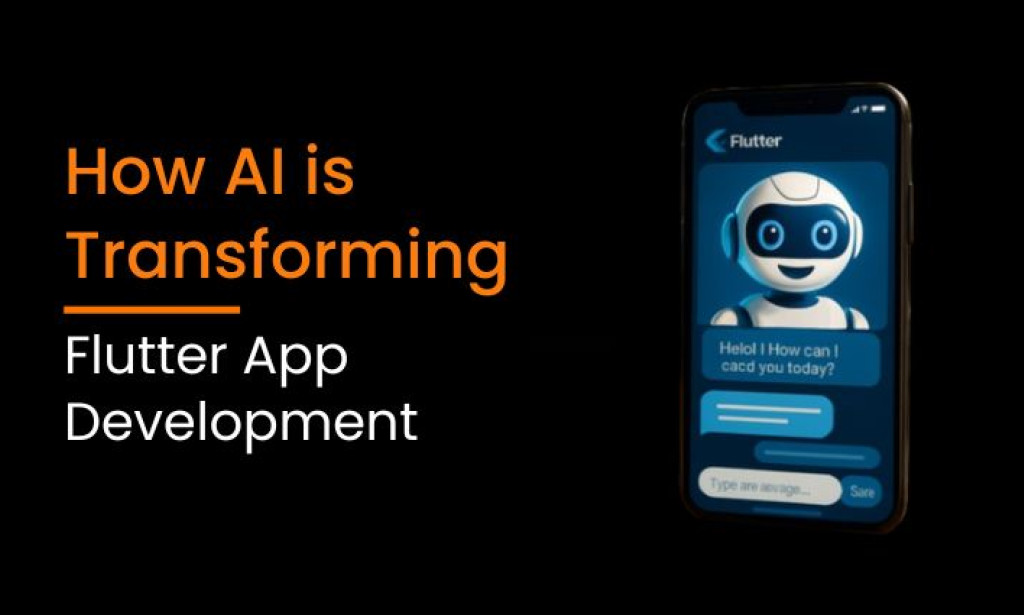
The mobile app industry is evolving rapidly, and two powerful technologies are driving this transformation: Artificial Intelligence (AI) and Flutter. As businesses race to deliver smarter, faster, and more personalized digital experiences, integrating AI into cross-platform apps has become a strategic necessity rather than an option.
Today, organizations are actively seeking artificial intelligence development services and partnering with a Custom Flutter app development company to build intelligent applications that enhance user engagement, automate processes, and improve decision-making.
In this comprehensive blog, we’ll explore how AI is revolutionizing Flutter app development, its benefits, real-world use cases, technologies involved, and what the future holds.
Introduction to Flutter and AI
What is Flutter?
Flutter is an open-source UI software development kit developed by Google. It enables developers to build natively compiled applications for mobile, web, and desktop from a single codebase. Flutter is known for:
-
Fast development with hot reload
-
Beautiful, customizable UI widgets
-
Cross-platform compatibility
-
High performance
-
Reduced development cost
What is Artificial Intelligence?
Artificial Intelligence refers to the simulation of human intelligence in machines programmed to think, learn, and make decisions. AI includes subfields such as:
-
Machine Learning (ML)
-
Natural Language Processing (NLP)
-
Computer Vision
-
Predictive Analytics
-
Generative AI
When AI is integrated into Flutter applications, it creates smart apps capable of learning from user behavior, automating tasks, and delivering personalized experiences.
Why AI Integration in Flutter Apps is Growing Rapidly
The demand for AI-powered apps has increased dramatically across industries such as healthcare, fintech, retail, travel, and real estate. Businesses want apps that:
-
Predict user preferences
-
Provide intelligent chat support
-
Detect fraud
-
Analyze user data in real time
-
Offer voice-based interaction
Flutter’s cross-platform architecture makes it easier to deploy AI-powered features across Android and iOS simultaneously. This reduces time-to-market while maintaining consistent performance.
A professional Custom Flutter app development company can combine Flutter’s UI capabilities with AI-driven backend intelligence to create next-generation applications.
Key Ways AI is Transforming Flutter App Development
1. Intelligent Chatbots and Virtual Assistants
AI-powered chatbots are becoming a standard feature in modern mobile apps. By integrating NLP models, Flutter apps can:
-
Provide 24/7 customer support
-
Handle FAQs automatically
-
Process orders
-
Assist users with navigation
AI chatbots enhance user engagement and significantly reduce operational costs. Businesses leveraging artificial intelligence development services are implementing conversational AI that feels human-like and context-aware.
2. Personalized User Experience
AI analyzes user behavior such as:
-
Browsing history
-
Purchase patterns
-
Search behavior
-
In-app interactions
Using predictive algorithms, Flutter apps can deliver personalized content, product recommendations, and notifications.
For example:
-
E-commerce apps recommend products.
-
OTT apps suggest content.
-
Fitness apps provide customized workout plans.
Personalization improves retention rates and increases customer lifetime value.
3. AI-Powered Predictive Analytics
Predictive analytics allows apps to forecast trends and user actions. Flutter apps integrated with AI can:
-
Predict customer churn
-
Suggest optimal pricing
-
Identify future buying patterns
-
Forecast demand
This capability is especially useful in fintech and retail industries where real-time insights drive competitive advantage.
4. Image Recognition and Computer Vision
Computer vision enables Flutter apps to analyze and interpret visual data. AI models can:
-
Recognize objects
-
Detect faces
-
Scan documents
-
Enable augmented reality (AR) features
For instance:
-
Healthcare apps analyze medical images.
-
Real estate apps allow virtual property visualization.
-
Retail apps enable visual product search.
AI-powered image processing adds powerful capabilities to mobile applications.
5. Voice Recognition and Smart Assistants
Voice-enabled features enhance accessibility and user experience. By integrating speech recognition APIs, Flutter apps can:
-
Convert speech to text
-
Enable voice commands
-
Provide AI-based responses
-
Support multilingual communication
Voice search and AI assistants are especially valuable in travel, healthcare, and ecommerce sectors.
6. Fraud Detection and Security Enhancement
Security is critical for fintech, healthcare, and enterprise apps. AI algorithms can detect:
-
Suspicious login behavior
-
Unusual transaction patterns
-
Bot activity
-
Identity fraud
Flutter apps integrated with AI-driven security models provide real-time threat detection and risk analysis, ensuring user data protection.
7. Smart Automation
AI automates repetitive tasks inside applications, such as:
-
Data categorization
-
Email responses
-
Workflow approvals
-
Smart scheduling
Automation increases operational efficiency and reduces manual errors.
Technologies Used to Integrate AI in Flutter Apps
To build AI-powered Flutter applications, developers rely on advanced tools and frameworks.
1. TensorFlow Lite
TensorFlow Lite is a lightweight version of TensorFlow optimized for mobile devices. It enables on-device machine learning inference with low latency.
Benefits:
-
Faster predictions
-
Offline functionality
-
Reduced server dependency
2. Firebase ML Kit
Firebase ML Kit provides ready-to-use AI features such as:
-
Face detection
-
Text recognition
-
Image labeling
-
Barcode scanning
It integrates smoothly with Flutter applications.
3. OpenAI APIs
OpenAI APIs enable advanced NLP and generative AI features like:
-
Smart chatbots
-
Content generation
-
Code suggestions
-
AI-powered writing tools
4. Google Cloud AI
Google Cloud offers scalable AI and ML services, including:
-
Vision AI
-
Speech-to-Text
-
Natural Language AI
-
AutoML
These services power enterprise-level AI applications built with Flutter.
Industry-Wise Impact of AI in Flutter App Development
Healthcare
AI-powered Flutter apps in healthcare enable:
-
Disease prediction
-
Remote diagnostics
-
AI chat support for patients
-
Medical image analysis
Telemedicine apps are increasingly integrating AI to improve patient care.
Fintech
AI in fintech apps helps with:
-
Fraud detection
-
Credit scoring
-
Risk assessment
-
Robo-advisors
AI ensures faster and more secure financial transactions.
E-commerce & Retail
AI enhances retail apps with:
-
Personalized product recommendations
-
Demand forecasting
-
Smart inventory management
-
AI chatbots
Retailers using artificial intelligence development services gain a competitive edge.
Travel & Hospitality
AI-powered travel apps offer:
-
Dynamic pricing
-
Smart itinerary planning
-
AI chat assistants
-
Real-time translation
This improves overall customer satisfaction.
Benefits of AI in Flutter App Development
1. Enhanced User Engagement
Personalized experiences keep users engaged longer.
2. Faster Decision-Making
Real-time analytics help businesses act instantly.
3. Reduced Operational Costs
AI automates customer service and backend tasks.
4. Improved Accuracy
Machine learning models reduce human error.
5. Competitive Advantage
AI-enabled apps stand out in crowded markets.
Challenges of Integrating AI with Flutter
Despite the benefits, there are challenges:
-
High development complexity
-
Data privacy concerns
-
AI model training requirements
-
Performance optimization issues
-
Continuous model updates
This is why partnering with a Custom Flutter app development company experienced in AI integration is crucial for successful implementation.
Future Trends: AI and Flutter in 2026 and Beyond
The future of AI in Flutter looks promising. Emerging trends include:
1. Generative AI in Mobile Apps
AI-generated content, design suggestions, and code automation will become mainstream.
2. Edge AI
On-device AI processing will reduce latency and improve privacy.
3. Hyper-Personalization
Apps will predict user needs before users even search.
4. AI-Driven UI/UX Optimization
AI will automatically adjust UI layouts based on user interaction patterns.
5. Autonomous Mobile Apps
Apps capable of self-learning and adaptive decision-making will redefine user experience.
Why Businesses Should Invest in AI-Powered Flutter Apps
The combination of AI and Flutter offers:
-
Cross-platform reach
-
Faster development cycles
-
Cost-effective solutions
-
Intelligent automation
-
Data-driven insights
Companies that invest in artificial intelligence development services today are preparing themselves for a future driven by smart technology and digital transformation.
Choosing the Right Development Partner
When selecting a Custom Flutter app development company, consider:
-
AI expertise
-
Experience in cross-platform development
-
Portfolio of AI-powered projects
-
Data security standards
-
Scalability capabilities
A skilled development partner ensures seamless AI integration and long-term support.
Conclusion
AI is no longer a futuristic concept—it is actively transforming the mobile app ecosystem. When combined with Flutter’s cross-platform capabilities, AI empowers businesses to create intelligent, secure, and scalable applications.
From predictive analytics and chatbots to computer vision and voice recognition, AI-driven features enhance both user experience and business efficiency. As demand for smart applications continues to grow, organizations must adopt AI-powered strategies to stay competitive.
Partnering with expert providers ofartificial intelligence development services and an experienced Custom Flutter app development company can help businesses build future-ready applications that deliver measurable ROI.

You must be logged in to post a comment.