
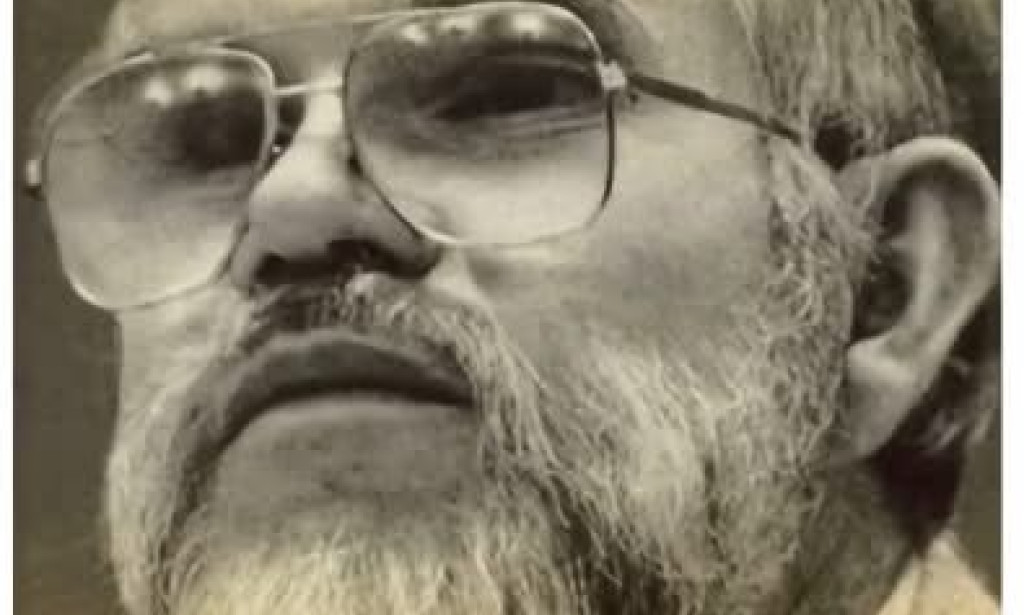
He was a genius-level criminal with an IQ of 135, who committed a near-annihilation murder using only a bottle of Coca-Cola. This man was meticulous in his work, leaving no loopholes in physical evidence, witness testimonies, or the timing of the crime—a textbook example of a "perfect crime." Even more terrifying was his mastery of psychological warfare; during police interrogation, he remained calm and even offered advice on how to solve cases with great interest. Clearly, conventional criminal investigation methods were completely ineffective against him.
Desperate, the police launched "Operation Undercover"—sending a female officer undercover to infiltrate his social circle. Like a patient hunter, she remained undercover for eighteen months, ultimately obtaining crucial evidence and exposing the man's true nature. The world was shocked to discover that his crimes extended far beyond this one poisoning. So, what exactly happened in the "Alturas Murders" in Florida? How did this courageous policewoman bring the killer to justice?
The story begins with a threatening letter. In October 1988, the Carl family in Alturas, Florida, received an unsigned letter in their mailbox. It read, "Your whole family has two weeks. Either leave Florida, or none of you will survive." The family was initially stunned, but quickly laughed, thinking it was a joke. After all, they had only lived there for a little over six months, had no enemies, and didn't know many people in town, so no one took it seriously.
However, a few days later, the Carl family's two dogs suddenly and mysteriously died. Peggy Carl, the wife, realized something was wrong and immediately thought of their neighbor, George Trepar. The two houses lived less than fifty meters apart, and Peggy had previously had two arguments with them because of loud music; he was the only person Peggy could recall ever verbally clashing with her family. However, the family thought it was absurd—who would commit murder over noise? Besides, George usually wore glasses, spoke politely, and was an intellectual; he didn't seem like the type to do anything malicious.
However, what was unexpected was that beneath his refined exterior lay a deeply vengeful nature. In fact, the dog's death was his final warning to the Carl family.
One day in October of the same year, Peggy returned home from work and suddenly experienced excruciating chest pain and unbearable stabbing pain in her legs. Her family immediately took her to the hospital, but doctors conducted numerous tests without finding the cause. Her condition worsened; clumps of hair fell out, and she lost a tremendous amount of weight, becoming emaciated in just over ten days. Worse still, her family members subsequently developed the same symptoms.
The medical team then suspected poisoning. After heavy metal screening, a shocking conclusion was reached—they had "carbonate poisoning." This type of substance is colorless and odorless; once ingested, it damages the nervous system and brain function and is difficult to eliminate naturally. Although her family members received timely medical attention and ultimately survived, Peggy, due to the extremely high concentration she had absorbed, was on the verge of death.
The case was upgraded to premeditated murder. Police immediately launched a full investigation and eventually found a high concentration of the lethal ingredient in a Coca-Cola bottle in the Carl family's refrigerator. They deduced that the killer likely smuggled the poison in when no one was home, then tightened the cap to make it appear unopened. Strangely, no one had been seen entering or leaving the house. This indicated that the killer must have been familiar with the family's habits.
The investigation quickly focused on George Trepal. Police discovered that he was the only person who had ever had a conflict with the Carl family. However, a motive based solely on "neighborhood quarrels" was too weak. Would someone really poison an entire family over a little noise? Although it seemed unbelievable, no other suspicious items could be found besides him. Police had no choice but to conduct a background check on George.
The results shocked the police. Forty-year-old George had an IQ of 135, was a former software engineer, and was proficient in mathematics, chemistry, and physics—truly "exceptionally intelligent." However, he was not a law-abiding citizen; more than a decade ago, he had been arrested for using his chemical knowledge to manufacture contraband. Police initially expected him to serve many years in prison, but George had prepared in advance, planting a bomb in the lab to destroy all key evidence. He ultimately received a light sentence of imprisonment for "concealing contraband."
A psychological evaluation described him as "extremely dangerous," the kind of arrogant, cold, calculating, and highly intelligent criminal. Although police currently lack direct evidence, George almost perfectly fits the classic triangular theory of criminal investigation—"means, motive, opportunity."
He possessed chemical knowledge and the ability to manufacture drugs; his residence was just steps from Carl's, allowing him to know when Carl left; and his motive likely stemmed from a long-standing grudge. With all three conditions met, he was almost certainly the killer.
However, the problem was—there were no eyewitnesses, no physical evidence, and the time of the crime couldn't be determined. Under US law, police cannot enter a residence without a search warrant, and even if they find evidence, it has no legal effect. To avoid alerting him, the police decided to question George under the guise of a "routine inquiry."
However, George immediately saw through the police's intentions. He remained calm, his answers airtight, even defiantly "teaching" the police how to solve the case, ending with a cold remark: "No matter how you investigate, you won't catch the real culprit." This made the police realize that he had been thoroughly aware of their every move.
Therefore, the police launched a covert operation. After rigorous screening, the task was assigned to Susan Grecker, a female officer in the Special Investigations Unit. Susan was known for her prudence and composure, and was skilled in undercover work and intelligence gathering. Although she understood the extreme danger, she did not back down and accepted the mission without hesitation.
She adopted a new identity as "Shirley Gene," from Texas, recently divorced, and starting a new life in Florida. The investigation revealed that George and his wife Diana were members of Mensa, a high-IQ society, so Susan painstakingly infiltrated the group under a false identity. She deliberately maintained her distance, not actively approaching them, waiting for the right opportunity.
A month later, the association held a "Detective Weekend" event—participants played roles in fictional murder cases, solving mysteries by finding clues and deductions. Susan's chosen role involved frequent interactions with George and his wife, naturally leading to an initial friendship among the three.
As they spent more time together, Susan discovered the deep bond between George and his wife. To gain his trust, she needed to win Diana's favor first. She spent considerable time researching Diana's interests, gradually becoming their friend. Throughout this process, Susan remained extremely cautious, never proactively offering any information.
As the days passed, George finally lowered his guard. In numerous gatherings and conversations, he began recounting his past "glorious experiences," even proudly describing several heinous acts to Susan—such as poisoning a ride-hailing driver, showing no shame but rather considerable pride.
Even more outrageous, he "designed" a "perfect murder" plan for Susan, instructing her to use it against her ex-husband. While Susan calmly cooperated, she became increasingly convinced that if this man wasn't imprisoned, there would be many more victims.
However, despite getting close to her goal, she couldn't find direct evidence. The undercover life was incredibly stressful. To avoid revealing her true identity, she was almost completely cut off from the outside world, living in fear and tension for a full year and a half.
Then, in April 1990, an opportunity finally arose. George and his wife were preparing to sell their current home to buy a larger one. Susan, on a whim, expressed her desire to buy the house, and after viewing it, made an offer that George found hard to refuse.
However, George said he hadn't found a new place yet and wouldn't be able to move in for a while. To prevent evidence from being removed, Susan immediately offered to stay temporarily as a "tenant," willing to pay rent. Through a formal lease, she gained partial control of the residence, allowing the police to legally enter and investigate later.
During their time living together, George and his wife trusted her implicitly, allowing her free access to the house, except for the basement, which was always locked, further fueling her suspicions.
After a secret consultation with the police, the following morning, a team of officers, having mastered the legal procedures, raided the house. The moment the basement door opened, everyone gasped—
Inside was a wooden bed, but not an ordinary one; it had been modified into a torture device. The bed frame bore numerous signs of use. Small vials containing poison and a notebook detailing various chemical formulas and toxicological experiments were also found at the scene.
These discoveries became the decisive evidence for George's arrest. Police arrested him on the spot, and nine months later, he was formally brought to court.
The trial was lengthy, but at a crucial moment, Susan handed over a tape she had secretly recorded during her undercover work—it contained clips of George's own confessions, as well as his extremely cold-blooded remarks about life, such as "killing is just a game." These contents shocked the jury and convinced everyone that this man was indeed capable of committing murder for trivial reasons.
Based on all the evidence, the judge ultimately found George Trepal guilty of first-degree murder and six counts of attempted murder, sentencing him to death, later commuted to life imprisonment without parole. The remaining cases, lacking sufficient evidence, were ultimately dropped by the police.
Fortunately, this highly intelligent criminal ultimately fell victim to the perseverance and courage of a policewoman over eighteen months. George lost not to intelligence, but to something he could never understand—the unwavering belief in justice. This belief cannot be quantified, yet it is the most resilient spiritual defense for maintaining social good.
This concludes the full picture of the "Arturas Murders."

You must be logged in to post a comment.